Showing posts with label Online Retailers. Show all posts

Friday, July 13, 2018

Amazon to Enter Prescription Pharmaceuticals Market with Purchase of PillPack


Image result for amazon pillpack

Amazon Inc. has been growing by leaps and bounds over the past couple of decades since it was first founded. What started as an online bookstore has since become a platform so broad that it can't really be classified as any one type of store. Especially over the past couple of years, Amazon has continued to expand into new areas as it consumes all kinds of different businesses. Whole Foods helped them to get a grip on the groceries industry, and various entertainment sources have allowed Amazon to build a sizable streaming platform. Most recently, according to a recent Bloomberg article, Amazon is looking to expand into prescription pharmaceuticals and has already begun to make a name in the generic drugs industry.

Amazon is such a large company that sells such a large quantity per day that it is able to easily lower item prices just enough to undercut competitors while still making a healthy profit. For every industry into which Amazon expands, there are dozens of brick-and-mortar chains losing business because many consumers choose the convenience of online shopping. Last August, Amazon introduced its line of generic drugs last August, and has since expanded from about 35 to 65 different products, all items that someone could buy at their local drugstore. The upshot is that the drugs Amazon is selling are not a store brand, which means the online retailer can charge much less, making the choice much more enticing to potential customers.

While Amazon already has better prices on over 70% their Basic Care products than the same products at local stores like Walgreens and CVS, those drugs are all non-prescription, which means that many consumers still have to go in to a physical pharmacist to pick up many of their medications. Many of those same customers would get their prescription drugs online if it were possible, where it could be shipped directly to their home without having to wait in long lines or deal with other customers at a brick-and-mortar store.

Well, those customers are in luck, since Amazon just announced that they will be purchasing a company called PillPack, a pharmacy company. Almost immediately after the announcement, the stock prices for companies like CVS dropped, likely correlated with investors' expectation that many consumers will choose Amazon over their local stores for filling prescriptions. Amazon may run into some legal snags when it comes to selling prescription drugs online, but it is very likely that very soon, you too will be able to get your prescriptions delivered right to your door (possibly with free delivery if included on Amazon Prime!).

***************************************************************************************************
Find out more about us at www.sepulvedaescrow.net. Any Questions? Contact our Escrow Expert! Sepulveda Escrow Corporation (818) 838-1831. Follow our company on FacebookTwitterLinkedIn, and Google+.
**************************************************************************************************

Friday, March 23, 2018

Liquidation Sales Could Offer Great Discounts for Savvy Shoppers


Several retail chains over the past few months have had to start shutting down some of their less-profitable stores and liquidating their merchandise. One of the more notable examples, Toys R Us, was in the news recently about having to close down all of its over 700 locations. Many economists blame the surge in store closures on the success of online retailers like Amazon. When a shopper can get the same product for the same price (or cheaper) without ever having to leave the house, why would they ever shop at a brick-and-mortar store? Compounded with the decreased number of customers is the fact that traditional retailers have inherently higher costs (rent, electricity, more employees, etc).

Well, according to an article by the Associated Press of the L.A. Times, if they play their cards right, a retailer's loss could be the savvy shopper's gain. A shopper has to be careful, though; liquidation sales aren't always a good deal. You have to compare prices and check online deals if you want to make sure you're not being tricked by the "CLOSING" sign in big letters. Liquidators are aiming to make as much money as possible from the merchandise before they completely go out of business. Therefore, it makes sense that the liquidation prices would be at some equilibrium: high enough that the store can make money, but low enough that they can entice shoppers to buy the merchandise.

One of the tricks that retailers use to make the deal seem better is to focus on the percentage discount, rather than the final price of the product. Often, they will raise the prices, then mark a discount on it, so that it seems like it's significantly cheaper than usual when, in fact, the amount of money saved is pretty minor. The way to avoid such tricks is to compare the final discounted price with the price of the product at other stores or online. It's only a good deal if the overall price is low, not necessarily if there's a large percentage discount.

Additionally, shoppers should be aware that there's a happy medium in getting the best deal on the greatest selection of products in a liquidation sale. The sales tend to start at a 20% discount and prices go down over time until all of the merchandise is gone. If a shopper waits long enough, they can save the most money. On the other hand, if they shop earlier, they have a greater selection of products to choose from. There's a sweet spot in the middle where the discounts are relatively high AND the selection is relatively expansive. Shoppers looking to find the best deals (especially on clothes and toys, because those tend to be more discounted than electronics) should try to find that sweet spot.

If you have a gift card for a store that's closing down, use it immediately! Even if you know the chain is being bought out by another retailer, use the gift card, because the store credit may not be honored by the new owners. Once in a while, gift card holders can get a settlement after the retailer's bankruptcy, but that requires filing claims, something that many customers forget to do until after the deadline. Finally, even though liquidation sales can have great deals, shoppers should be careful that the items they're buying are of good quality and not defective. Often, sales during a liquidation are final, and the stores don't allow returns, so be careful when shopping and only make purchases when the merchandise seems to be in good condition.

***************************************************************************************************
Find out more about us at www.sepulvedaescrow.net. Any Questions? Contact our Escrow Expert! Sepulveda Escrow Corporation (818) 838-1831. Follow our company on FacebookTwitterLinkedIn, and Google+.
**************************************************************************************************

Friday, January 19, 2018

Amazon Expects Advertising Revenue to Improve Profit Margin


Jeff Bezos, the CEO of Amazon Inc., recently took over the spot of "richest man in the world" from Bill Gates, the creator of Microsoft. To many, Bezos' wealth doesn't make much sense, because, for the past 20 years, Amazon has not brought in a profit. That may seem pretty cut and dry: profit means financial success. However, for Bezos, that's not exactly how it works. For many years, Bezos' financial strategy has been to choose business growth over profit, reinvesting any revenue into expanding Amazon. In that manner, Amazon's stock value has steadily gone up, even without paying any dividends to shareholders. According to an L.A. Times article by Spencer Soper and Mark Bergen, Amazon's latest shift, to focus on sources of advertising revenue, could help to push the company into profit territory.

Over the past few years, Amazon has been losing money in its e-commerce business but has been able to recoup those losses due to its profitable business of providing cloud services. However, the differences between gains and losses are tight: Amazon's average profit is only around 1%. Up until now, Amazon's advertising business has been pretty small, at $1.7 billion in revenue compared with Google's $35 or Facebook's $17.4 billion. Amazon has nowhere to go but up when it comes to advertising. It is likely that the growth will be among companies trying to get priority placement for their products on Amazon's website. That kind of business plan pivot is unlikely to have high costs and has huge potential for billions more in revenue.

Amazon is in a good place for advertisements. Often, on Google or Facebook, an advertisement appears that tries to push a user toward another site, where the user might purchase the product being advertised. The problem with that system is that users get annoyed by incessant advertisements when they aren't looking to buy anything. The difference for Amazon is that its users are already looking to buy something. Advertisements would be both helpful to the shopper, would benefit the advertiser, and would give Amazon more revenue. Everyone wins!

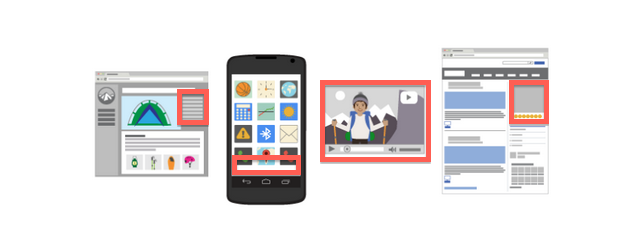
Food companies spend millions each year to put advertisements on television and in magazines to try to generate more interest in their products among potential customers. The same effect can be achieved on Amazon's website for far lower cost, with less work, simply by adding in suggested searches or sponsored search results. Of course, putting actual images and videos as advertisements can also help, but if someone is looking to buy a product, they're going to choose the one that seems to be at the best price. Through Amazon advertisements, companies can make their products more interesting to the average user. Perhaps one day, Amazon's advertisements could replace those on television entirely. Amazon does have its own video streaming capabilities, after all.

***************************************************************************************************
Find out more about us at www.sepulvedaescrow.net. Any Questions? Contact our Escrow Expert! Sepulveda Escrow Corporation (818) 838-1831. Follow our company on FacebookTwitterLinkedIn, and Google+.
**************************************************************************************************

Friday, December 22, 2017

Big Box Retailers Looking to Compete by Combining with Same-Day Delivery Services


Over the past few years, especially during the holiday shopping season, e-commerce businesses have found themselves pulling ahead of their brick-and-mortar competitors. In this modern age, more and more shoppers value the efficiency of online purchasing over the more personalized feeling of a physical store. The economy has become based on instant gratification, and many feel that online retailers can fill that need more easily. Ronald White's L.A. Times article begs to differ: White claims that retailers are aiming to recapture the market by offering same-day delivery.

While people were once satisfied to wait up to 6 weeks for a product to arrive from a mail-order catalog, technological and business advances by companies like Amazon have led consumers to expect fast delivery, often at no extra cost. For a shipping giant like Amazon, same-day delivery isn't such a big deal, because they already built up their infrastructure over the years. For businesses like Target or Wal-Mart, things can get a little tricky. Those companies are used to delivering in bulk but tend to take several days to a week to make a delivery.

The big box chains don't have the time or the capital to build a same-day shipping platform from the ground up. So, they've turned to alternative delivery modules, most notably third-parties like Shipt, Grand Junction, and Deliv. Those services use mobile apps to connect the network of delivery drivers to the big box retailers. While some companies are on a part-time basis with those services, using them for deliveries when necessary, others are looking to make acquisitions for their future success. In fact, Target put in a $550 million acquisition offer to Shipt just last week. If the offer is accepted, Target will have their own network of same-day delivery drivers, giving the chain a competitive advantage against places like Best Buy or Wal-Mart.

These same-day delivery platforms operate under the same principle as services like Uber or Lyft. Drivers sign up to deliver packages during certain hours, deliver those packages, and get paid their set rate. If a driver gets too many negative reviews (damaged package, delayed delivery, etc) then they aren't allowed to deliver anymore. The better a deliverer's ratings, the better the perks. While services like Shipt are only economically feasible in big cities like L.A. or New York, Target s willing to make that big acquisition move because they know that the independent contractors connected through the app are faster and more reliable than mainstream delivery services like USPS or Fed-Ex.

***************************************************************************************************
Find out more about us at www.sepulvedaescrow.net. Any Questions? Contact our Escrow Expert! Sepulveda Escrow Corporation (818) 838-1831. Follow our company on FacebookTwitterLinkedIn, and Google+.
**************************************************************************************************

Friday, July 21, 2017

Best Buy's Pivoting has Helped the Company Survive Amazon's Expansion


As more consumers look to online sources for many of their purchases, brick-and-mortar retailers have had to work on quickly adjusting their business model to stay in the game. Many such retail outlets have failed and filed for bankruptcy in recent years, including Radio Shack, once one of Best Buy's biggest competitors. Somehow, Best Buy was able to avoid a similar fate and has in fact made great strides since 2012, when most analysts thought they were doomed to fail. A recent L.A. Times article by James F. Peltz and Jack Flemming describes some of the methods Best Buy's CEO used to get the company back on track.

One of the biggest factors hurting the electronics chain's profits was a practice among shoppers called "showrooming." Consumers like to be able to see the products in person before purchasing them, which is one factor that makes people hesitant about making purchases on Amazon. However, they also want to make sure they're getting the best deal and spending the least amount of money. So, what they would do is go into stores like Best Buy, look at the variety of products, figure out which specific model they wanted to buy, then simply order it on Amazon for a cheaper price. To combat this practice, Best Buy invested more into expanding its market to the online sector instead of just focusing on its stores. Additionally, they have cut their profits on individual items in order to match Amazon's prices. In the short run, they may be losing money on an item-by-item basis, but overall, getting back some of their market share on electronics has been beneficial.

Even though Best Buy has been developing the online sales portion of their business model much more in recent years, the CEO of the company still considers the physical stores to be a huge asset. Although "same-store sales," which is a measure of the number of sales within a lasting store as opposed to new locations, was on a decline for 4 years, revenue at the older stores has been steadily increasing over the past 3 years. Online sales rose 21% this year and now account for 12% of Best Buy's overall sales. According to analysts, Best Buy's overall sales have remained flat because the electronics industry has been growing very slowly. The economy may be improving, but people are not buying as many "big-ticket" items anymore. Slower innovation and the vast range of retailers has led to a decrease in prices and less interest among consumers who might otherwise be interested in personal computers or televisions.

By offering the same prices as Amazon and speeding up their shipping times, Best Buy has been able to reel in some customers who want to get their product immediately, rather than waiting a while for it to be delivered. They also integrated a way for online shoppers to pick up the ordered product at their local store, which cuts down on shipping costs for both parties. Finally, Best Buy has invested heavily in education for their employees. By making sure that their employees are tech-savvy enough to explain products to shoppers, they are more likely to make a sale. Additionally, customers are more likely to shop at the store where the product is explained to them than on Amazon, where all they have is a description and some pictures. Improving customer service and lowering prices have helped, but it's still quite a while until we can determine whether Best Buy and other similar retailers will survive Amazon's spread throughout the industry.

***************************************************************************************************
Find out more about us at www.sepulvedaescrow.net. Any Questions? Contact our Escrow Expert! Sepulveda Escrow Corporation (818) 838-1831. Follow our company on FacebookTwitterLinkedIn, and Google+.
**************************************************************************************************

Friday, May 26, 2017

Google Aims to use Targeted Advertisements to Boost Both In-Store and Online Shopping


Most people who use the internet, especially for online shopping, have noticed at some point that the advertisements that appear on web pages they visit tend to relate to items they have been looking to buy. It is one of the ways that Google makes revenue, by selling advertising space and targeting the advertisements at those consumers most likely to be swayed by them. By correlating the number of clicks on an advertisement to the actual items purchased online by consumers, Google is able to show online retailers that their advertisements are the right choice.

Similarly, Google seems to be looking to move into the non-digital marketplace. According to an article by the Associated Press of the L.A. Times, Google is looking into a new service that will track how much consumers spend in brick and mortar stores after clicking on advertisements related to those purchases. However, it will only be able to correlate the information to stores, not to specific items purchased at the stores, which may not be enough information for some advertisers.

By determining how ad clicks are connected with actual purchases, Google can help advertisers to determine whether their ads are a waste of money or actually useful. If the data is convincing enough, it could be beneficial to both Google and the advertisers it is contracted by. If advertisers see how well their ads work, they are more likely to increase their advertising budget, thus generating more revenue for the retailer and more income for Google. The main problem, however, seems to be the loss of privacy inherent in this kind of data tracking.

Already, Google has digital dossiers on everyone who uses their online services. They know what people search for, what people shop for, and even the types of videos people watch on social media. Using that information, they can create targeted ads that are directed at the proper demographics. This new system just seems to be an expansion of that concept. There are precautions in place, fortunately. The system is expected to run in a "double-blind" manner, which means Google receives personal information that credit card companies and merchants don't, while the credit card company receives information that Google doesn't. Additionally, it won't be able to gather information on cash transactions and about 30% of credit card transactions. Advertisements have the ability to help all involved parties in that they can point customers toward products they want and provided added demand on products for retailers. The main question: is the loss of privacy worth the added benefits of the ads?

***************************************************************************************************
Find out more about us at www.sepulvedaescrow.net. Any Questions? Contact our Escrow Expert! Sepulveda Escrow Corporation (818) 838-1831. Follow our company on FacebookTwitterLinkedIn, and Google+.
**************************************************************************************************

Friday, December 2, 2016

Mobile Shopping Increasingly Becoming an Integral Component of Black Friday


Black Friday has become a cultural phenomenon throughout the US. When it first started in 1952, it was just a day to start your holiday shopping, when stores discounted their products so that they could begin making a profit for the year and be "in the black." As time went on, the deals got better and better until it got to a point that people were waiting for hours in the middle of the night on Thanksgiving to get a chance at the best discounts once the stores opened. Over the past few years, however, stores have started to offer the same deals online as in the stores, which has reduced the number of Black Friday shoppers. Samantha Masunaga, in her L.A. Times article, discusses the shift to mobile shopping and some of the reasons why Black Friday continues, even with such decreased demand.

This year, it is projected that the e-commerce for the holiday season will grow to a valuation of over $117 billion. While Cyber Monday once represented the day when deal-hunters could get discounts on their online shopping, but now that so much of the Black Friday Shopping can be done online, many people consider Cyber Monday to be obsolete. It makes more sense to get their deals over the holiday than to find an hour or two in the middle of a busy workday to find the best deals. Retailers are seeing the difference: on Thanksgiving night, which has in itself begun to replace Black Friday, sales were 13.6% higher than last year, a total of nearly $1.2 billion.

Not only are people taking advantage of online deals rather than going into the stores, a surprising number of shoppers are doing so via mobile devices instead of computers. Nearly $550 million of the $1.2 billion total on Thanksgiving night came from mobile purchases. That's a 58.6% increase from last year's mobile sales. While mobile shopping is convenient, some people find it to be too much of a hassle and prefer using a computer, at least to complete their transactions. Not enough online retailers have improved their mobile layout, which has led to a projection that while 53% of e-commerce visits will happen on mobile devices, only 34% of sales will happen on apps.

Many customers find the checkout process to be too time-consuming or confusing on mobile apps for some businesses, and opt to go onto a computer or choose an easy-to-understand platform like Amazon to make their purchases. If online retailers want to stay competitive, they will have to improve their platforms, potentially by integrating easier payment systems like PayPal, Android Pay, or Apple Pay, rather than making customers try to input credit card information on the small screen of their smartphone. Target and Wal-Mart, among other companies, have noticed improvements in their mobile performance over the past few years. After fixing its online platforms and making it easier to checkout, Target even found that mobile sales over the weekend had increased by 200% from last year.

While mobile apps and online platforms are great for the tech-savvy consumer, many customers prefer the emotional connection to Black Friday that they get by physically going to the late-night sales. Some shoppers don't want to do online shopping because they would prefer to see the product up close and examine it before buying. Other people just enjoy the cultural experience of rushing through the store, hunting for deals. Whatever the reason, even if Black Friday becomes a mainly online phenomenon, it is very likely that there will still be in-store experiences available. Black Friday is a tradition for many shoppers, and especially since many people do their bargain-hunting online, crowding is less of an issue, many shoppers expect to be able to keep up the practice for many years to come.

***************************************************************************************************
Find out more about us at www.sepulvedaescrow.net. Any Questions? Contact our Escrow Expert! Sepulveda Escrow Corporation (818) 838-1831. Follow our company on FacebookTwitterLinkedIn, and Google+.
***************************************************************************************************

Friday, July 22, 2016

ZestFinance to Use Search Data in Calculating Credit Scores


Traditionally, a credit profile is derived by looking at a potential borrower's history of paying back loans. Whether from car loans, credit card usage, or a mortgage on a home, the more an individual can show that they have paid back borrowed money in the past, the lower their interest rate will be on a new loan. However, there is the issue of the Catch-22 of credit: without any credit history, it is very difficult to get your first loan on the path to a good credit profile. Some companies have started including monthly rent payments in their calculations. In partnership with Chinese search engine Baidu, Hollywood credit firm ZestFinance will be using a potential borrower's internet search and shopping history to calculate their credit score, as described in James Rufus Koren's L.A. Times article.

Nontraditional means have been used in the past to calculate a potential borrower's credit, especially when that borrower has never borrowed money, but this will be the first time using search data. ZestFinance has focused on borrowers with little credit history from the very beginning and is confident that the sheer size of Baidu's engine will make them succeed where no one has ever dared venture before. The company will be breaking out in both the US and China, underwriting loans through the companies Basix and JD.com, respectively.

In addition to using the search data in calculating credit profiles, behavioral data gained from analyzing search history can help the company to avoid fraudulent customers. With enough data, ZestFinance believes they will be able to statistically determine the likelihood of a borrower paying back their loan in a certain time frame. One example they give is that for some reason, potential borrowers who fill out their loan application with proper capitalization are more likely to pay back their loan than a borrower who writes in all capital letters. They aren't sure exactly why this correlation exists, but they believe that enough research will enable them to create fair assessments of a borrower's credit profile.

Some believe that this system will be unfair, because how can anyone really tell if someone will pay back a loan based on what they look up online? However, if this is the system that enables the majority of those people who were previously refused loans to start down the road to good credit, then it may be worth it. In fact, ZestFinance believes their system will be fairer than current non-traditional calculations in that it can allow people with no credit history to have a decent interest rate, whereas before, they had to choose between paying exorbitant rates or missing out completely on the chance to develop their credit profile. As Douglas Merrill, a ZestFinance executive, says, three out of four Chinese citizens lack the financial history to have a fair credit profile. In exchange for a small, carefully limited, loss of privacy, credit could be gained more easily by everyone, and for most, that's a pretty simple trade.

***************************************************************************************************
Find out more about us at www.sepulvedaescrow.net. Any Questions? Contact our Escrow Expert! Sepulveda Escrow Corporation (818) 838-1831. Follow our company on FacebookTwitterLinkedIn, and Google+.
***************************************************************************************************

Friday, May 6, 2016

Bitcoin's True Founder - Revealed at Last?


Bitcoins are a form of electronic currency first introduced to the public in 2009 by a creator who goes by the pseudonym Satoshi Nakamoto. The "mining" of these Bitcoins is performed by computer software following a mathematical proof. The software is open-sourced, which means anyone can use it and check it out to see how it works. Recently, as discussed in Samantha Masunaga's L.A. Times article, an Australian businessman and computer scientist named Craig Wright came out of the shadows and provided evidence showing that he may, in fact, be the elusive Mr. Nakamoto.

Bitcoin's protocols make it impossible to churn out an endless supply of Bitcoins; only 21 million coins can ever be produced by "miners." That's one of the things that sets the electronic currency apart from more "traditional" currencies. With dollars or Euros or any other form of government-backed currency, an unlimited number of bills and coins could theoretically be printed. Sometimes it is done to provide a shock to try to start a stagnant economy, but, more often than not, it results in massive inflation and more economic downturn than before. There is a limit on the number of Bitcoins in the world, which means their value is pretty stable, and inflation doesn't really exist.

Additionally, while central banks can charge exorbitant fees to someone trying to open up an account or someone trying to send funds internationally, Bitcoin cuts out many of those fees. A Bitcoin account can be created in a matter of seconds, with no fees. The decentralization of Bitcoin's network means that there is no bank to default on any loans, so you know your "funds" are safe. Best of all, the network is extremely transparent since every transaction is recorded in a secure "blockchain" that can be added to, but never changed. Unfortunately, most normal retailers don't accept Bitcoin as a form of payment. Over recent years, however, Bitcoin has become much more prevalent, especially with online retailers, so it is expected to come into more widespread use.

Although Wright, an entrepreneur with several masters' degrees and a couple of doctorates, came out with some proof showing that he may be the true creator of Bitcoin, there are still many doubters. In his digital messages claiming to be "Satoshi Nakamoto," he signed off using certain cryptographic keys that could be found in Nakamoto's work in the early days of Bitcoin. He also published a very technical post on his blog with information that no one but Bitcoin's true creator should have. Wright claims that he has chosen now to reveal his identity because he is tired of the misinformation being spread about Bitcoin and its stability. Additionally, the media has long suspected Wright's alter-ego, and he wanted to put an end to the investigations into him and his family. While he hasn't provided undeniable proof, it seems very likely that Satoshi Nakamoto's secret identity has finally been revealed to the world.

***************************************************************************************************
Find out more about us at www.sepulvedaescrow.net. Any Questions? Contact our Escrow Expert! Sepulveda Escrow Corporation (818) 838-1831. Follow our company on FacebookTwitterLinkedIn, and Google+.
***************************************************************************************************

Thursday, March 24, 2016

BEWARE - You and Your Clients Are a Target For This Real Estate Scam


Cyber-criminals are finding new methods every day to steal personal and financial information. Their techniques range from phishing scams to buffer overflow techniques and brute-force password hacking. Banking institutions have found themselves under attack far more than usual in recent years, and have in turn begun to incorporate stronger security measures in an attempt to block hackers. As a result, many scammers/hackers have moved on to what they believe are "easier targets." focusing on normal people rather than financial institutions, Just last week, the Federal Trade Commission and the National Association of Realtors issued a warning to consumers that they must be hyper-vigilant in order to avoid recent phishing schemes that have been targeting closing costs on real estate transactions.

The National Association of Realtors, along with the Federal Trade Commission, issued their statement warning people to be on the look-out for a specific scheme targeting those involved in a real estate transaction. First, the hackers gain access to the email account of a customer, real estate agent, or escrow officer, and use the information to keep up-to-date on the transaction and determine the closing date. When they have figured out the closing date, the scammer sends an email that has been masked in such a way that they are able to impersonate the escrow company, title company, or real estate agent, telling the customer that the wiring instructions had a last-minute change. If the customer takes the bait, they send their funds to the scammer's account, which can be emptied in minutes.

Sepulveda Escrow utilizes encrypted and secure email when sending documents with sensitive and confidential information. In addition, documents can be returned via email through this secure portal. Sepulveda Escrow has also instituted new procedures to contact Clients directly to confirm details, rather than relying on email or contact through a third party. (Please see end of this blog for some helpful tips.)

It is imperative to know that cyber criminals don't always need to be able to break through firewalls or use high-tech software to get your personal information or access your computer's data. Quite often, hackers use more subtle tricks to gain access. Phishing schemes are one of the most common ways by which they trick potential targets. One example of phishing is when a hacker sends a mass email to a group of people, and makes it look like the email comes from a bank or other online payment platform. The email requests that the recipient verify their login information by following a link. The link leads to a page that closely resembles the actual login page for the financial institution, but when the user inputs their login information, the hacker records the username and password, thereby enabling them to access the account and steal their money.

Another example of phishing is when a hacker contacts a target or a group of targets under the guise of an Official informing them that they have been the victim of a scam. They then tell the recipient that they can help them fix the damage, but first ask for certain sensitive information like Social Security number or bank information, to "verify" what data had been "stolen."  While you may look at this and think that the scheme is too obvious to be effective, statistics show that approximately 0.4% of recipients fall prey to such attacks. In other words, if a mass email is sent to 10,000 people, about 40 of them will have their information successfully stolen.

While phishing is historically the easiest and most effective method by which hackers are able to steal personal or financial information, there are several other methods. A buffer overflow attack, used by more sophisticated hackers, involves inputting many lines of code into an online form in order to overload the system and allow the hacker to steal data inputted by previous customers. A brute-force password hack involves a computer program that inputs all kinds of combinations of letters, numbers, and symbols, until the correct password has been found and the hacker has gained access to an email or other kind of online account.

Finally, hackers often package viruses or worms into free online software or as attachments to mass emails. Such viruses can enable the hacker to record keystrokes, thus giving them access to many of your passwords, or enable them to access built-in microphones or webcams on laptops. Simply opening such an email or downloading an infected attachment can lead to a virus being installed on your computer or mobile device. Fortunately, anti-virus software can often help to detect and remove these viruses, but hackers are constantly finding new ways to avoid detection by your anti-virus program. The best way to avoid getting such viruses is to be careful when downloading anything, and to avoid opening any emails that seem suspicious or come from unknown or unreliable sources.

Here are some tips to help you avoid being affected by similar scams. First and foremost, if something doesn't look right or feels even a little bit suspicious, don't hesitate to double-check it. Don't rely too much on emails. Instead, pick up the phone and call your escrow officer or realtor to make sure that everything you have received is correct. Don't open email attachments you aren't expecting. Additionally, you shouldn't trust financial information that has been sent via email, nor should you send any of your own financial information via email, because it usually isn't secure. In general, wiring instructions are sent by fax or encrypted email message. When inputting personal information on a website, check the address for "https," of which the "s" stands for secure, meaning that your information will be better protected.

Be very careful when opening attachments or downloading anything from an email, no matter who sent it to you. Just because you recognize the email address, doesn't mean that the message actually came from the person you associate with that email address. It's possible that a scammer could have hacked a friend's email, or could have disguised their email to appear as if the message came from a friend's email address. Proceed with caution. Being aware and cautious can save you a lot of hassle in the long run. 

Biggest Tip: Following up on the phone after sending an email may seem burdensome, but we at Sepulveda Escrow find that it is always worthwhile to go the extra mile to avoid financial losses and potential lawsuits.

***************************************************************************************************
Find out more about us at www.sepulvedaescrow.net. Any Questions? Contact our Escrow Expert! Sepulveda Escrow Corporation (818) 838-1831. Follow our company on FacebookTwitterLinkedIn, and Google+.
***************************************************************************************************

Friday, March 11, 2016

Banks to Incorporate Biometric Scanning to Help Prevent Hacking on Mobile Platforms


Due to hackers and other cyber criminals, online security has become a major issue around the world. In an attempt to protect their users' information, various websites have enacted different countermeasures to increase security and prevent hacking, but criminals seem to be evolving with technology. Furthermore, many of the extra safety measures, while they do a good job of protecting users, are often viewed as too confusing or time-consuming. James Koren, in his L.A. Times article, describes Wells Fargo's newest security measures: eye scanning and facial/voice recognition.

Banks and credit card companies tend to be the main targets of hackers and scammers looking to steal money and/or identification information. With a relatively small amount of information about you, a cyber criminal can apply for credit cards, open up bank accounts, and rack up thousands of dollars in debt under your name before you are any the wiser. Banks like Bank of America, JP Morgan Chase, and Wells Fargo are constantly looking for better ways to protect their customers without causing more of a hassle. What they have concluded is that the best method, at least for the time being, is the use of biometric markers, which, with current technology, are nearly impossible to forge.

The average consumer wants to be well protected, yet doesn't want to have to put in a lot of effort in order to obtain that protection. For example, Google, among other websites, has a feature called 2-Step Verification. When you make an account with Google, you have the option to save a phone number to your account. Then, every time you try to log in to your account on a computer that you have not saved, Google requires that you input your username, password, and a six digit code that is sent in a text message to the provided phone number. While this system essentially prevents hackers from getting into your account via brute force attacks, it can also be pretty annoying for users who have to log on to multiple computers/devices in any given day.

Besides lengthy, multiple-step encryption, there is also the simple issue of having to remember several different passwords for different websites, each with different formatting requirements. Each website doesn't want you to use the same password on another site, in case one of the websites gets hacked, but how is the average user supposed to remember upward of 5 passwords, and recall which one goes to which website? Biometrics seems to be the best of both worlds for both time-conscious and safety-conscious customers. Currently, fingerprint-scanning is huge in the marketplace, as new phones by Apple and Samsung are coming with built-in fingerprint scanning capabilities. Some banks are already offering fingerprint-based mobile access to non-business customers. However, for commercial customers, who have much larger accounts, and therefore much more to lose to cyber criminals, the banks want to use additional biometric markers to help ensure the security.

Wells Fargo's new service will use a phone's front-facing camera to look at the pattern of blood vessels on a user's retina. This pattern of blood vessels is just as unique as an individual's fingerprint and, therefore, provides just as much security.  Additionally, users could log in to their account using facial/voice recognition. A user holds their phone so that the front-facing camera can see them, and reads a series of numbers that appear on the screen. A combination of recorded voice data and facial structure data will determine if the user is who they claim to be. In all, these new features should provide a much easier and safer experience for all users, especially business customers who need better safety features. As of now, technology has developed to the point where biometric scanning is doable, but not yet hackable. In the future, this may change, but for the moment, biometrics is the safest course.

***************************************************************************************************
Find out more about us at www.sepulvedaescrow.net. Any Questions? Contact our Escrow Expert! Sepulveda Escrow Corporation (818) 838-1831. Follow our company on FacebookTwitterLinkedIn, and Google+.
***************************************************************************************************

Monday, December 28, 2015

Online Shopping's Increased Popularity Causes Extended Shipping Delays


Just in December alone, it is expected that United Parcel Service will deliver a total of about 420 million packages in the United States while its competitor Federal Express will deliver about 228 million. The U.S. Parcel Service is also in the game, expected to ship about 545 million packages this month. All together, they will be shipping a huge amount, almost 8% more than they did at this time last year. According to Samantha Masunaga, in her L.A. Times article, this dramatic increase in the number of people and retailers needing to ship packages is due mainly to a recent increase in e-commerce.

This year, many retailers offered Black Friday deals on their websites, essentially giving their customers a choice. They could come into the store on Black Friday and shop, finding deals and purchasing items to take home with them immediately. Or, they could shop online, earning the same deals and reduced prices as in the store, and have the item shipped. Sensibly, many customers chose the second route, choosing to wait a little bit longer for their item rather than braving the hectic battle in the store on Black Friday. While this online integration by the retailers helped to keep Black Friday running more smoothly in stores, it came as an unexpected hit among shipping companies, whose predictions were far surpassed, which led to many delays on deliveries.

With the holidays approaching, shipping companies were getting even more overwhelmed with many more orders than in previous years. Because of that, they began telling customers that there would be no assurances that their package would arrive before Christmas unless they used the higher-cost options, like two-day or overnight shipping. Even those options were not perfect. UPS's on-time delivery rates for two-day and overnight delivery have varied throughout the month, ranging around 97%. Basically, when it comes down to it, even the more expensive options are not a guarantee, so consumers should plan ahead and order far in advance if they want to make sure their item arrives in a timely fashion.

Cyber Monday sales exceeded expectations, reaching $3.07 billion, which was 16% more than last year's sales. During Black Friday, about 103 million people got their deals online while 102 million preferred to do their shopping in brick-and-mortar establishments. Online purchases this year, especially during its final months, soared higher than ever expected, which is why shipping delays occurred. While shipping services were prepared for higher demand than in previous years, they could hardly know exactly how much the demand would increase, so the explosion of e-commerce's popularity caught them off-guard. Even for many online merchants, this year's demand was surprising. For several retailers, popular items ran out very quickly, and some even experienced crashes on their websites due to the increased traffic.

Most people in this day and age have a smartphone or some other way to get online while on the go. Because of this, online shopping may be easier and more appealing than having to go to stores and hope that they have the item you want in the correct size or color or style. It is simpler to just go to a website, type in exactly what it is you want, and order it. Over the holiday season, about 25% of e-commerce shopping was done via a mobile device. Our society's increasing dependence on new technology could be a reason why retailers have integrated more of that same technology into the shopping experience, making it easier and faster for potential customers to shop with them.

***************************************************************************************************
Find out more about us at www.sepulvedaescrow.net. Any Questions? Contact our Escrow Expert! Sepulveda Escrow Corporation (818) 838-1831. Follow our company on FacebookTwitterLinkedIn, and Google+.
***************************************************************************************************