Showing posts with label Online Shopping. Show all posts

Friday, September 28, 2018

Amazon-Snapchat Partnership Expected to Substantially Impact Snap Inc.'s Future Business Prospects


Image result for snapchat amazon

Online commerce constitutes a huge portion of all merchandise being purchased, and each year, the proportions keep increasing. While some people prefer to go into a store to actually feel an item or try on some clothes before making their purchase, services like Amazon Prime make it easy and convenient for consumers to shop online, then return anything they don't like, free of charge. With a feature that was recently added to Amazon's app, which allows a user to take a picture of an item in the real world in order to search for it on Amazon, the online market will continue to grow exponentially. Interestingly, although Amazon already has this feature on their own app, according to Sam Dean's L.A. Times article, the corporation has recently partnered with Snapchat to give the social media app the same shopping capabilities.

Economic analysts are unsure as to what Amazon's end goal might be. The corporation already has an app capable of leading a user to an item for sale based on a captured image. Why does Amazon want to add the same feature to Snapchat's app? Similarly, what could Snapchat possibly be getting out of the deal that it makes it worthwhile for them to use their platform to help an indirect competitor like Amazon? The explanation for Snap Inc.'s end of the partnership is simple: money. Online platforms that push business in Amazon's direction get between 1% and 10% of the sale price of a purchased item as a commission. So, the more Snap customers purchase on Amazon (which can be improved with this image-recognition feature), the more money Snap Inc. can bring in.

For Amazon's side of this partnership, no definite conclusions have been drawn. Some believe that Snapchat has a user base that is significantly different from Amazon's, to the extent that the benefit of increased sales would far outweigh the cost of adding the feature to Snapchat's app. According to a study, over three-quarters of all internet users between the ages of 18 and 24 use Snapchat, and that demographic tends to be much more likely than the average consumer to make online purchases on a whim. Others believe that this partnership is part of a far larger plan on Amazon's part. History has shown that when Amazon partners with a smaller company, they tend to only play nice until they fully understand the company's business model, at which point they put them out of business.

Alternatively, this tentative partnership could be a plan on both sides to improve the odds of a peaceful transition of ownership in the near future. Snap Inc. recently hired Tim Stone (a long-lasting executive at Amazon) as Snap's Chief Financial Officer. Also, because of Facebook's blatant copying of Snap's intellectual property over the years, if Snap executives were ever to consider liquidating the company, they would likely strongly oppose selling to Facebook, their business enemy. So, it isn't unbelievable to think that Snap might be gearing up to sell to Amazon soon, and this update to Snapchat's features could be their first step in testing such a combination of the companies.

***************************************************************************************************
Find out more about us at www.sepulvedaescrow.net. Any Questions? Contact our Escrow Expert! Sepulveda Escrow Corporation (818) 838-1831. Follow our company on FacebookTwitterLinkedIn, and Google+.
**************************************************************************************************

Friday, September 21, 2018

Online Advertising in the U.S. Outpaces Print for the First Time


Image result for online advertising

A company can be the best in the business and can be producing the highest-quality items at the lowest prices, but those facts don't matter much if no one hears about the company. So, in many ways, the reach of a company's advertising efforts can be a far more important factor in the business' success than the business itself. In the past, a company's outreach efforts involved advertisements posted in the local newspaper. Eventually, that developed into short commercials on the radio, then on television. Now, in the digital age, advertisers have to make use of the internet if they want to get noticed. In fact, according to Wendy Lee's L.A. Times article, over half of all advertisements in the U.S. this year were online.

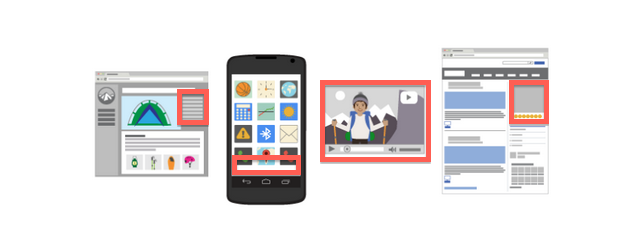
Since companies are looking to target more consumers from the younger demographics, and since it's well-known that younger consumers tend to spend far more time on mobile devices than older consumers, those companies have pivoted their marketing strategy to focus on platforms like Google and Facebook. This pivot was so significant that in 2018, advertisers will spend a total of more than $100 billion on online advertisements, a 16% increase from last year's expenditures. Studies have found that the online advertisements are more successful in targeting consumers, provides the advertisers with more information about the targeted consumer, and even costs less overall.

The advertisements tend to focus mainly on social media and internet searches. For example, if you like a Facebook page related to cooking, you might tend to see more ads on your Facebook feed related to cookware. Or, if you search on Google for a specific product, the next time you use the internet, advertisements will be more likely to show you products similar to the one you searched for, or related products from the same company. Online advertising has the benefit that it can target specific demographics of consumers and can record how many people are actually affected by the ads (determined by the ratio of ad clicks to purchases).

It makes sense that companies are making the shift to online advertising. Social media platforms like Facebook and Twitter have millions of users who log on every day, and a targeted ad can draw in many more potential customers than a generic advertisement in the local paper or a catchy commercial on TV. Especially as streaming services become more popular (thereby decreasing the percentage of the population who actively watch cable television), TV commercials become less effective and more annoying to the common viewer. Online ads are still seen as annoying, but if done in the right way, they can catch a consumer's attention without distracting a consumer from the posts and online content they are actually there to see.

***************************************************************************************************
Find out more about us at www.sepulvedaescrow.net. Any Questions? Contact our Escrow Expert! Sepulveda Escrow Corporation (818) 838-1831. Follow our company on FacebookTwitterLinkedIn, and Google+.
**************************************************************************************************

Friday, March 23, 2018

Liquidation Sales Could Offer Great Discounts for Savvy Shoppers


Several retail chains over the past few months have had to start shutting down some of their less-profitable stores and liquidating their merchandise. One of the more notable examples, Toys R Us, was in the news recently about having to close down all of its over 700 locations. Many economists blame the surge in store closures on the success of online retailers like Amazon. When a shopper can get the same product for the same price (or cheaper) without ever having to leave the house, why would they ever shop at a brick-and-mortar store? Compounded with the decreased number of customers is the fact that traditional retailers have inherently higher costs (rent, electricity, more employees, etc).

Well, according to an article by the Associated Press of the L.A. Times, if they play their cards right, a retailer's loss could be the savvy shopper's gain. A shopper has to be careful, though; liquidation sales aren't always a good deal. You have to compare prices and check online deals if you want to make sure you're not being tricked by the "CLOSING" sign in big letters. Liquidators are aiming to make as much money as possible from the merchandise before they completely go out of business. Therefore, it makes sense that the liquidation prices would be at some equilibrium: high enough that the store can make money, but low enough that they can entice shoppers to buy the merchandise.

One of the tricks that retailers use to make the deal seem better is to focus on the percentage discount, rather than the final price of the product. Often, they will raise the prices, then mark a discount on it, so that it seems like it's significantly cheaper than usual when, in fact, the amount of money saved is pretty minor. The way to avoid such tricks is to compare the final discounted price with the price of the product at other stores or online. It's only a good deal if the overall price is low, not necessarily if there's a large percentage discount.

Additionally, shoppers should be aware that there's a happy medium in getting the best deal on the greatest selection of products in a liquidation sale. The sales tend to start at a 20% discount and prices go down over time until all of the merchandise is gone. If a shopper waits long enough, they can save the most money. On the other hand, if they shop earlier, they have a greater selection of products to choose from. There's a sweet spot in the middle where the discounts are relatively high AND the selection is relatively expansive. Shoppers looking to find the best deals (especially on clothes and toys, because those tend to be more discounted than electronics) should try to find that sweet spot.

If you have a gift card for a store that's closing down, use it immediately! Even if you know the chain is being bought out by another retailer, use the gift card, because the store credit may not be honored by the new owners. Once in a while, gift card holders can get a settlement after the retailer's bankruptcy, but that requires filing claims, something that many customers forget to do until after the deadline. Finally, even though liquidation sales can have great deals, shoppers should be careful that the items they're buying are of good quality and not defective. Often, sales during a liquidation are final, and the stores don't allow returns, so be careful when shopping and only make purchases when the merchandise seems to be in good condition.

***************************************************************************************************
Find out more about us at www.sepulvedaescrow.net. Any Questions? Contact our Escrow Expert! Sepulveda Escrow Corporation (818) 838-1831. Follow our company on FacebookTwitterLinkedIn, and Google+.
**************************************************************************************************

Friday, February 2, 2018

PayPal- eBay Split Expected to Significantly Benefit Both Companies in the Long Run


PayPal, which is one of the world's largest online payment companies, was created in 1998, had its initial public offering in 2002, and was acquired by eBay later that year. The system can be used to transfer money over the internet without the need for checks or money orders and is mainly associated with online shopping sites, where they are well-known for security and ease-of-use. In 2015, when eBay decided to make PayPal a separate entity once more, it was intended to diversify the company's investments. Now, according to James Peltz's L.A. Times article, eBay is committing deeper to that goal by cutting PayPal free from its position as eBay's primary payments processor.

For years, shoppers on eBay have been forced to use PayPal when checking out, and sellers have had to pay a commission to PayPal on top of the commission they already have to pay to eBay for using their site. eBay's relationship with Adyen, which will begin in 2020, will give customers more payment options to choose from, which will enable people to pick the one that suits them most economically. The massive online retailer also believes that the change to Adyen will create a "more seamless experience" for customers.

PayPal's stock took a dive and eBay's went the opposite direction after the announcement this week. However, analysts believe that PayPal's issues are only for the short-term. Executives have pointed out that the portion of PayPal's business connected to eBay has been steadily shrinking over the years, and that this break-up will have little impact. eBay's business was about 13% of PayPal's total volume last year (down 3% per year for the past few years). However, PayPal doesn't seem to be worried about the loss of volume. They are choosing instead to focus on profitability.

 According to PayPal executives, although the partnership with eBay had led to a large volume of money transferring for the payment company, they made very little per transaction, which didn't make it so profitable. One of PayPal's subsidiaries, Venmo, saw a huge jump in quarterly profits: 59% higher than last year, by some measurements. PayPal has other similar projects in the works that have the potential for profitability, so it seems that the split with eBay may be beneficial to both companies in the end.

***************************************************************************************************
Find out more about us at www.sepulvedaescrow.net. Any Questions? Contact our Escrow Expert! Sepulveda Escrow Corporation (818) 838-1831. Follow our company on FacebookTwitterLinkedIn, and Google+.
**************************************************************************************************

Friday, January 19, 2018

Amazon Expects Advertising Revenue to Improve Profit Margin


Jeff Bezos, the CEO of Amazon Inc., recently took over the spot of "richest man in the world" from Bill Gates, the creator of Microsoft. To many, Bezos' wealth doesn't make much sense, because, for the past 20 years, Amazon has not brought in a profit. That may seem pretty cut and dry: profit means financial success. However, for Bezos, that's not exactly how it works. For many years, Bezos' financial strategy has been to choose business growth over profit, reinvesting any revenue into expanding Amazon. In that manner, Amazon's stock value has steadily gone up, even without paying any dividends to shareholders. According to an L.A. Times article by Spencer Soper and Mark Bergen, Amazon's latest shift, to focus on sources of advertising revenue, could help to push the company into profit territory.

Over the past few years, Amazon has been losing money in its e-commerce business but has been able to recoup those losses due to its profitable business of providing cloud services. However, the differences between gains and losses are tight: Amazon's average profit is only around 1%. Up until now, Amazon's advertising business has been pretty small, at $1.7 billion in revenue compared with Google's $35 or Facebook's $17.4 billion. Amazon has nowhere to go but up when it comes to advertising. It is likely that the growth will be among companies trying to get priority placement for their products on Amazon's website. That kind of business plan pivot is unlikely to have high costs and has huge potential for billions more in revenue.

Amazon is in a good place for advertisements. Often, on Google or Facebook, an advertisement appears that tries to push a user toward another site, where the user might purchase the product being advertised. The problem with that system is that users get annoyed by incessant advertisements when they aren't looking to buy anything. The difference for Amazon is that its users are already looking to buy something. Advertisements would be both helpful to the shopper, would benefit the advertiser, and would give Amazon more revenue. Everyone wins!

Food companies spend millions each year to put advertisements on television and in magazines to try to generate more interest in their products among potential customers. The same effect can be achieved on Amazon's website for far lower cost, with less work, simply by adding in suggested searches or sponsored search results. Of course, putting actual images and videos as advertisements can also help, but if someone is looking to buy a product, they're going to choose the one that seems to be at the best price. Through Amazon advertisements, companies can make their products more interesting to the average user. Perhaps one day, Amazon's advertisements could replace those on television entirely. Amazon does have its own video streaming capabilities, after all.

***************************************************************************************************
Find out more about us at www.sepulvedaescrow.net. Any Questions? Contact our Escrow Expert! Sepulveda Escrow Corporation (818) 838-1831. Follow our company on FacebookTwitterLinkedIn, and Google+.
**************************************************************************************************

Thursday, October 26, 2017

"Honey" Browser Extension Automatically Inputs Coupon Codes for Online Shoppers


Many consumers prefer to do their shopping online as opposed to in brick-and-mortar stores. Shopping online, especially when you know exactly what you're looking for, can be cheaper, easier, and more expedient than taking the time to go to Wal-Mart or Target and pick up the latest device. Still, consumers want to get the best deal possible, especially when shopping online. Research shows that consumers are often hesitant to place an order online due to a feeling that they may be paying too much. In his L.A. Times article, David Pierson describes an innovative browser add-on called Honey that automatically finds discount codes for many shopping websites.

The extension is free for download on all Firefox, Safari, and Google Chrome browsers, and requires absolutely no effort on the part of the user. Simply by installing the add-on, the discounts will immediately begin popping up when a user goes to check out on thousands of shopping sites. The extension uses user-inputted data (like Waze) to determine which discount codes work best and which don't work at all, so each consumer using the app helps to make it better for the next user. Honey has over 5 million users, who have saved an average of $32 per month on items that they were going to purchase anyway.

This browser extension seems to be a win-win-win for everyone involved. Consumers get to find discounts that they wouldn't have otherwise been able to use on items that they were planning on purchasing anyway. The shopping sites tend to make more money because shoppers are 55% more likely to finish checking out when Honey has checked for potential discounts. Honey itself makes money because certain merchants pay to have their discounts made more visible, to increase customer traffic. Everyone is making money, without much of a risk to any one party.

About 9,000 of Honey's 21,000 affiliated merchants pays the company a commission for driving customer sales. One of their biggest issues, however, is that they have so far been unable to convince Amazon to get on board. Because Amazon has such a large share of the online shopping market, that could pose problems for Honey in the future. They hope that consumers will choose to use other websites, to keep the Seattle-based company from monopolizing the market and raising prices, but time will tell whether their efforts will be successful. Until then, Honey has an integrated feature for Amazon shoppers to let them know when prices of items in their cart have fluctuated. That feature may be enough to help Honey stay relevant in the Amazon-saturated market.

***************************************************************************************************
Find out more about us at www.sepulvedaescrow.net. Any Questions? Contact our Escrow Expert! Sepulveda Escrow Corporation (818) 838-1831. Follow our company on FacebookTwitterLinkedIn, and Google+.
**************************************************************************************************

Friday, July 21, 2017

Best Buy's Pivoting has Helped the Company Survive Amazon's Expansion


As more consumers look to online sources for many of their purchases, brick-and-mortar retailers have had to work on quickly adjusting their business model to stay in the game. Many such retail outlets have failed and filed for bankruptcy in recent years, including Radio Shack, once one of Best Buy's biggest competitors. Somehow, Best Buy was able to avoid a similar fate and has in fact made great strides since 2012, when most analysts thought they were doomed to fail. A recent L.A. Times article by James F. Peltz and Jack Flemming describes some of the methods Best Buy's CEO used to get the company back on track.

One of the biggest factors hurting the electronics chain's profits was a practice among shoppers called "showrooming." Consumers like to be able to see the products in person before purchasing them, which is one factor that makes people hesitant about making purchases on Amazon. However, they also want to make sure they're getting the best deal and spending the least amount of money. So, what they would do is go into stores like Best Buy, look at the variety of products, figure out which specific model they wanted to buy, then simply order it on Amazon for a cheaper price. To combat this practice, Best Buy invested more into expanding its market to the online sector instead of just focusing on its stores. Additionally, they have cut their profits on individual items in order to match Amazon's prices. In the short run, they may be losing money on an item-by-item basis, but overall, getting back some of their market share on electronics has been beneficial.

Even though Best Buy has been developing the online sales portion of their business model much more in recent years, the CEO of the company still considers the physical stores to be a huge asset. Although "same-store sales," which is a measure of the number of sales within a lasting store as opposed to new locations, was on a decline for 4 years, revenue at the older stores has been steadily increasing over the past 3 years. Online sales rose 21% this year and now account for 12% of Best Buy's overall sales. According to analysts, Best Buy's overall sales have remained flat because the electronics industry has been growing very slowly. The economy may be improving, but people are not buying as many "big-ticket" items anymore. Slower innovation and the vast range of retailers has led to a decrease in prices and less interest among consumers who might otherwise be interested in personal computers or televisions.

By offering the same prices as Amazon and speeding up their shipping times, Best Buy has been able to reel in some customers who want to get their product immediately, rather than waiting a while for it to be delivered. They also integrated a way for online shoppers to pick up the ordered product at their local store, which cuts down on shipping costs for both parties. Finally, Best Buy has invested heavily in education for their employees. By making sure that their employees are tech-savvy enough to explain products to shoppers, they are more likely to make a sale. Additionally, customers are more likely to shop at the store where the product is explained to them than on Amazon, where all they have is a description and some pictures. Improving customer service and lowering prices have helped, but it's still quite a while until we can determine whether Best Buy and other similar retailers will survive Amazon's spread throughout the industry.

***************************************************************************************************
Find out more about us at www.sepulvedaescrow.net. Any Questions? Contact our Escrow Expert! Sepulveda Escrow Corporation (818) 838-1831. Follow our company on FacebookTwitterLinkedIn, and Google+.
**************************************************************************************************

Friday, July 7, 2017

Grocery Delivery: Niche or Mainstream?


Going shopping can be both inconvenient and time-consuming for the average person. People like to save time and money so you might think that a technological innovation to make grocery shopping more convenient might attract a lot of interest. According to David Pierson's L.A. Times article, that might not be the case after all.

Amazon recently put in a $13.7 billion bid to acquire Whole Foods Inc., including all of its stores, warehouses, and distribution centers. Although Amazon already has a service called AmazonFresh, which allows customers to order fruits, vegetables, and other perishable food products to be delivered on the same day, this acquisition seems to show that Amazon is looking to gain greater traction in the grocery-delivery market. But, the question still remains: will grocery delivery be a successful venture in the years to come?

During the dot-com boom of the 1990s. a company called Webvan had a goal of making grocery shopping a thing of the past. They planned to do what Amazon is attempting to do: make grocery delivery mainstream. Unfortunately for Webvan, even after $800 million in funding, they were ultimately forced to declare bankruptcy nearly 20 years ago. They realized too late that, at the time, grocery delivery was both incredibly costly and extremely risky because it takes a certain kind of customer to let someone else pick out their groceries for them.

Research has shown that people have some innate preference for picking out their groceries themselves. They want to be able to look at each and every piece of fruit before purchasing it, making sure that it's unbruised or the right level of ripeness. Consumers don't trust that an employee of AmazonFresh or another similar company will be able to do as good a job as them when picking out their groceries. Especially if they end up paying the same amount for the delivered groceries as for those purchased in the store, customers will not sacrifice quality for a little bit of convenience.

However, if the convenience factor was there and the prices were reduced, studies show that the combination might be enough to convince some customers to try out grocery delivery. People care about the price more than anything else. That's why discount grocery stores like Aldi have been expanding so quickly in recent years. Even if the quality of the food is not phenomenal, the lower prices bring customers in faster than at any other chain. So, although many people in this day and age want organic fruits and vegetables, few of them purchase their organic foods at Whole Foods, because the chain is known to have high prices. If Amazon somehow found a way to reduce the prices and deliver the food, all while still making a profit, their goal might be achieved in the near future.

***************************************************************************************************
Find out more about us at www.sepulvedaescrow.net. Any Questions? Contact our Escrow Expert! Sepulveda Escrow Corporation (818) 838-1831. Follow our company on FacebookTwitterLinkedIn, and Google+.
**************************************************************************************************

Friday, May 26, 2017

Google Aims to use Targeted Advertisements to Boost Both In-Store and Online Shopping


Most people who use the internet, especially for online shopping, have noticed at some point that the advertisements that appear on web pages they visit tend to relate to items they have been looking to buy. It is one of the ways that Google makes revenue, by selling advertising space and targeting the advertisements at those consumers most likely to be swayed by them. By correlating the number of clicks on an advertisement to the actual items purchased online by consumers, Google is able to show online retailers that their advertisements are the right choice.

Similarly, Google seems to be looking to move into the non-digital marketplace. According to an article by the Associated Press of the L.A. Times, Google is looking into a new service that will track how much consumers spend in brick and mortar stores after clicking on advertisements related to those purchases. However, it will only be able to correlate the information to stores, not to specific items purchased at the stores, which may not be enough information for some advertisers.

By determining how ad clicks are connected with actual purchases, Google can help advertisers to determine whether their ads are a waste of money or actually useful. If the data is convincing enough, it could be beneficial to both Google and the advertisers it is contracted by. If advertisers see how well their ads work, they are more likely to increase their advertising budget, thus generating more revenue for the retailer and more income for Google. The main problem, however, seems to be the loss of privacy inherent in this kind of data tracking.

Already, Google has digital dossiers on everyone who uses their online services. They know what people search for, what people shop for, and even the types of videos people watch on social media. Using that information, they can create targeted ads that are directed at the proper demographics. This new system just seems to be an expansion of that concept. There are precautions in place, fortunately. The system is expected to run in a "double-blind" manner, which means Google receives personal information that credit card companies and merchants don't, while the credit card company receives information that Google doesn't. Additionally, it won't be able to gather information on cash transactions and about 30% of credit card transactions. Advertisements have the ability to help all involved parties in that they can point customers toward products they want and provided added demand on products for retailers. The main question: is the loss of privacy worth the added benefits of the ads?

***************************************************************************************************
Find out more about us at www.sepulvedaescrow.net. Any Questions? Contact our Escrow Expert! Sepulveda Escrow Corporation (818) 838-1831. Follow our company on FacebookTwitterLinkedIn, and Google+.
**************************************************************************************************

Friday, December 2, 2016

Mobile Shopping Increasingly Becoming an Integral Component of Black Friday


Black Friday has become a cultural phenomenon throughout the US. When it first started in 1952, it was just a day to start your holiday shopping, when stores discounted their products so that they could begin making a profit for the year and be "in the black." As time went on, the deals got better and better until it got to a point that people were waiting for hours in the middle of the night on Thanksgiving to get a chance at the best discounts once the stores opened. Over the past few years, however, stores have started to offer the same deals online as in the stores, which has reduced the number of Black Friday shoppers. Samantha Masunaga, in her L.A. Times article, discusses the shift to mobile shopping and some of the reasons why Black Friday continues, even with such decreased demand.

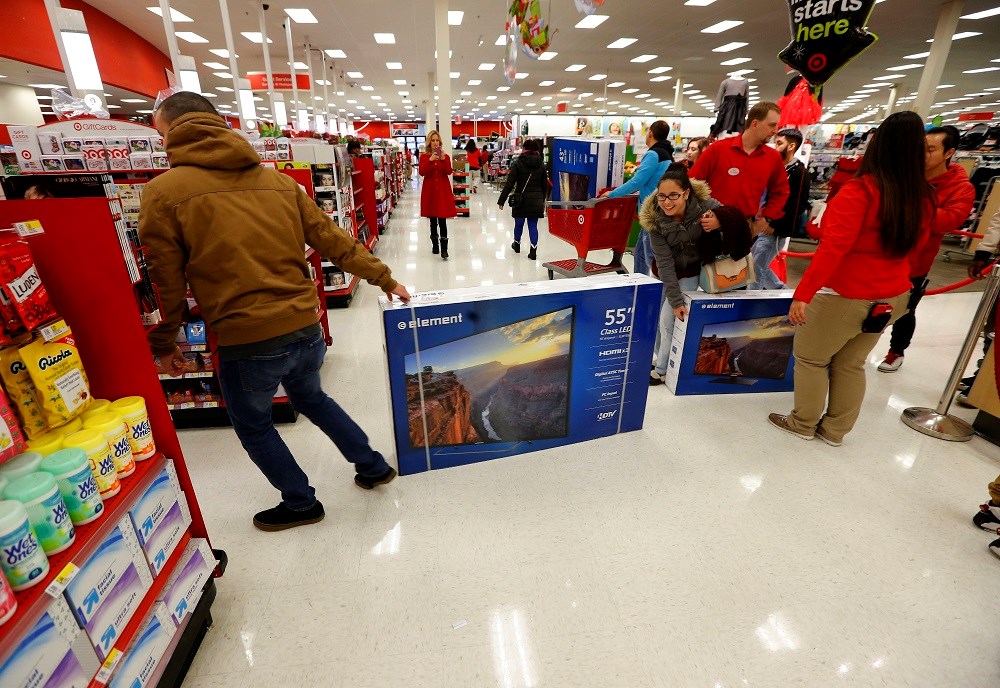
This year, it is projected that the e-commerce for the holiday season will grow to a valuation of over $117 billion. While Cyber Monday once represented the day when deal-hunters could get discounts on their online shopping, but now that so much of the Black Friday Shopping can be done online, many people consider Cyber Monday to be obsolete. It makes more sense to get their deals over the holiday than to find an hour or two in the middle of a busy workday to find the best deals. Retailers are seeing the difference: on Thanksgiving night, which has in itself begun to replace Black Friday, sales were 13.6% higher than last year, a total of nearly $1.2 billion.

Not only are people taking advantage of online deals rather than going into the stores, a surprising number of shoppers are doing so via mobile devices instead of computers. Nearly $550 million of the $1.2 billion total on Thanksgiving night came from mobile purchases. That's a 58.6% increase from last year's mobile sales. While mobile shopping is convenient, some people find it to be too much of a hassle and prefer using a computer, at least to complete their transactions. Not enough online retailers have improved their mobile layout, which has led to a projection that while 53% of e-commerce visits will happen on mobile devices, only 34% of sales will happen on apps.

Many customers find the checkout process to be too time-consuming or confusing on mobile apps for some businesses, and opt to go onto a computer or choose an easy-to-understand platform like Amazon to make their purchases. If online retailers want to stay competitive, they will have to improve their platforms, potentially by integrating easier payment systems like PayPal, Android Pay, or Apple Pay, rather than making customers try to input credit card information on the small screen of their smartphone. Target and Wal-Mart, among other companies, have noticed improvements in their mobile performance over the past few years. After fixing its online platforms and making it easier to checkout, Target even found that mobile sales over the weekend had increased by 200% from last year.

While mobile apps and online platforms are great for the tech-savvy consumer, many customers prefer the emotional connection to Black Friday that they get by physically going to the late-night sales. Some shoppers don't want to do online shopping because they would prefer to see the product up close and examine it before buying. Other people just enjoy the cultural experience of rushing through the store, hunting for deals. Whatever the reason, even if Black Friday becomes a mainly online phenomenon, it is very likely that there will still be in-store experiences available. Black Friday is a tradition for many shoppers, and especially since many people do their bargain-hunting online, crowding is less of an issue, many shoppers expect to be able to keep up the practice for many years to come.

***************************************************************************************************
Find out more about us at www.sepulvedaescrow.net. Any Questions? Contact our Escrow Expert! Sepulveda Escrow Corporation (818) 838-1831. Follow our company on FacebookTwitterLinkedIn, and Google+.
***************************************************************************************************

Friday, November 18, 2016

Study by Adobe Systems: Holiday Deals and Discounts of 2016


With Thanksgiving quickly approaching, many people are already starting to plan for the holiday shopping that comes right around the corner. Late November is often the best time to shop for the holidays if you're looking for great deals on many items. However, this rule often only applies to general items, not specialty items that might sell out quickly. Jonnelle Marte, in her L.A. Times article, describes the results of a study performed by Adobe systems, which tells shoppers which dates are potentially the best for deals on toys, electronics, clothing, and jewelry.

Just a few years ago, Black Friday started early on the morning following Thanksgiving, when many people were off of work and had the time to go wait in hours-long lines to get a deal on the latest products. More recently, though, Black Friday has undergone a shift to start earlier and earlier, to the extent that some stores start their "Black Friday" sales as early as 6 PM on Thanksgiving Day itself. Some items have their best deals on Black Friday, but not as many as might be expected.

Electronics are one category of items that receive the largest markdowns on Thanksgiving Day, according to Adobe's research. From flat-screen televisions to cell phones and computers, Thanksgiving is the day to get those deals. When compared to the average prices on the electronics in October, it was found that televisions are expected to be discounted by an average of 20% and tablet computers will have an average discount of 18%. Those deals won't last forever, of course, given that the stores only have a limited supply of each product, but for the deal-hunters that get to their holiday shopping extra early, they could find themselves snagging quite the discount.

Another type of item that has its greatest discount on Thanksgiving is jewelry. Adobe's study found that on average, jewelry will be discounted approximately 10%. The research also found that many people push off making those purchases until later on, closer to the holidays, often because they are searching for the "perfect" piece of jewelry, regardless of the jewelry's brand. Because they search for a certain style and higher quality of jewelry, they often miss out on the deals, but because they get the best piece they can, many customers don't mind missing out on the 10% savings.

Most other items have their greatest deals on days other than Thanksgiving/ Black Friday. For example, clothing and other apparel often have the greatest discounts on November 22nd, or the Tuesday before Thanksgiving. Retailers often start their discounts on clothing early, because it's not an item in major demand. Most people are more appreciative if they get a new electronic device on the holidays, not clothing, so the stores have to do something extra to get the additional revenue that has become expected during holiday times. In fact, some everyday items, like socks, will sometimes be marked down the most significantly right after the holidays are over.

As for toys, Adobe's research showed that the best day for deals would be Cyber Monday, which is the Monday after Thanksgiving. Cyber Monday is known for its online deals, but it is expected that most toys, especially generic ones, will be discounted an average of 13%. Toys are a more tricky item, especially for parents, because if they wait for the best deal on certain in-demand items, they may end up missing out on the item altogether, if te store's stock runs out. So, in general, Cyber Monday can offer the best deals on toys, as long as you're not focused on getting a particular toy. If you are looking for the latest Hatchimal or Lego set, you might want to pay a little bit extra to guarantee you get it.

Overall, the best deals seem to be those involving electronics that are offered on Thanksgiving Day. Every other deal seems to be a good one, but only to the customer who doesn't care about what specific product they are getting. For electronics, especially televisions, many customers don't care about the specific brand, so any discount on a large, flat-screen television is a good thing. When it comes to pieces of jewelry, people become pickier and look for quality pieces that won't necessarily offer the better deal. The above suggestions will benefit people searching for general products, but if a customer is looking for a very specific product, they might just have to bite the bullet and spend full price on it to help guarantee that they get exactly what they want.

***************************************************************************************************
Find out more about us at www.sepulvedaescrow.net. Any Questions? Contact our Escrow Expert! Sepulveda Escrow Corporation (818) 838-1831. Follow our company on FacebookTwitterLinkedIn, and Google+.
***************************************************************************************************