Showing posts with label Television. Show all posts

Friday, March 30, 2018

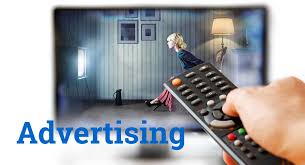
TV Networks Looking to Cut Commercials in Exchange for Higher Viewership


People who watch television today, especially Millennials, have discovered that with improving technology come opportunities to make the viewing experience more enjoyable. It is a generally accepted fact that very few people actually enjoy commercials of any kind. Sure, some SuperBowl commercials stand out, but in general, commercials tend to be repetitive and boring, and simply get in the way of the TV program trying to be watched. According to Stephen Battaglio's L.A. Times article, more and more television customers are finding ways to avoid commercials in their daily viewing.

Streaming services like Netflix give consumers an alternative to normally scheduled broadcast television. They can watch all the TV shows and movies they want (albeit within a limited library of titles) without any commercial breaks for around $10 per month. TV ratings are continuously declining because even though television has the earliest airing time for many sought-after shows, if a viewer is willing to wait an extra day, they can watch the same episode without the annoying commercials and advertisements.

When digital recording devices became popular within the last decade, primetime shows had to change their strategy to engage the viewers who would simply watch later and fast-forward through any commercials. When remote controls were first invented, TV channels stopped having commercials in between different shows because they found that viewers were more likely to change channels during that transition. Especially as younger viewers adapt to new technology, networks will have to adjust accordingly if they don't want to lose an entire demographic for the foreseeable future.

In response to the changing viewership, networks are working on cutting down the amount of ad time to meet the expectations of their viewers. Many viewers want to see fewer ads, and if that doesn't happen, they'll just turn to alternatives like streaming. Some channels have up to 18 minutes of commercials per hour of television. Some have stated that they're looking to cut ad time by up to 50%. Others are working on other strategies, such as airing two long ads, one at the beginning and one at the end of a TV show, without a commercial break in the middle. Their hope is that viewers will be more attentive to ads if there are fewer of them. If those networks can convince advertisers that the reduction in clutter will improve their brand, then they may just be able to bring in the same amount of ad revenue even with less air time commited to commercials.

***************************************************************************************************
Find out more about us at www.sepulvedaescrow.net. Any Questions? Contact our Escrow Expert! Sepulveda Escrow Corporation (818) 838-1831. Follow our company on FacebookTwitterLinkedIn, and Google+.
**************************************************************************************************

Friday, December 15, 2017

Disney's Acquisition of Fox Expected to Drastically Change the Entertainment Industry


Most companies in this day and age are subsidiaries of other companies and there is a relatively small number of parent corporations that own the majority of the other corporations. Disney Inc. is one of those parent companies, and their business decisions over the past couple of decades have made them one of the largest and most powerful corporations in the world. According to an article by the staff of the L.A. Times, Disney's most recent move is to acquire 21st Century Fox, a deal that could completely reshape the entertainment industry.

Most of Disney's sprawling growth has happened since Robert Iger was named CEO in 2005. However, even before Iger, Disney Inc. had begun to acquire competitors and build an entertainment empire. In 1996, Disney made a move that first brought Iger to the company: they purchased Capital Cities/ABC and thereby gained ESPN as well (which was a subsidiary of Capital Cities) for $19 billion. Iger was president of Capital Cities at the time, and the acquisition introduced him to the executive arena of the Disney entertainment powerhouse.

Then, in 2006, after Iger was made CEO, Disney made its second main power move, this time to address a decline in its animation department. After several animated films that flopped in the box office, Disney spent $7.4 billion to acquire Pixar Animation Studios in a stock deal, which allowed them to retain John Lasseter and Ed Catmull, the geniuses behind Pixar hits like "Finding Nemo" and "Toy Story." The acquisition has since paid off many times, as the Disney-Pixar animation team has arguably become the best in the world.

The action film franchises were next on Disney's road to supremacy. In 2009, Disney purchased Marvel Films for $4 billion, and in 2012, they acquired Lucasfilm (and the Star Wars franchise) for another $4 billion. Since then, Disney has made dozens of movies set in the Marvel cinematic universe and has just released another movie set in the Star Wars universe, and will soon be opening a Star Wars Land at Disneyland. Additionally, by owning those two companies, Disney has put itself in a position to rival streaming sites like Hulu or Netflix by limiting the spread of their movies on competing streaming platforms. Then, by acquiring a controlling stake in BamTech (a streaming video company) in 2017, Disney has assured itself a competitive advantage in the online streaming market, both for sports (ESPN) and TV shows/movies.

Disney's latest move to purchase 21st Century Fox could be its most important decision in making sure it remains the most powerful entertainment company in the world. It's possible that government regulators will stop the $52.4 billion deal on anti-trust arguments, but if the purchase goes through, Disney will be able to add several existing shows (The Simpsons, Family Guy, etc) to its video streaming service, will gain a majority stake in streaming competitor Hulu, and will gain control of another studio, as well as Fox's television channels, including FX and National Geographic. Disney will be more powerful than any other company could hope to be, and that is likely to affect Hollywood in unpredictable ways,

***************************************************************************************************
Find out more about us at www.sepulvedaescrow.net. Any Questions? Contact our Escrow Expert! Sepulveda Escrow Corporation (818) 838-1831. Follow our company on FacebookTwitterLinkedIn, and Google+.
**************************************************************************************************

Friday, July 21, 2017

Best Buy's Pivoting has Helped the Company Survive Amazon's Expansion


As more consumers look to online sources for many of their purchases, brick-and-mortar retailers have had to work on quickly adjusting their business model to stay in the game. Many such retail outlets have failed and filed for bankruptcy in recent years, including Radio Shack, once one of Best Buy's biggest competitors. Somehow, Best Buy was able to avoid a similar fate and has in fact made great strides since 2012, when most analysts thought they were doomed to fail. A recent L.A. Times article by James F. Peltz and Jack Flemming describes some of the methods Best Buy's CEO used to get the company back on track.

One of the biggest factors hurting the electronics chain's profits was a practice among shoppers called "showrooming." Consumers like to be able to see the products in person before purchasing them, which is one factor that makes people hesitant about making purchases on Amazon. However, they also want to make sure they're getting the best deal and spending the least amount of money. So, what they would do is go into stores like Best Buy, look at the variety of products, figure out which specific model they wanted to buy, then simply order it on Amazon for a cheaper price. To combat this practice, Best Buy invested more into expanding its market to the online sector instead of just focusing on its stores. Additionally, they have cut their profits on individual items in order to match Amazon's prices. In the short run, they may be losing money on an item-by-item basis, but overall, getting back some of their market share on electronics has been beneficial.

Even though Best Buy has been developing the online sales portion of their business model much more in recent years, the CEO of the company still considers the physical stores to be a huge asset. Although "same-store sales," which is a measure of the number of sales within a lasting store as opposed to new locations, was on a decline for 4 years, revenue at the older stores has been steadily increasing over the past 3 years. Online sales rose 21% this year and now account for 12% of Best Buy's overall sales. According to analysts, Best Buy's overall sales have remained flat because the electronics industry has been growing very slowly. The economy may be improving, but people are not buying as many "big-ticket" items anymore. Slower innovation and the vast range of retailers has led to a decrease in prices and less interest among consumers who might otherwise be interested in personal computers or televisions.

By offering the same prices as Amazon and speeding up their shipping times, Best Buy has been able to reel in some customers who want to get their product immediately, rather than waiting a while for it to be delivered. They also integrated a way for online shoppers to pick up the ordered product at their local store, which cuts down on shipping costs for both parties. Finally, Best Buy has invested heavily in education for their employees. By making sure that their employees are tech-savvy enough to explain products to shoppers, they are more likely to make a sale. Additionally, customers are more likely to shop at the store where the product is explained to them than on Amazon, where all they have is a description and some pictures. Improving customer service and lowering prices have helped, but it's still quite a while until we can determine whether Best Buy and other similar retailers will survive Amazon's spread throughout the industry.

***************************************************************************************************
Find out more about us at www.sepulvedaescrow.net. Any Questions? Contact our Escrow Expert! Sepulveda Escrow Corporation (818) 838-1831. Follow our company on FacebookTwitterLinkedIn, and Google+.
**************************************************************************************************

Tuesday, May 19, 2015

Viewers Dropping Cable for Cheaper Over-the-Air Options


5/10/15 - As many remember quite well, television of the mid-1900s consisted of a few channels for each of the major broadcasting stations: ABC, CBS, and NBC, among some others. Mainly due to the advent of cable and satellite television providers, modern television has hundreds of channels with content ranging from news to information to entertainment. Television has grown exponentially, but the downside of having so many channels is that prices have skyrocketed. Stephen Battaglio, in his L.A. Times article, discusses a recent phenomenon by which many consumers, unable to afford high-priced television packages, have “cut the cord” and gone back to the television choices provided by bunny-ear antennas.

Watchers of recent years have developed their own system by which they are able to watch all of their favorite shows at a fraction of the price for cable. They use “over-the-air” antennas to watch shows on FOX, CBS, ABC, and NBC for free, and use internet streaming programs like HBO Go, Hulu, and Netflix to watch a variety of other content. Since internet is already a necessity in most homes, this method cuts costs significantly.

Already, about 12.3 million homes rely only on over-the-air broadcasting for their television needs. While this is only 11% of total television users, this trend is a warning signal for cable and satellite providers. As television subscriptions go down, internet usage increases dramatically. Battaglio's sources suggest that cable companies recognize this fact and use it to their advantage. Many such companies are beginning to offer broadband internet service to serve as an alternative to customers while more and more households drop television service.

Price seems to be the big issue for most television watchers. Since cable companies are unable or unwilling to offer prices comparable to those of internet providers, the decision is made easy for many consumers. TV-Internet bundles seem to be the way of the future, but this could lead to problems regarding the FCC's ruling about net neutrality. With the new rules, internet providers are forced to give the same internet speeds and connectivity to all users. Unfortunately, this could take away much of the competitiveness between internet providers and reduce their ability to make economically effective partnerships with television providers.

Internet-based television will likely become more common in years to come, as it is the most economically feasible option for most families. What us the point of spending more money to get the same programs? Battaglio predicts that many people will begin to transfer over as they realize that having a cable or satellite connection is not the only way to access their favorite shows.

***************************************************************************************************
Find out more about us at www.sepulvedaescrow.net. Any Questions? Contact our Escrow Expert! Sepulveda Escrow Corporation (818) 838-1831. Follow our company on FacebookTwitterLinkedIn, and Google+.
***************************************************************************************************