Showing posts with label Best Buy. Show all posts

Friday, December 22, 2017

Big Box Retailers Looking to Compete by Combining with Same-Day Delivery Services


Over the past few years, especially during the holiday shopping season, e-commerce businesses have found themselves pulling ahead of their brick-and-mortar competitors. In this modern age, more and more shoppers value the efficiency of online purchasing over the more personalized feeling of a physical store. The economy has become based on instant gratification, and many feel that online retailers can fill that need more easily. Ronald White's L.A. Times article begs to differ: White claims that retailers are aiming to recapture the market by offering same-day delivery.

While people were once satisfied to wait up to 6 weeks for a product to arrive from a mail-order catalog, technological and business advances by companies like Amazon have led consumers to expect fast delivery, often at no extra cost. For a shipping giant like Amazon, same-day delivery isn't such a big deal, because they already built up their infrastructure over the years. For businesses like Target or Wal-Mart, things can get a little tricky. Those companies are used to delivering in bulk but tend to take several days to a week to make a delivery.

The big box chains don't have the time or the capital to build a same-day shipping platform from the ground up. So, they've turned to alternative delivery modules, most notably third-parties like Shipt, Grand Junction, and Deliv. Those services use mobile apps to connect the network of delivery drivers to the big box retailers. While some companies are on a part-time basis with those services, using them for deliveries when necessary, others are looking to make acquisitions for their future success. In fact, Target put in a $550 million acquisition offer to Shipt just last week. If the offer is accepted, Target will have their own network of same-day delivery drivers, giving the chain a competitive advantage against places like Best Buy or Wal-Mart.

These same-day delivery platforms operate under the same principle as services like Uber or Lyft. Drivers sign up to deliver packages during certain hours, deliver those packages, and get paid their set rate. If a driver gets too many negative reviews (damaged package, delayed delivery, etc) then they aren't allowed to deliver anymore. The better a deliverer's ratings, the better the perks. While services like Shipt are only economically feasible in big cities like L.A. or New York, Target s willing to make that big acquisition move because they know that the independent contractors connected through the app are faster and more reliable than mainstream delivery services like USPS or Fed-Ex.

***************************************************************************************************
Find out more about us at www.sepulvedaescrow.net. Any Questions? Contact our Escrow Expert! Sepulveda Escrow Corporation (818) 838-1831. Follow our company on FacebookTwitterLinkedIn, and Google+.
**************************************************************************************************

Friday, July 21, 2017

Best Buy's Pivoting has Helped the Company Survive Amazon's Expansion


As more consumers look to online sources for many of their purchases, brick-and-mortar retailers have had to work on quickly adjusting their business model to stay in the game. Many such retail outlets have failed and filed for bankruptcy in recent years, including Radio Shack, once one of Best Buy's biggest competitors. Somehow, Best Buy was able to avoid a similar fate and has in fact made great strides since 2012, when most analysts thought they were doomed to fail. A recent L.A. Times article by James F. Peltz and Jack Flemming describes some of the methods Best Buy's CEO used to get the company back on track.

One of the biggest factors hurting the electronics chain's profits was a practice among shoppers called "showrooming." Consumers like to be able to see the products in person before purchasing them, which is one factor that makes people hesitant about making purchases on Amazon. However, they also want to make sure they're getting the best deal and spending the least amount of money. So, what they would do is go into stores like Best Buy, look at the variety of products, figure out which specific model they wanted to buy, then simply order it on Amazon for a cheaper price. To combat this practice, Best Buy invested more into expanding its market to the online sector instead of just focusing on its stores. Additionally, they have cut their profits on individual items in order to match Amazon's prices. In the short run, they may be losing money on an item-by-item basis, but overall, getting back some of their market share on electronics has been beneficial.

Even though Best Buy has been developing the online sales portion of their business model much more in recent years, the CEO of the company still considers the physical stores to be a huge asset. Although "same-store sales," which is a measure of the number of sales within a lasting store as opposed to new locations, was on a decline for 4 years, revenue at the older stores has been steadily increasing over the past 3 years. Online sales rose 21% this year and now account for 12% of Best Buy's overall sales. According to analysts, Best Buy's overall sales have remained flat because the electronics industry has been growing very slowly. The economy may be improving, but people are not buying as many "big-ticket" items anymore. Slower innovation and the vast range of retailers has led to a decrease in prices and less interest among consumers who might otherwise be interested in personal computers or televisions.

By offering the same prices as Amazon and speeding up their shipping times, Best Buy has been able to reel in some customers who want to get their product immediately, rather than waiting a while for it to be delivered. They also integrated a way for online shoppers to pick up the ordered product at their local store, which cuts down on shipping costs for both parties. Finally, Best Buy has invested heavily in education for their employees. By making sure that their employees are tech-savvy enough to explain products to shoppers, they are more likely to make a sale. Additionally, customers are more likely to shop at the store where the product is explained to them than on Amazon, where all they have is a description and some pictures. Improving customer service and lowering prices have helped, but it's still quite a while until we can determine whether Best Buy and other similar retailers will survive Amazon's spread throughout the industry.

***************************************************************************************************
Find out more about us at www.sepulvedaescrow.net. Any Questions? Contact our Escrow Expert! Sepulveda Escrow Corporation (818) 838-1831. Follow our company on FacebookTwitterLinkedIn, and Google+.
**************************************************************************************************

Friday, July 14, 2017

Over 50% of U.S. Households Expected to Have Prime Membership by Year's End


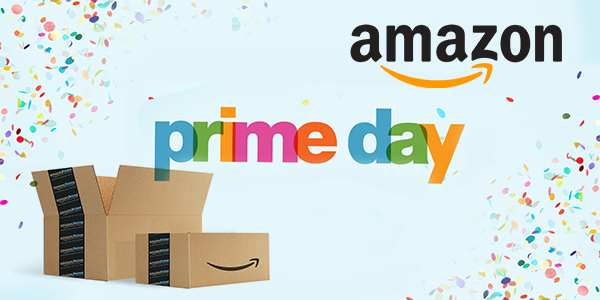
Amazon Prime is a popular service that allows subscribers to pay a yearly fee in order to get expedited shipping on everything they order. Two years ago, on July 15, 2015, which was the anniversary of the company's founding, CEO Jeff Bezos started something new to further incentivize Prime users: Amazon Prime Day. On Prime Day, subscribers get special deals on select Amazon products. According to the L.A. Times article written by Angel Gonzalez and Ethan Varian, this year's Prime Day (on July 10th), attracted over 60% more shoppers than last year.

Prime Day, which has been compared to Cyber Monday or Black Friday, was designed by Amazon founder and CEO Bezos to be a "holiday" of deals. Not only was it intended to reward current Prime members, but it was also meant to attract new users. Although Amazon has only released the numbers of users that made purchases on Prime Day, it's likely that they gained many more Prime users in the weeks or months leading up to Prime Day. Tens of millions of users made purchases on Prime Day, over 50% more than last year, which brought in over $1 billion in revenue for Amazon over a single 30-hour period.

Analysts have calculated that the number of households in the US with a Prime account has increased 7% over the past year, and they predict that over half of the households in America will have Prime membership by the end of the year. Free shipping and various deals led people to buy some of their favorite new gadgets this year. Over the 30 hour period in 13 countries, Amazon's biggest sellers were their Amazon Echo speaker, Amazon Fire tablets, and Instant Pot programmable pressure cooker. Many other items sold well, but users were really after the deals on personal electronics.

Other retailers tried similar promotions to either compete with or ride the hype of Prime Day. Fry's Electronics offered free same-day delivery on select items and Best Buy had a "Big Deals Day." In the years to come, it is likely that many other businesses will follow suit, offering free shipping at the very least. Some day in the near future, Prime Day may become a holiday in its own right, similar in scope to Cyber Monday or Black Friday. As long as the deals keep coming, customers will keep shopping, so we'll just have to wait and see.

***************************************************************************************************
Find out more about us at www.sepulvedaescrow.net. Any Questions? Contact our Escrow Expert! Sepulveda Escrow Corporation (818) 838-1831. Follow our company on FacebookTwitterLinkedIn, and Google+.
**************************************************************************************************