Showing posts with label Amazon. Show all posts

Friday, September 28, 2018

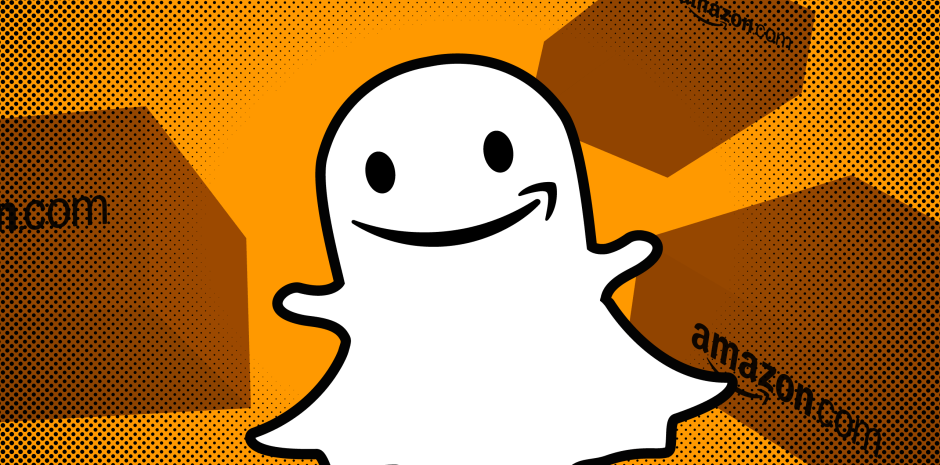
Amazon-Snapchat Partnership Expected to Substantially Impact Snap Inc.'s Future Business Prospects


Image result for snapchat amazon

Online commerce constitutes a huge portion of all merchandise being purchased, and each year, the proportions keep increasing. While some people prefer to go into a store to actually feel an item or try on some clothes before making their purchase, services like Amazon Prime make it easy and convenient for consumers to shop online, then return anything they don't like, free of charge. With a feature that was recently added to Amazon's app, which allows a user to take a picture of an item in the real world in order to search for it on Amazon, the online market will continue to grow exponentially. Interestingly, although Amazon already has this feature on their own app, according to Sam Dean's L.A. Times article, the corporation has recently partnered with Snapchat to give the social media app the same shopping capabilities.

Economic analysts are unsure as to what Amazon's end goal might be. The corporation already has an app capable of leading a user to an item for sale based on a captured image. Why does Amazon want to add the same feature to Snapchat's app? Similarly, what could Snapchat possibly be getting out of the deal that it makes it worthwhile for them to use their platform to help an indirect competitor like Amazon? The explanation for Snap Inc.'s end of the partnership is simple: money. Online platforms that push business in Amazon's direction get between 1% and 10% of the sale price of a purchased item as a commission. So, the more Snap customers purchase on Amazon (which can be improved with this image-recognition feature), the more money Snap Inc. can bring in.

For Amazon's side of this partnership, no definite conclusions have been drawn. Some believe that Snapchat has a user base that is significantly different from Amazon's, to the extent that the benefit of increased sales would far outweigh the cost of adding the feature to Snapchat's app. According to a study, over three-quarters of all internet users between the ages of 18 and 24 use Snapchat, and that demographic tends to be much more likely than the average consumer to make online purchases on a whim. Others believe that this partnership is part of a far larger plan on Amazon's part. History has shown that when Amazon partners with a smaller company, they tend to only play nice until they fully understand the company's business model, at which point they put them out of business.

Alternatively, this tentative partnership could be a plan on both sides to improve the odds of a peaceful transition of ownership in the near future. Snap Inc. recently hired Tim Stone (a long-lasting executive at Amazon) as Snap's Chief Financial Officer. Also, because of Facebook's blatant copying of Snap's intellectual property over the years, if Snap executives were ever to consider liquidating the company, they would likely strongly oppose selling to Facebook, their business enemy. So, it isn't unbelievable to think that Snap might be gearing up to sell to Amazon soon, and this update to Snapchat's features could be their first step in testing such a combination of the companies.

***************************************************************************************************
Find out more about us at www.sepulvedaescrow.net. Any Questions? Contact our Escrow Expert! Sepulveda Escrow Corporation (818) 838-1831. Follow our company on FacebookTwitterLinkedIn, and Google+.
**************************************************************************************************

Friday, July 13, 2018

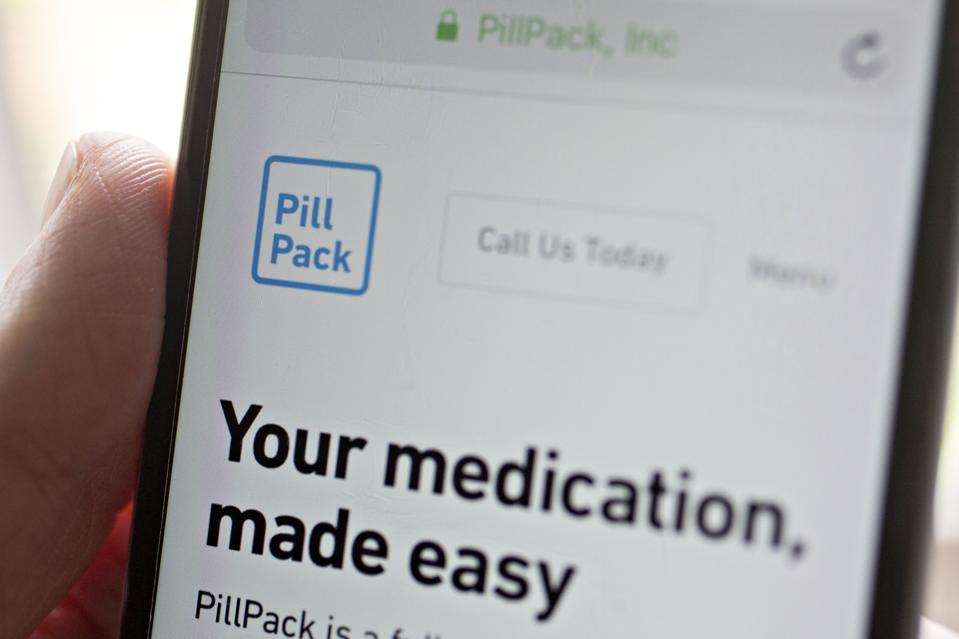
Amazon to Enter Prescription Pharmaceuticals Market with Purchase of PillPack


Image result for amazon pillpack

Amazon Inc. has been growing by leaps and bounds over the past couple of decades since it was first founded. What started as an online bookstore has since become a platform so broad that it can't really be classified as any one type of store. Especially over the past couple of years, Amazon has continued to expand into new areas as it consumes all kinds of different businesses. Whole Foods helped them to get a grip on the groceries industry, and various entertainment sources have allowed Amazon to build a sizable streaming platform. Most recently, according to a recent Bloomberg article, Amazon is looking to expand into prescription pharmaceuticals and has already begun to make a name in the generic drugs industry.

Amazon is such a large company that sells such a large quantity per day that it is able to easily lower item prices just enough to undercut competitors while still making a healthy profit. For every industry into which Amazon expands, there are dozens of brick-and-mortar chains losing business because many consumers choose the convenience of online shopping. Last August, Amazon introduced its line of generic drugs last August, and has since expanded from about 35 to 65 different products, all items that someone could buy at their local drugstore. The upshot is that the drugs Amazon is selling are not a store brand, which means the online retailer can charge much less, making the choice much more enticing to potential customers.

While Amazon already has better prices on over 70% their Basic Care products than the same products at local stores like Walgreens and CVS, those drugs are all non-prescription, which means that many consumers still have to go in to a physical pharmacist to pick up many of their medications. Many of those same customers would get their prescription drugs online if it were possible, where it could be shipped directly to their home without having to wait in long lines or deal with other customers at a brick-and-mortar store.

Well, those customers are in luck, since Amazon just announced that they will be purchasing a company called PillPack, a pharmacy company. Almost immediately after the announcement, the stock prices for companies like CVS dropped, likely correlated with investors' expectation that many consumers will choose Amazon over their local stores for filling prescriptions. Amazon may run into some legal snags when it comes to selling prescription drugs online, but it is very likely that very soon, you too will be able to get your prescriptions delivered right to your door (possibly with free delivery if included on Amazon Prime!).

***************************************************************************************************
Find out more about us at www.sepulvedaescrow.net. Any Questions? Contact our Escrow Expert! Sepulveda Escrow Corporation (818) 838-1831. Follow our company on FacebookTwitterLinkedIn, and Google+.
**************************************************************************************************

Friday, April 27, 2018

Amazon's In-Car Delivery Proposal is a Huge Risk Amid Privacy Concerns


Even in the midst of widespread concern among consumers about their private information and how corporations might be able to use it, Amazon has a brand new delivery feature that they are looking to offer. The feature essentially boils down to this: on specific models of cars (especially those built in 2015 or later), if given permission by the consumer, Amazon deliverers would be able to deliver packages straight into the trunk of a car parked anywhere. David Pierson and Tracey Lien's article in the L.A. Times outlines some of the positive and negative aspects of such a proposed service.

In this modern age, many consumers like features like the one Amazon is proposing because it can make life easier. They don't have to make sure to be home for a delivery, boxes don't get left on a porch, and generally, their deliveries are safer and better protected. Many consumers also like to integrate as much technology into the experience as possible and would value the ability to order something from the road and have it appear in the trunk of their car a day or two later. The move is also good for Amazon because it brings their consumers tighter into the Amazon network, making them more likely to choose to shop with Amazon again in the future.

On the other hand, especially in the aftermath of the Facebook/Cambridge Analytica data scandal, many consumers are wary of giving companies more of their personal private information. It is well-known that Amazon makes money off of selling the data of their customers. They sell advertisement space based on what a customer had searched for on their site in the past. With the integration of in-car delivery, Amazon could also track physical locations, length of time at those locations, and how often the consumer goes to those locations. All of that data is useful to Amazon and its advertising customers, but its also something that most consumers don't want companies to have access to.

Amazon is taking a big risk with this and other somewhat invasive delivery features like in-house delivery. If they're able to become an industry standard before the government gets involved, they could avoid being blocked by regulations. But, if they fail to win over consumers, they could be the reason for even stricter regulations. Amazon, just like other large companies, wants to get as much access to as many lives as possible. The more information they have, the more they are able to adjust their marketing to keep consumers even more involved. It's an endless cycle that locks customers in for life.

***************************************************************************************************
Find out more about us at www.sepulvedaescrow.net. Any Questions? Contact our Escrow Expert! Sepulveda Escrow Corporation (818) 838-1831. Follow our company on FacebookTwitterLinkedIn, and Google+.
**************************************************************************************************

Friday, March 23, 2018

Liquidation Sales Could Offer Great Discounts for Savvy Shoppers


Several retail chains over the past few months have had to start shutting down some of their less-profitable stores and liquidating their merchandise. One of the more notable examples, Toys R Us, was in the news recently about having to close down all of its over 700 locations. Many economists blame the surge in store closures on the success of online retailers like Amazon. When a shopper can get the same product for the same price (or cheaper) without ever having to leave the house, why would they ever shop at a brick-and-mortar store? Compounded with the decreased number of customers is the fact that traditional retailers have inherently higher costs (rent, electricity, more employees, etc).

Well, according to an article by the Associated Press of the L.A. Times, if they play their cards right, a retailer's loss could be the savvy shopper's gain. A shopper has to be careful, though; liquidation sales aren't always a good deal. You have to compare prices and check online deals if you want to make sure you're not being tricked by the "CLOSING" sign in big letters. Liquidators are aiming to make as much money as possible from the merchandise before they completely go out of business. Therefore, it makes sense that the liquidation prices would be at some equilibrium: high enough that the store can make money, but low enough that they can entice shoppers to buy the merchandise.

One of the tricks that retailers use to make the deal seem better is to focus on the percentage discount, rather than the final price of the product. Often, they will raise the prices, then mark a discount on it, so that it seems like it's significantly cheaper than usual when, in fact, the amount of money saved is pretty minor. The way to avoid such tricks is to compare the final discounted price with the price of the product at other stores or online. It's only a good deal if the overall price is low, not necessarily if there's a large percentage discount.

Additionally, shoppers should be aware that there's a happy medium in getting the best deal on the greatest selection of products in a liquidation sale. The sales tend to start at a 20% discount and prices go down over time until all of the merchandise is gone. If a shopper waits long enough, they can save the most money. On the other hand, if they shop earlier, they have a greater selection of products to choose from. There's a sweet spot in the middle where the discounts are relatively high AND the selection is relatively expansive. Shoppers looking to find the best deals (especially on clothes and toys, because those tend to be more discounted than electronics) should try to find that sweet spot.

If you have a gift card for a store that's closing down, use it immediately! Even if you know the chain is being bought out by another retailer, use the gift card, because the store credit may not be honored by the new owners. Once in a while, gift card holders can get a settlement after the retailer's bankruptcy, but that requires filing claims, something that many customers forget to do until after the deadline. Finally, even though liquidation sales can have great deals, shoppers should be careful that the items they're buying are of good quality and not defective. Often, sales during a liquidation are final, and the stores don't allow returns, so be careful when shopping and only make purchases when the merchandise seems to be in good condition.

***************************************************************************************************
Find out more about us at www.sepulvedaescrow.net. Any Questions? Contact our Escrow Expert! Sepulveda Escrow Corporation (818) 838-1831. Follow our company on FacebookTwitterLinkedIn, and Google+.
**************************************************************************************************

Friday, March 2, 2018

Tech Companies Aim to Develop Ecosystems of Interconnected Devices


Many new technological innovations revolve around the category of "smart devices." These inventions, which tend to be for the home, but can also be used in businesses, aim to integrate all of the user's devices, for a seamless connection and a simpler interface. For example, over the past year or so, several of the largest tech companies (Amazon, Apple, Google, etc) have come out with their own devices powered by artificial intelligence (Alexa, Cortana, Siri, etc). More than that, though, says Tracey Lien in her L.A. Times article, those big tech firms are making a concentrated effort to integrate all kinds of other technologies into their digital assistants, in order to better draw in potential new users.

For example, Amazon approached a company called "August," which focuses on remotely-controlled locking systems, a few years ago to see if August would be willing to allow integration of their service into Amazon's Echo device. The CEO of August agreed, figuring that the partnership with Amazon could only be a good thing, and now a user of the Echo can lock or unlock their doors simply by speaking and instructing Alexa (Amazon's artificial intelligence) to do so. Using voice recognition to control other devices in a home is a highly-sought-after capability among consumers, which is why devices like the Echo have become so popular.

From August to security camera-designer Ring and so many others, there are over 30,000 different ways by which Alexa interacts with third-party devices and applications. With many, the combination of third-party accessibility is the selling point. Let's say you're expecting your friend to come by to pick something up, but you're bed-ridden, or you just don't feel like getting up to answer the door. Ring would tell you who is at the door, then you could use that information to decide whether to let August unlock the door so they can just walk in. The combination of devices makes many things that much easier and more efficient, saving users time.

The purpose of companies like Amazon is to make their devices so useful that they can bring in more and more customers. Then, much like Apple has done continuously over the years, they create an ecosystem of their devices, where each device is useful on its own, but they blend so seamlessly that having all of the devices is the ideal choice. Through various online shopping services, such as Amazon Prime or Google Express, there may even come a day in the near future when users can control everything about their home, including the purchase and receipt of deliveries, remotely. Already, Wi-Fi enabled thermostats and smart electronics are poking out into the marketplace. Who knows what's next?

***************************************************************************************************
Find out more about us at www.sepulvedaescrow.net. Any Questions? Contact our Escrow Expert! Sepulveda Escrow Corporation (818) 838-1831. Follow our company on FacebookTwitterLinkedIn, and Google+.
**************************************************************************************************

Friday, January 19, 2018

Amazon Expects Advertising Revenue to Improve Profit Margin


Jeff Bezos, the CEO of Amazon Inc., recently took over the spot of "richest man in the world" from Bill Gates, the creator of Microsoft. To many, Bezos' wealth doesn't make much sense, because, for the past 20 years, Amazon has not brought in a profit. That may seem pretty cut and dry: profit means financial success. However, for Bezos, that's not exactly how it works. For many years, Bezos' financial strategy has been to choose business growth over profit, reinvesting any revenue into expanding Amazon. In that manner, Amazon's stock value has steadily gone up, even without paying any dividends to shareholders. According to an L.A. Times article by Spencer Soper and Mark Bergen, Amazon's latest shift, to focus on sources of advertising revenue, could help to push the company into profit territory.

Over the past few years, Amazon has been losing money in its e-commerce business but has been able to recoup those losses due to its profitable business of providing cloud services. However, the differences between gains and losses are tight: Amazon's average profit is only around 1%. Up until now, Amazon's advertising business has been pretty small, at $1.7 billion in revenue compared with Google's $35 or Facebook's $17.4 billion. Amazon has nowhere to go but up when it comes to advertising. It is likely that the growth will be among companies trying to get priority placement for their products on Amazon's website. That kind of business plan pivot is unlikely to have high costs and has huge potential for billions more in revenue.

Amazon is in a good place for advertisements. Often, on Google or Facebook, an advertisement appears that tries to push a user toward another site, where the user might purchase the product being advertised. The problem with that system is that users get annoyed by incessant advertisements when they aren't looking to buy anything. The difference for Amazon is that its users are already looking to buy something. Advertisements would be both helpful to the shopper, would benefit the advertiser, and would give Amazon more revenue. Everyone wins!

Food companies spend millions each year to put advertisements on television and in magazines to try to generate more interest in their products among potential customers. The same effect can be achieved on Amazon's website for far lower cost, with less work, simply by adding in suggested searches or sponsored search results. Of course, putting actual images and videos as advertisements can also help, but if someone is looking to buy a product, they're going to choose the one that seems to be at the best price. Through Amazon advertisements, companies can make their products more interesting to the average user. Perhaps one day, Amazon's advertisements could replace those on television entirely. Amazon does have its own video streaming capabilities, after all.

***************************************************************************************************
Find out more about us at www.sepulvedaescrow.net. Any Questions? Contact our Escrow Expert! Sepulveda Escrow Corporation (818) 838-1831. Follow our company on FacebookTwitterLinkedIn, and Google+.
**************************************************************************************************

Friday, December 22, 2017

Big Box Retailers Looking to Compete by Combining with Same-Day Delivery Services


Over the past few years, especially during the holiday shopping season, e-commerce businesses have found themselves pulling ahead of their brick-and-mortar competitors. In this modern age, more and more shoppers value the efficiency of online purchasing over the more personalized feeling of a physical store. The economy has become based on instant gratification, and many feel that online retailers can fill that need more easily. Ronald White's L.A. Times article begs to differ: White claims that retailers are aiming to recapture the market by offering same-day delivery.

While people were once satisfied to wait up to 6 weeks for a product to arrive from a mail-order catalog, technological and business advances by companies like Amazon have led consumers to expect fast delivery, often at no extra cost. For a shipping giant like Amazon, same-day delivery isn't such a big deal, because they already built up their infrastructure over the years. For businesses like Target or Wal-Mart, things can get a little tricky. Those companies are used to delivering in bulk but tend to take several days to a week to make a delivery.

The big box chains don't have the time or the capital to build a same-day shipping platform from the ground up. So, they've turned to alternative delivery modules, most notably third-parties like Shipt, Grand Junction, and Deliv. Those services use mobile apps to connect the network of delivery drivers to the big box retailers. While some companies are on a part-time basis with those services, using them for deliveries when necessary, others are looking to make acquisitions for their future success. In fact, Target put in a $550 million acquisition offer to Shipt just last week. If the offer is accepted, Target will have their own network of same-day delivery drivers, giving the chain a competitive advantage against places like Best Buy or Wal-Mart.

These same-day delivery platforms operate under the same principle as services like Uber or Lyft. Drivers sign up to deliver packages during certain hours, deliver those packages, and get paid their set rate. If a driver gets too many negative reviews (damaged package, delayed delivery, etc) then they aren't allowed to deliver anymore. The better a deliverer's ratings, the better the perks. While services like Shipt are only economically feasible in big cities like L.A. or New York, Target s willing to make that big acquisition move because they know that the independent contractors connected through the app are faster and more reliable than mainstream delivery services like USPS or Fed-Ex.

***************************************************************************************************
Find out more about us at www.sepulvedaescrow.net. Any Questions? Contact our Escrow Expert! Sepulveda Escrow Corporation (818) 838-1831. Follow our company on FacebookTwitterLinkedIn, and Google+.
**************************************************************************************************

Thursday, October 26, 2017

"Honey" Browser Extension Automatically Inputs Coupon Codes for Online Shoppers


Many consumers prefer to do their shopping online as opposed to in brick-and-mortar stores. Shopping online, especially when you know exactly what you're looking for, can be cheaper, easier, and more expedient than taking the time to go to Wal-Mart or Target and pick up the latest device. Still, consumers want to get the best deal possible, especially when shopping online. Research shows that consumers are often hesitant to place an order online due to a feeling that they may be paying too much. In his L.A. Times article, David Pierson describes an innovative browser add-on called Honey that automatically finds discount codes for many shopping websites.

The extension is free for download on all Firefox, Safari, and Google Chrome browsers, and requires absolutely no effort on the part of the user. Simply by installing the add-on, the discounts will immediately begin popping up when a user goes to check out on thousands of shopping sites. The extension uses user-inputted data (like Waze) to determine which discount codes work best and which don't work at all, so each consumer using the app helps to make it better for the next user. Honey has over 5 million users, who have saved an average of $32 per month on items that they were going to purchase anyway.

This browser extension seems to be a win-win-win for everyone involved. Consumers get to find discounts that they wouldn't have otherwise been able to use on items that they were planning on purchasing anyway. The shopping sites tend to make more money because shoppers are 55% more likely to finish checking out when Honey has checked for potential discounts. Honey itself makes money because certain merchants pay to have their discounts made more visible, to increase customer traffic. Everyone is making money, without much of a risk to any one party.

About 9,000 of Honey's 21,000 affiliated merchants pays the company a commission for driving customer sales. One of their biggest issues, however, is that they have so far been unable to convince Amazon to get on board. Because Amazon has such a large share of the online shopping market, that could pose problems for Honey in the future. They hope that consumers will choose to use other websites, to keep the Seattle-based company from monopolizing the market and raising prices, but time will tell whether their efforts will be successful. Until then, Honey has an integrated feature for Amazon shoppers to let them know when prices of items in their cart have fluctuated. That feature may be enough to help Honey stay relevant in the Amazon-saturated market.

***************************************************************************************************
Find out more about us at www.sepulvedaescrow.net. Any Questions? Contact our Escrow Expert! Sepulveda Escrow Corporation (818) 838-1831. Follow our company on FacebookTwitterLinkedIn, and Google+.
**************************************************************************************************