Showing posts with label Millennials. Show all posts

Friday, September 28, 2018

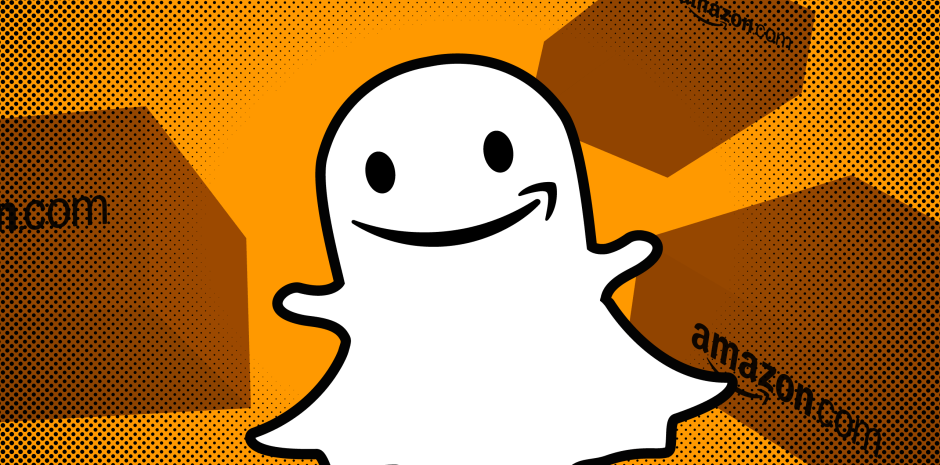
Amazon-Snapchat Partnership Expected to Substantially Impact Snap Inc.'s Future Business Prospects


Image result for snapchat amazon

Online commerce constitutes a huge portion of all merchandise being purchased, and each year, the proportions keep increasing. While some people prefer to go into a store to actually feel an item or try on some clothes before making their purchase, services like Amazon Prime make it easy and convenient for consumers to shop online, then return anything they don't like, free of charge. With a feature that was recently added to Amazon's app, which allows a user to take a picture of an item in the real world in order to search for it on Amazon, the online market will continue to grow exponentially. Interestingly, although Amazon already has this feature on their own app, according to Sam Dean's L.A. Times article, the corporation has recently partnered with Snapchat to give the social media app the same shopping capabilities.

Economic analysts are unsure as to what Amazon's end goal might be. The corporation already has an app capable of leading a user to an item for sale based on a captured image. Why does Amazon want to add the same feature to Snapchat's app? Similarly, what could Snapchat possibly be getting out of the deal that it makes it worthwhile for them to use their platform to help an indirect competitor like Amazon? The explanation for Snap Inc.'s end of the partnership is simple: money. Online platforms that push business in Amazon's direction get between 1% and 10% of the sale price of a purchased item as a commission. So, the more Snap customers purchase on Amazon (which can be improved with this image-recognition feature), the more money Snap Inc. can bring in.

For Amazon's side of this partnership, no definite conclusions have been drawn. Some believe that Snapchat has a user base that is significantly different from Amazon's, to the extent that the benefit of increased sales would far outweigh the cost of adding the feature to Snapchat's app. According to a study, over three-quarters of all internet users between the ages of 18 and 24 use Snapchat, and that demographic tends to be much more likely than the average consumer to make online purchases on a whim. Others believe that this partnership is part of a far larger plan on Amazon's part. History has shown that when Amazon partners with a smaller company, they tend to only play nice until they fully understand the company's business model, at which point they put them out of business.

Alternatively, this tentative partnership could be a plan on both sides to improve the odds of a peaceful transition of ownership in the near future. Snap Inc. recently hired Tim Stone (a long-lasting executive at Amazon) as Snap's Chief Financial Officer. Also, because of Facebook's blatant copying of Snap's intellectual property over the years, if Snap executives were ever to consider liquidating the company, they would likely strongly oppose selling to Facebook, their business enemy. So, it isn't unbelievable to think that Snap might be gearing up to sell to Amazon soon, and this update to Snapchat's features could be their first step in testing such a combination of the companies.

***************************************************************************************************
Find out more about us at www.sepulvedaescrow.net. Any Questions? Contact our Escrow Expert! Sepulveda Escrow Corporation (818) 838-1831. Follow our company on Facebook, Twitter, LinkedIn, and Google+.
**************************************************************************************************


Friday, March 30, 2018

TV Networks Looking to Cut Commercials in Exchange for Higher Viewership


People who watch television today, especially Millennials, have discovered that with improving technology come opportunities to make the viewing experience more enjoyable. It is a generally accepted fact that very few people actually enjoy commercials of any kind. Sure, some SuperBowl commercials stand out, but in general, commercials tend to be repetitive and boring, and simply get in the way of the TV program trying to be watched. According to Stephen Battaglio's L.A. Times article, more and more television customers are finding ways to avoid commercials in their daily viewing.

Streaming services like Netflix give consumers an alternative to normally scheduled broadcast television. They can watch all the TV shows and movies they want (albeit within a limited library of titles) without any commercial breaks for around $10 per month. TV ratings are continuously declining because even though television has the earliest airing time for many sought-after shows, if a viewer is willing to wait an extra day, they can watch the same episode without the annoying commercials and advertisements.

When digital recording devices became popular within the last decade, primetime shows had to change their strategy to engage the viewers who would simply watch later and fast-forward through any commercials. When remote controls were first invented, TV channels stopped having commercials in between different shows because they found that viewers were more likely to change channels during that transition. Especially as younger viewers adapt to new technology, networks will have to adjust accordingly if they don't want to lose an entire demographic for the foreseeable future.

In response to the changing viewership, networks are working on cutting down the amount of ad time to meet the expectations of their viewers. Many viewers want to see fewer ads, and if that doesn't happen, they'll just turn to alternatives like streaming. Some channels have up to 18 minutes of commercials per hour of television. Some have stated that they're looking to cut ad time by up to 50%. Others are working on other strategies, such as airing two long ads, one at the beginning and one at the end of a TV show, without a commercial break in the middle. Their hope is that viewers will be more attentive to ads if there are fewer of them. If those networks can convince advertisers that the reduction in clutter will improve their brand, then they may just be able to bring in the same amount of ad revenue even with less air time commited to commercials.

***************************************************************************************************
Find out more about us at www.sepulvedaescrow.net. Any Questions? Contact our Escrow Expert! Sepulveda Escrow Corporation (818) 838-1831. Follow our company on Facebook, Twitter, LinkedIn, and Google+.
**************************************************************************************************

Friday, February 9, 2018

Amazon-Whole Foods Partnership to Offer Two-Hour Grocery Delivery


Many people strongly prefer to go to a brick-and-mortar grocery store and pick out their foods themselves. Often, they have preferences on the level of ripeness they're looking for. Others worry that anything picked out by someone else may be dented or bruised or otherwise rendered unusable. On the other hand, there are many shoppers, especially of younger, more tech-savvy generation, who would prefer the efficiency and time-saving of ordering groceries online. Well, according to a recent L.A. Times article, the Amazon-Whole Foods partnership may make that a commonplace reality for the latter demographic.

This year, Amazon is planning to add two-hour Whole Foods grocery deliveries as another benefit for Prime customers. While some Prime customers have already experienced similar benefits through Amazon Fresh, this is different in that Prime customers only have to pay $99 per year versus the $299 per year cost of Amazon Fresh. Additionally, the Whole Foods service delivers within two hours, while Amazon Fresh deliveries often have to be scheduled for the next day. However, the Whole Foods Prime option will likely have a much more limited selection than that offered on Amazon Fresh, so there is a trade-off involved.

Many potential shoppers consider Whole Food's groceries to be of high quality and therefore doubt that they will have any problems with the service, even though they aren't picking out and handling the foods themselves. Others, who have their doubts about smashed cookies or bruised fruit would prefer to shop online, then pick up in the store, thereby saving some time while still ensuring better quality. Currently, about 7% of households in the United States purchase groceries online, with most of those opting to have the groceries shipped. This new deal through Amazon Prime may drive those numbers even higher.

Amazon isn't the only company looking into the only grocery-shopping business. WalMart has developed a system whereby shoppers can order groceries ahead of time and just come into the store to pick them up. Kroger, the company that owns some grocery stores, including Ralph's and Smith's, has offered in-store pickup and is testing out delivery options. Target recently bought grocery-delivery company Shipt, and Whole Foods has even been delivering products through a company called Instacart. Amazon Prime's move is just increasing the prevalence, and will likely lead to a greater number of people ordering groceries from home.

***************************************************************************************************
Find out more about us at www.sepulvedaescrow.net. Any Questions? Contact our Escrow Expert! Sepulveda Escrow Corporation (818) 838-1831. Follow our company on Facebook, Twitter, LinkedIn, and Google+.
**************************************************************************************************

Friday, April 15, 2016

Millennials Better at Saving Than Previously Assumed


Millennials are often stereotyped as being bad with money. Many people view those 20-something-year-olds as frivolous spenders, more concerned with the here and now than with the future. However, according to recent research, Millennials don't actually deserve this classification. According to Jonnelle Marte's L.A. Times article, they are saving much more aggressively than in past years, and in some cases are saving more than their middle-aged counterparts.

In the study, "Millennials" were defined as consumers between the ages of 18 and 29, and the results blew away many assumptions previously made about their age group. About 62% of Millennials are saving more than 5% of their income for retirement, emergencies, or other future financial goals. This is a significant improvement from last year when only about 42% of Millennials put the same portion of their pay toward savings. Comparatively, it was found that about 50% of consumers between the ages of 30 and 49 were putting as much into savings.

Analysts believe that Millennials' interest in saving money for a rainy day may come from personal experience or what they saw family members go through. Many, especially those straight out of college, struggled to get a job during the recession. Others, even if unaffected themselves, watched as family members were hit by layoffs and saw how hard it was for parents or even grandparents to recover. Likely because of this, 40% of Millennials are putting their savings aside for an emergency, rather than for retirement or something else that would matter the most in the distant future. They know how hard it can be to survive if they unexpectedly lose their job, and as such, want to be sufficiently prepared.

How are Millennials able to save more money now than in previous years? Some are cutting their spending, realizing that instant gratification isn't worth potential financial struggles in the future. Others are getting better jobs or being promoted to better-paying positions in the recovering company, and therefore are earning more money and are more able to put some of it toward savings. Some went back to school when they found that they couldn't find work during the recession and are putting their degrees to use in getting jobs now.

Not all Millennials are choosing to put their money aside for emergencies. Many are saving in order to be able to afford big purchases in the near future. About 27% are saving for a future home, 26% are saving for a car, and 36% are saving to go on vacation. No matter what they are saving for, researchers agree that Millennials have come to understand the value of saving, often more than their older counterparts. When asked about their major goals, the majority chose "saving", while smaller, but still significant, portions chose "leading a healthy lifestyle" or "paying down debt." Saving money can have a positive impact on anyone's life, so it's a good thing that more individuals have come to realize the value of saving over spending.

***************************************************************************************************
Find out more about us at www.sepulvedaescrow.net. Any Questions? Contact our Escrow Expert! Sepulveda Escrow Corporation (818) 838-1831. Follow our company on Facebook, Twitter, LinkedIn, and Google+.
***************************************************************************************************

Friday, October 16, 2015

Young Adults: Halloween's Growing Demographic


While Halloween was once considered to be mainly for children, statistics show that it has become a major consumer holiday, celebrated by plenty of Millenials and young adults. In fact, it is expected that this year, American will spend approximately $6.9 billion on Halloween and everything it entails. James Peltz, in his L.A. Times article, discusses how spending on such festivities has increased drastically over the years.

It is expected that over 157 million Americans will be participating in the festivities this year. Whether that includes purchasing candy to pass out to trick-or-treaters, or carving a pumpkin and wearing a costume, consumers will be spending a lot of money on their night of fun. The average price per consumer will be around $74, dramatically up from the $48 they spent a decade ago.

Spending, while high on Halloween, is still nowhere near the level during holidays like Christmas, Thanksgiving, Mother's Day, etc. However, for some businesses like costume shops and amusement parks, Halloween provides a significant portion of their yearly revenue. Most of the pumpkins grown in California are used for Halloween, thereby providing a reliable source of income for farmers in the San Joaquin Valley.

Some costume stores like Party City and Spirit Halloween open specific stores only for the six weeks preceding the holiday, thereby getting the most bang for their buck. Even though Party City has year-round stores, Halloween is their biggest season, bringing in about 25% of their annual sales. Even "Knott's Scary Farm" and Six Flags' "Fright Fest" have been known to encompass 15% of the total number of visitors to each amusement park in a given year. American consumers spend over $2 billion in candy alone per year. Generally, Halloween has become very profitable for an array of different kinds of businesses.

Even while consumers reuse decorations and costumes purchased in past years, they can't avoid spending on perishable items like food, candy, and fresh pumpkins, Research has even found that as involvement in social media has grown, so too have holiday-related costs. People share costume ideas via Facebook, Pinterest, and Twitter, alerting friends to sales at certain stores. Even more so, young adults, especially Millennials, tend to participate as a group, purchasing matching costumes and attending themed parties, all of which can be shared around the world by social media.

Peltz sees that nationwide spending on the festivities has doubled in the past 10 years. He believes that it is quite likely due to the technological era in which we live. As new devices and new movies/television shows enter our world, we have so much more to use in the celebration. Sure, kids are still participating in the holiday, but Peltz shows that Millennials make up the largest proportion of participants, and he believes that this trend will continue to hold true for many years to come.

***************************************************************************************************
Find out more about us at www.sepulvedaescrow.net. Any Questions? Contact our Escrow Expert! Sepulveda Escrow Corporation (818) 838-1831. Follow our company on Facebook, Twitter, LinkedIn, and Google+.
***************************************************************************************************

Friday, May 29, 2015

Potential Issues Caused by Inflation Indexing


5/29/15 - The national minimum wage was first created by Congress in 1938, under the Fair Labor Standards Act (FLSA). It was developed to protect workers and ensure that they receive some standard level of pay for their hourly labor. The FLSA banned child labor, set a maximum workweek of 44 hours, and made the minimum rate of pay 25 cents per hour. As inflation has made prices for everything else increase, the minimum wage has increased as well, to its current $7.25 per hour. Many states, however, have their own minimum wages, with some as high as $9 or $10 per hour. In a very controversial decision among business owners and economists, the Los Angeles City Council recently started drafting a plan that would raise the minimum wage annually, raising it to $15 by 2020 and even higher in years to come. Tiffany Hsu and Andrew Khouri, in their LA Times article, address the debate over the wage increase, describing the points made on both sides of the argument.

Raising the minimum wage has always been a difficult undertaking. Through this plan, the minimum wage would go up automatically in response to inflation, which would benefit workers. Unfortunately, inflation also makes rent increase, which will make it more difficult for entrepreneurs, especially owners of small businesses, to be able to afford the higher wages. This would force them to either raise prices or lay off workers. However, prices can only go so high before consumers go elsewhere to make their purchases. This will affect the small businesses most drastically since larger businesses have more flexibility to lower prices without losing as much profit. This competition could potentially lead to a clearing of the market, forcing small businesses out.

This procedure, called inflation indexing, seems to be working well for the twenty-or-so localities with their own wage policies, according to UC Berkeley's Institute for Research on Labor and Employment. Inflation indexing allows the wage to respond directly to increases in the cost of living, without the need for intervention by policy-makers. In an ideal sense, indexing would increase the wage in a gradual manner, rather than shocking the system with large spikes. Int his way, businesses could adjust more easily to changing costs and respond accordingly. Still, consumers and business owners are wary.

Richard LoGuercio, the owner of Town & Country Event Rentals, would only have to raise wages for about 100 of his 430 workers under this policy. However, he fears that he will have to raise wages across the board to keep everyone happy. If minimum-wage laborers are receiving $15 or more per hour, everyone else will want to be paid more for their contributions to the business. As wages increase for the lowest-paid level in a company, wages in the higher levels will likely increase proportionally, which would force price increases and contribute to inflation. Thus, raising the minimum wage continuously in response to inflation could turn into an endless cycle of wage increases.

All in all, the major effects of the minimum wage increase will come down to the actions of consumers. Businesses could lay off workers in response to their increasing costs, but in the end, they will have to raise their prices. Consumers are only willing to spend so much before they decide that a product just isn't worth it. So, as long as consumers are willing to spend a few extra dollars per product, the effects of the wage increases may not be so bad.

***************************************************************************************************
Find out more about us at www.sepulvedaescrow.net. Any Questions? Contact our Escrow Expert! Sepulveda Escrow Corporation (818) 838-1831. Follow our company on Facebook, Twitter, LinkedIn, and Google+.
***************************************************************************************************

Tuesday, May 19, 2015

Viewers Dropping Cable for Cheaper Over-the-Air Options


5/10/15 - As many remember quite well, television of the mid-1900s consisted of a few channels for each of the major broadcasting stations: ABC, CBS, and NBC, among some others. Mainly due to the advent of cable and satellite television providers, modern television has hundreds of channels with content ranging from news to information to entertainment. Television has grown exponentially, but the downside of having so many channels is that prices have skyrocketed. Stephen Battaglio, in his L.A. Times article, discusses a recent phenomenon by which many consumers, unable to afford high-priced television packages, have “cut the cord” and gone back to the television choices provided by bunny-ear antennas.

Watchers of recent years have developed their own system by which they are able to watch all of their favorite shows at a fraction of the price for cable. They use “over-the-air” antennas to watch shows on FOX, CBS, ABC, and NBC for free, and use internet streaming programs like HBO Go, Hulu, and Netflix to watch a variety of other content. Since internet is already a necessity in most homes, this method cuts costs significantly.

Already, about 12.3 million homes rely only on over-the-air broadcasting for their television needs. While this is only 11% of total television users, this trend is a warning signal for cable and satellite providers. As television subscriptions go down, internet usage increases dramatically. Battaglio's sources suggest that cable companies recognize this fact and use it to their advantage. Many such companies are beginning to offer broadband internet service to serve as an alternative to customers while more and more households drop television service.

Price seems to be the big issue for most television watchers. Since cable companies are unable or unwilling to offer prices comparable to those of internet providers, the decision is made easy for many consumers. TV-Internet bundles seem to be the way of the future, but this could lead to problems regarding the FCC's ruling about net neutrality. With the new rules, internet providers are forced to give the same internet speeds and connectivity to all users. Unfortunately, this could take away much of the competitiveness between internet providers and reduce their ability to make economically effective partnerships with television providers.

Internet-based television will likely become more common in years to come, as it is the most economically feasible option for most families. What us the point of spending more money to get the same programs? Battaglio predicts that many people will begin to transfer over as they realize that having a cable or satellite connection is not the only way to access their favorite shows.

***************************************************************************************************
Find out more about us at www.sepulvedaescrow.net. Any Questions? Contact our Escrow Expert! Sepulveda Escrow Corporation (818) 838-1831. Follow our company on Facebook, Twitter, LinkedIn, and Google+.
***************************************************************************************************