Showing posts with label Business. Show all posts

Friday, July 27, 2018

Federal Law Prohibits Banks, Escrow, and Title Companies from Participating in the Sale of Marijuana-Related Businesses


The sale and consumption of marijuana, both medicinally and recreationally, is a pretty controversial topic throughout the United States. Some view marijuana as a dangerous substance that should be banned, comparable to hard narcotics like cocaine or methamphetamine. Many others view marijuana as a substance that should have limitations (similar to the sale of alcohol and tobacco), but not be completely illegal. Then, there's the even deeper issue of medicinal versus recreational usage. Some believe that marijuana should only be used when absolutely necessary (i.e. as a diagnosed treatment for a legitimate medical condition like glaucoma or nausea caused by chemotherapy), and some believe that cannabis isn't dangerous enough to be limited much, if at all.

The main difference between cannabis and substances like tobacco and alcohol is a lack of information. While there has been plenty of research done on the health effects of tobacco (cancer, asthma, etc.) and alcohol (impaired motor skills, liver disease, etc.) and even the effects on a fetus, there really isn't enough evidence to make a conclusive ruling on marijuana. However, for a while, it didn't matter whether marijuana was healthy or not. It didn't matter if it could impair motor skills or give a smoker asthma, because the sale and/or consumption of marijuana was illegal in the U.S., both on a federal and state level.

Over a decade ago, several states (California being one of the first) began to legalize medical marijuana, which could only be purchased from a licensed dispensary with a prescription from a doctor. Then, much more recently, states began legalizing recreational marijuana usage. However, that doesn't mean much from a business standpoint, because although marijuana is now legal in California, it's still illegal according to federal law. That may change within the next several years, but as of this moment, the law is the law, and that's all there is to it.

Because marijuana is still illegal federally, many businesses that must comply with state law (such as escrow/title companies), are not permitted to participate in any transactions regarding businesses that handle the sale of marijuana. In fact, in April of 2017, several national title companies received a memorandum from the Office of the Chief Underwriting Counsel that if the title company gets any indication from a buyer, seller, or broker that the Land will be used for growing, processing, distributing, or dispensing any types of marijuana-based products, they aren't allowed to be involved in the handling of any escrow or other funds of any type, issue any type of zoning coverage, or issue title insurance (except with the inclusion of an exception related to violation of federal law). This policy even applies to an entrepreneur looking to buy property that they will then rent out to tenants who may be involved in the marijuana industry,

Federal laws are taken very seriously by businesses involved in escrow and the transfer of funds, including banks. Banks are federally chartered, insured by the FDI, and use the Federal Reserve wire system. If those banks start breaking federal laws (even laws that don't exist at the state level), the bank can lose its charter and FDIC insurance, and eventually get shut down altogether. Just like banks, escrow companies lose their legal ability to operate if they break federal laws, especially in the financial realm, and for most of those businesses, it simply isn't worth the risk of getting involved in any transaction that might violate federal law.

For that reason, escrow companies (just like title companies and banks) don't take part in transactions involving property (or businesses) that are connected to the marijuana industry. It can be next to impossible for an entrepreneur to start that kind of business with a loan from a bank, because banks won't provide the loans and title companies won't close the sale (a closing is usually required by a lender). However, in some situations (where the sale is an all-cash offer, with no financing), there are law firms with real estate experience that can close real estate transactions. As of now, federal law makes it nearly impossible to do business in the cannabis industry if you need bank financing or plan to go through an escrow company. The laws may change in the future, but for now, it is what it is.

***************************************************************************************************
Find out more about us at www.sepulvedaescrow.net. Any Questions? Contact our Escrow Expert! Sepulveda Escrow Corporation (818) 838-1831. Follow our company on FacebookTwitterLinkedIn, and Google+.
**************************************************************************************************

Friday, July 14, 2017

Over 50% of U.S. Households Expected to Have Prime Membership by Year's End


Amazon Prime is a popular service that allows subscribers to pay a yearly fee in order to get expedited shipping on everything they order. Two years ago, on July 15, 2015, which was the anniversary of the company's founding, CEO Jeff Bezos started something new to further incentivize Prime users: Amazon Prime Day. On Prime Day, subscribers get special deals on select Amazon products. According to the L.A. Times article written by Angel Gonzalez and Ethan Varian, this year's Prime Day (on July 10th), attracted over 60% more shoppers than last year.

Prime Day, which has been compared to Cyber Monday or Black Friday, was designed by Amazon founder and CEO Bezos to be a "holiday" of deals. Not only was it intended to reward current Prime members, but it was also meant to attract new users. Although Amazon has only released the numbers of users that made purchases on Prime Day, it's likely that they gained many more Prime users in the weeks or months leading up to Prime Day. Tens of millions of users made purchases on Prime Day, over 50% more than last year, which brought in over $1 billion in revenue for Amazon over a single 30-hour period.

Analysts have calculated that the number of households in the US with a Prime account has increased 7% over the past year, and they predict that over half of the households in America will have Prime membership by the end of the year. Free shipping and various deals led people to buy some of their favorite new gadgets this year. Over the 30 hour period in 13 countries, Amazon's biggest sellers were their Amazon Echo speaker, Amazon Fire tablets, and Instant Pot programmable pressure cooker. Many other items sold well, but users were really after the deals on personal electronics.

Other retailers tried similar promotions to either compete with or ride the hype of Prime Day. Fry's Electronics offered free same-day delivery on select items and Best Buy had a "Big Deals Day." In the years to come, it is likely that many other businesses will follow suit, offering free shipping at the very least. Some day in the near future, Prime Day may become a holiday in its own right, similar in scope to Cyber Monday or Black Friday. As long as the deals keep coming, customers will keep shopping, so we'll just have to wait and see.

***************************************************************************************************
Find out more about us at www.sepulvedaescrow.net. Any Questions? Contact our Escrow Expert! Sepulveda Escrow Corporation (818) 838-1831. Follow our company on FacebookTwitterLinkedIn, and Google+.
**************************************************************************************************

Friday, February 17, 2017

California's Wine Exports Reach Record-Breaking Levels


Of the various foods that California produces for export, many have faced hard times over the past couple of years, mainly due to the scarcity of water throughout the state. Almonds, California's largest export, grow on trees that require gallons of water to grow properly. Those almond trees have suffered over the past couple of years, and, even though rainfall has increased, the trees may not recover, at least not any time soon. Fortunately, even though the almond market has hit rough times, other exports from California have reached record levels. In his L.A. Times article, Geoffrey Moan discusses increased exports of American wines in 2016, led by California's brands.

Even with the increased strength of the dollar, a limited water supply, and high tariffs, which all had limiting effects on the wine exports, foreign trade revenue still increased from $1.49 to $1.62 billion in 2016. Of all of the wine exported from the United States, around 90% came from California. Not only did the volume of wine increase, so too did the prices of those wines. Golden State labels have gained higher prestige in foreign markets, and vintners take advantage of that "premiumization" to mark up the wines. It seems to be a good business strategy that hasn't negatively impacted demand while still increasing revenue.

The single country that imported the largest amount of U.S. wine was Canada, accounting for $431 million in table wines. Behind them came Germany and Britain who, along with the rest of the countries in the European Union, imported a total of $685 million in American wines. Behind them came Mexico, Switzerland, and several Asian countries, who collectively accounted for the remaining portions of U.S. wine export revenue. Wine exporters have faced some difficulties with laws in British Columbia and other areas that prevent retailers from carrying foreign wine brands, but exports have still increased despite such restrictions.

Exporters throughout the U.S. expect that the demand will continue increasing, so limits on foreign retailers could pose future issues. While some exporters are working with foreign governments to try to gain equal access to their markets, other exporters make "trade tours" through the countries that import the most product, to renew their relationships and remind importers of their company's commitment to the wine market. While American wines have plenty of domestic demand, which is why the wine industry depends much less on exports than other industries, vintners are focusing on foreign markets mainly because they represent the best opportunity for fast growth. Their work right now will help to define their growth in the industry in years to come.

***************************************************************************************************
Find out more about us at www.sepulvedaescrow.net. Any Questions? Contact our Escrow Expert! Sepulveda Escrow Corporation (818) 838-1831. Follow our company on FacebookTwitterLinkedIn, and Google+.
***************************************************************************************************

Friday, January 20, 2017

Internet Connectivity is Becoming a Staple on Many Domestic Flights


Internet access is considered a "must-have" by many Americans, especially when on te move. In an increasingly spread-out and mobile world, consumers want constant access to the Internet to keep in touch with family and friends, or just as often, to get their work done. Long bus, train, or airplane trips can either be several hours of stress for a businessperson, or the perfect time for them to get through some of their work. Because of that, Wi-Fi aboard all forms of transportation has become more commonly provided throughout the country. In his L.A. Times article, Hugo Martin discusses Wi-Fi aboard airlines and their increased prevalence in recent years.

When Wi-Fi on airlines was introduced just a few years ago, it seemed like an overpriced gimmick that no one was really using. Eventually, though, as smartphones became more popular, airline passengers had a way to surf the Internet without lugging around a bulky laptop in their bag. So quickly that no one could tell when exactly the trend shifted, in-flight Wi-Fi became a highly-demanded amenity. From businesspeople keeping up with work emails to the average Joe checking their social media accounts, the technology had to quickly catch up to provide high enough speeds for users to feel like the high prices they were being charged were justified.

In-flight Wi-Fi has become so prevalent that a recent study showed that a passenger has an 83% chance of having access to the Internet on a domestic flight, which is up from 74% in 2015. Unfortunately, that same research found that the chance of having internet access on an international flight is only 28%. The three airlines with the most internet connectivity are Emirates, United, and Lufthansa, especially on long-distance flights where the demand would be higher.

While many American companies are trying to keep up with the trend, some are providing Wi-Fi that is good enough to check emails, but not good enough to stream a movie or TV show. Still, there a significant number of companies, including JetBlue and Southwest Airlines that are aiming to outfit all of their planes with high-speed internet connectivity by the end of the year. JetBlue's will be free, while Southwest's is expected to cost about $8 per day, per device. Overall, for most users, a high-speed internet connection while traveling is well worth similar fees. Eventually, it seems, in-flight internet will likely become an included amenity, available on all airlines. Only time will tell how long it will be until that becomes the status quo.

***************************************************************************************************
Find out more about us at www.sepulvedaescrow.net. Any Questions? Contact our Escrow Expert! Sepulveda Escrow Corporation (818) 838-1831. Follow our company on FacebookTwitterLinkedIn, and Google+.
***************************************************************************************************
Friday, January 13, 2017

Snapchat's Planned Updates Expect to Expand User Base


In late 2011, a group of Stanford students came together to develop a new kind of social media platform, which they called Snapchat. Snapchat was unique in that it aimed to allow virtual communication with the same level of emotional range that one might expect from an in-person conversation. To accomplish that goal, Snapchat was designed to be impermanent in that all messages, pictures, and videos sent through the app would be deleted after the recipient had viewed them. The new concept took the social media world by storm and brought in many users, especially among the teenage to early twenties demographic.

Eventually, however, the buzz died down and many users became bored of the concept, turning to standard social media platforms like Facebook and Twitter for their day-to-day use. Snapchat kept updating their software, adding features to make it more interesting to use, but some people didn't see a purpose in sharing 10-second blurbs of their life. It wasn't until late 2015 that the company made a big change that brought in so many more users: filters. Their filters gave users the ability to change their appearance, voice, or background, thereby making photos and videos more of a fun experience to share with friends. Since then, Snapchat has been continuously adding to their supply of filters, getting more and more detailed by the day. Most recently, as Paresh Dave described in his L.A. Times article, Snapchat is making another big change, a search bar that will make the platform that much more similar to competitors like Facebook.

Besides the fact that the new update seems to stray from the company's original plan to be different from other social media platforms, the search bar seems to be a great addition. Not only will users be able to look up friends by name, they will also be able to efficiently find celebrities and companies that they want to follow. Additionally, all users will have the ability to send their Snaps to the company for the chance to be featured publicly, a feature that was once limited to specific locations and events. Perhaps the coolest part of the new update involves the use of artificial intelligence to identify objects or people in public videos. In that way, a user could choose to view any Snap containing a specific product or featuring the image of a politician or some other famous person.

Because Snapchat is now allowing public submissions from anyone around the world, they are making their users happy and are granting themselves access to far more content. If users are willing to send in their own funny or thought-provoking images and videos, then Snapchat doesn't have to invest money into coming up with their own. Their AI will sort the Snaps based on event or location, which could be helpful for real-time coverage by real people in the event of a natural disaster or local emergency. All of these changes to the app seem to be timely and will hopefully be quite effective in both helping the company grow and allowing users to connect easily.

***************************************************************************************************
Find out more about us at www.sepulvedaescrow.net. Any Questions? Contact our Escrow Expert! Sepulveda Escrow Corporation (818) 838-1831. Follow our company on FacebookTwitterLinkedIn, and Google+.
***************************************************************************************************

Friday, January 6, 2017

Universal Studios Hollywood Beginning to See Record-Breaking Attendance in 2017


Since its creation, Disney Parks and Resorts has held the lead based on annual attendance among amusement park corporations, both in California as well as the world. While Universal Studios has come in second place in California and third in the world (behind Merlin Entertainment Group, a UK-based company), it was never a close competition. Disney's parks have regularly seen triple the number of visitors as Universal's, but this year, the gap may be closing. As discussed in Hugo Martin's L.A. Times article, attendance at Universal Studios Hollywood has been growing rapidly, so much so that the park reached its maximum capacity and had to close its gates to incoming guests this week.

It will take much more than a single good week (especially one during winter break, when many people have time off of school and work) for Universal to see greater attendance than Disney. In fact, it is unlikely that Universal will take the lead any time in the near future, mainly due to size and capacity limitations, but the increased demand has shown that Universal's recent investments into new attractions are starting to pay off. after the huge success of "The Wizarding World of Harry Potter" at their Orlando park, Universal finished construction on the smaller Los Angeles version last year, which led to a massive surge in the park's popularity.

Harry Potter World has brought in many more visitors as well as thousands of dollars in spending on souvenirs and food. However, that new portion of the park is not the only thing that has increased the park's popularity. Since 2014, Universal has invested over $1.4 billion in revamping and improving their Hollywood-based theme park. Their new Fast and Furious ride has caused improvement among some demographics, and their Minions/ Despicable Me attractions gathered interest on the other end of the spectrum. One of the biggest attractions to the park, besides The Wizarding World of Harry Potter, has been a haunted maze themed after AMC's popular show, "The Walking Dead." Universal has been making changes throughout the park, targeting all of their demographics, which seems to be a good strategy to help them get an edge on the competition.

New Year's Day at Universal Studios Hollywood saw record-breaking numbers, but those records were broken again and again throughout the week. In 2015, the park had seen an average of 20,000 visitors per day, but the number has been rising in leaps and bounds over the past year. This week, when demand was higher than ever before, wait times ranged anywhere between 30 minutes and 2 hours for their most popular attractions. While those numbers are nowhere near as high as those at Disney's parks, Universal may need to look at addressing the issue if they don't want to upset too many potential customers. However, studies have shown that people prefer waiting in long lines rather than not being allowed in the park at all, so closing the gates (except for reasons of legal capacity) may not be the best solution either.

***************************************************************************************************
Find out more about us at www.sepulvedaescrow.net. Any Questions? Contact our Escrow Expert! Sepulveda Escrow Corporation (818) 838-1831. Follow our company on FacebookTwitterLinkedIn, and Google+.
***************************************************************************************************

Friday, December 30, 2016

Manufacturers Face Difficulty Predicting Popularity of New Toys


Over the years, there have been a variety of "must-have" toys that hit the shelves in the month or two leading up to Christmas. From Chatty Cathy in 1960 to Tickle Me Elmo in 1996 and everything in between, there have been so many toys that had booms in popularity around the holidays. Of course, because of the surges in popularity, those toys would often sell out quickly, and parents who wanted to find the toy for their child would have to pay much higher prices to scalpers. Some might ask themselves why the toy company didn't just manufacture more of them to begin with, but as Shan Li discusses in her L.A. Times article, the answer is not so simple.

First of all, toy manufacturers have no way of knowing which toys will be the most popular. Since only a couple of toys each year receive huge popularity, if they produced enough of every toy in their catalog to meet the demand that a must-have toy faces, then they would not make any money and would end up with warehouses full of less popular toys that won't sell. Still, some manufacturers take a chance and make an educated guess as to which toys will be most popular. Sometimes that pays off in boosted profits, and other times the company has massive losses.

There's no way to predict with 100% certainty what choices the average shopper will make during the holiday season. Many people believed that the popular item this season would be the Nintendo Wii U, a modern gaming system, when in reality, Nintendo's retro NES Classic Edition is the game console garnering the most demand. It seems that the best thing a company can do is keep their eyes open, and when they see that demand is spiking for a certain toy, try to ramp up production quickly enough to meet the demand. Some companies even keep extra factories "on retainer" during the holiday season to help make the ramping up process more efficient. Ramping up doesn't work out for every toy, however.

For any toy, it can be difficult to suddenly increase production enough to meet the spike in demand. It is most difficult when the toy involves any sort of electronic components, Manufacturing a gaming system is much more complex and time-consuming than manufacturing a stuffed animal, so if that "must-have" item of the year is an electronic device, it is more likely to stay at limited quantities, even if the manufacturers try to increase production. A few years ago, the popular toy around the holidays was the "Pillow Pet." However, because it didn't have any electronic components, the manufacturers were able to increase production to meet demand without having to raise prices. Even though the stores caught on early enough to try to ramp up production, the electronic components of this year's "Hatchimal" make it difficult to quickly produce.

While all of that is true, sometimes the decreased stock for certain products is done on purpose by stores and manufacturers alike. When shoppers are searching everywhere for the toy, other shoppers see that and get interested in the toy because of how interested the shoppers seem. High demand for a limited commodity begets even more demand by people wondering why others seem to want it so much. So, sometimes they will keep a supply of the product in storage, to limit the amount on the market and drive up demand and prices. Many companies even release the extra supply just before the holidays to capitalize on last-minute shoppers still looking for the right toy who are willing to pay anything they need to in order to get it.

They never know when interest will spike, so companies will often keep producing certain toys even after the popularity has waned. Like with the Bakugan, sometimes a toy will see a sudden surge in popularity for no apparent reason. Sometimes people will see it in stores and be interested; other times the toy will have appeared on a television show and people get nostalgic. There is no one factor that determines a product's popularity, even after it has already been popular, so in much the same way, shoppers can't expect manufacturers to know ahead of time which toys they should produce the most of. In general, it's a flip of the coin, and only the luckiest manufacturers succeed in the end.

***************************************************************************************************
Find out more about us at www.sepulvedaescrow.net. Any Questions? Contact our Escrow Expert! Sepulveda Escrow Corporation (818) 838-1831. Follow our company on FacebookTwitterLinkedIn, and Google+.
***************************************************************************************************

Friday, November 18, 2016

Study by Adobe Systems: Holiday Deals and Discounts of 2016


With Thanksgiving quickly approaching, many people are already starting to plan for the holiday shopping that comes right around the corner. Late November is often the best time to shop for the holidays if you're looking for great deals on many items. However, this rule often only applies to general items, not specialty items that might sell out quickly. Jonnelle Marte, in her L.A. Times article, describes the results of a study performed by Adobe systems, which tells shoppers which dates are potentially the best for deals on toys, electronics, clothing, and jewelry.

Just a few years ago, Black Friday started early on the morning following Thanksgiving, when many people were off of work and had the time to go wait in hours-long lines to get a deal on the latest products. More recently, though, Black Friday has undergone a shift to start earlier and earlier, to the extent that some stores start their "Black Friday" sales as early as 6 PM on Thanksgiving Day itself. Some items have their best deals on Black Friday, but not as many as might be expected.

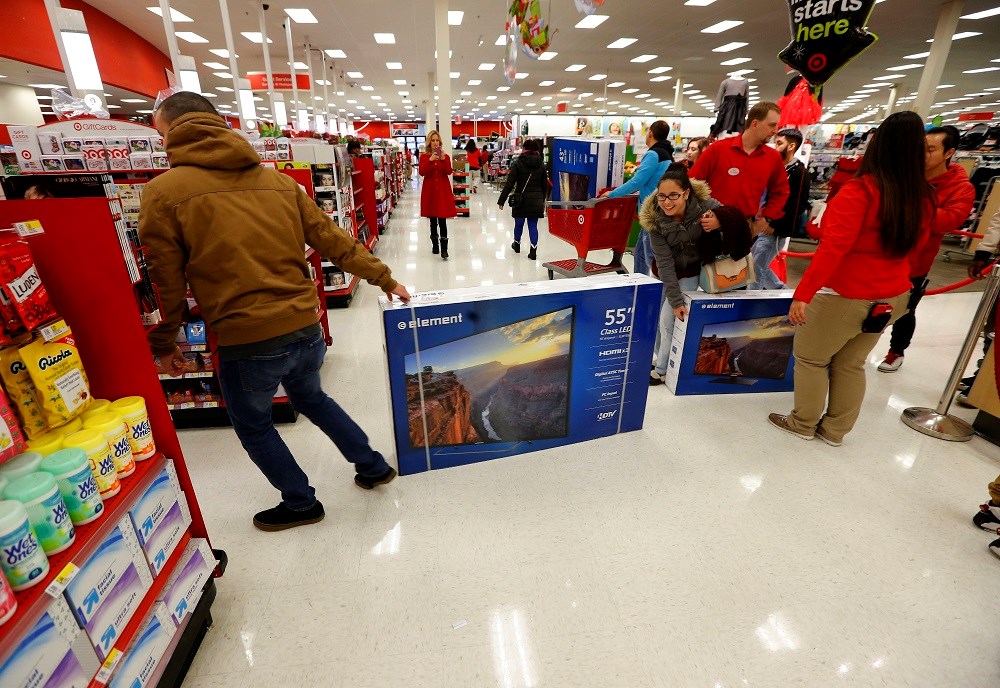
Electronics are one category of items that receive the largest markdowns on Thanksgiving Day, according to Adobe's research. From flat-screen televisions to cell phones and computers, Thanksgiving is the day to get those deals. When compared to the average prices on the electronics in October, it was found that televisions are expected to be discounted by an average of 20% and tablet computers will have an average discount of 18%. Those deals won't last forever, of course, given that the stores only have a limited supply of each product, but for the deal-hunters that get to their holiday shopping extra early, they could find themselves snagging quite the discount.

Another type of item that has its greatest discount on Thanksgiving is jewelry. Adobe's study found that on average, jewelry will be discounted approximately 10%. The research also found that many people push off making those purchases until later on, closer to the holidays, often because they are searching for the "perfect" piece of jewelry, regardless of the jewelry's brand. Because they search for a certain style and higher quality of jewelry, they often miss out on the deals, but because they get the best piece they can, many customers don't mind missing out on the 10% savings.

Most other items have their greatest deals on days other than Thanksgiving/ Black Friday. For example, clothing and other apparel often have the greatest discounts on November 22nd, or the Tuesday before Thanksgiving. Retailers often start their discounts on clothing early, because it's not an item in major demand. Most people are more appreciative if they get a new electronic device on the holidays, not clothing, so the stores have to do something extra to get the additional revenue that has become expected during holiday times. In fact, some everyday items, like socks, will sometimes be marked down the most significantly right after the holidays are over.

As for toys, Adobe's research showed that the best day for deals would be Cyber Monday, which is the Monday after Thanksgiving. Cyber Monday is known for its online deals, but it is expected that most toys, especially generic ones, will be discounted an average of 13%. Toys are a more tricky item, especially for parents, because if they wait for the best deal on certain in-demand items, they may end up missing out on the item altogether, if te store's stock runs out. So, in general, Cyber Monday can offer the best deals on toys, as long as you're not focused on getting a particular toy. If you are looking for the latest Hatchimal or Lego set, you might want to pay a little bit extra to guarantee you get it.

Overall, the best deals seem to be those involving electronics that are offered on Thanksgiving Day. Every other deal seems to be a good one, but only to the customer who doesn't care about what specific product they are getting. For electronics, especially televisions, many customers don't care about the specific brand, so any discount on a large, flat-screen television is a good thing. When it comes to pieces of jewelry, people become pickier and look for quality pieces that won't necessarily offer the better deal. The above suggestions will benefit people searching for general products, but if a customer is looking for a very specific product, they might just have to bite the bullet and spend full price on it to help guarantee that they get exactly what they want.

***************************************************************************************************
Find out more about us at www.sepulvedaescrow.net. Any Questions? Contact our Escrow Expert! Sepulveda Escrow Corporation (818) 838-1831. Follow our company on FacebookTwitterLinkedIn, and Google+.
***************************************************************************************************

Friday, November 4, 2016

SolarCity Releases New Type of Solar Panels in Response to Decreasing Growth in the Industry


One of the biggest complaints that homeowners have against solar panels is that they "look ugly." Homeowners claim that the normal glass and metal panels clash with the look of their house and negatively affect the feel of the neighborhood. Fortunately for them, Elon Musk, the chairman of SolarCity, has revealed a whole new line of solar panels that look more like regular roofing tiles. Ivan Penn and Russ Mitchell, in their L.A. Times article, discuss what this innovation means for consumers and how it ties into all of the other technology being designed by Musk's companies.

Not only do these re-designed solar panels address the "ugliness" issue, but Musk also hopes that these panels will provide homeowners with more of an incentive to invest in one of Tesla's wall-mounted batteries. When the sun is shining, the tiles provide energy for current use and charge up the battery. When the sun isn't shining, the charge in the battery can be used to provide energy for the house. Eventually, he hopes that every home will have its own personal "alternative energy ecosystem" made up of Tesla and SolarCity devices. His goal is for green-minded homeowners to mix electric vehicles, charging stations, solar rooftops, and wall-mounted batteries to create the perfect blend for an energy-efficient home. Realistically, all of those devices are very pricey, so the components are sold separately, but Musk makes it clear that they work best as a total system.

Analysts believe that SolarCity's big announcement regarding the new-and-improved solar panels was due to the slowing growth of Southern California's solar industry. Where solar panel sales rose by 66% in the first three quarters of 2015 compared to the previous year, sales only rose by 12% in the same period of 2016. They believe the slowing growth is caused by the dwindling number of early adopters for the technology. The hope is that the new style of solar panels and the introduction of Tesla's new Powerwall home electricity storage batteries will help them quickly move on to the early majority segment of potential customers. Additionally, the slowing growth could be due to changes in state and local regulations. Rules are changing regarding how solar companies can sell their energy to utility companies, and tax credits for green energy are running out, so it becomes a less affordable proposition by the day.

Still, overall, analysts believe that the solar industry will continue expanding through the end of 2016. Prices on solar panels and wall-mount batteries are continuously going down, which helps those on the fence to make a decision. It is believed that overall sales in the solar industry will reach $38 billion by 2025, from $3 billion in 2016. While utility companies and local regulators have been targeting solar providers, making their costs rise, the solar companies have responded by partnering with electricity storage companies. It is sensible that a package of solar energy with a way to store it can be optimal based on customer demands. But, Musk already has a head-start on everyone else, since Tesla and SolarCity already make up their own strategic alliance. If other companies want to catch up, they will have to figure out a way to cut costs significantly, or accept lower profits until they have been able to get a substantial market share.

***************************************************************************************************
Find out more about us at www.sepulvedaescrow.net. Any Questions? Contact our Escrow Expert! Sepulveda Escrow Corporation (818) 838-1831. Follow our company on FacebookTwitterLinkedIn, and Google+.
***************************************************************************************************

Friday, October 28, 2016

Twitter Inc. to Shut Down Vine and Lay Off Hundreds of Employees


Five years ago, Facebook and Twitter got into a battle over who would ultimately purchase Instagram. When the more-powerful Facebook ultimately purchased Instagram, Twitter took a risk and went for the unheard-of Vine app. In the short-run, Vine was a far cheaper investment and ended up with millions of users. However, now that live video streaming seems to be the way of the future. According to Paresh Dave, in his L.A. Times article, Twitter is being forced to stop all future development on Vine and cut approximately 9% of its workforce to make ends meet as their profits continue to decrease.

Vine is an app that enables users, especially those with comedic talent, to share short videos, limited to approximately 6 seconds. Many people have gained viral fame due to Vine, including comedians like Thomas Sanders and singers like Shawn Mendes. Unfortunately, even though Vine gained massive popularity, it only lasted a few years before users and advertisers realized that YouTube and other platforms would be more lucrative. As one analyst stated, there are too many alternatives for video advertising to have a successful app that limits clips to 6 seconds.

Vine isn't the only thing Twitter Inc. is getting rid of, though. In order to save around $100 million per year, even after severance pay, Twitter plans to lay off approximately 350 of its 3,900 employees. Unfortunately, analysts don;t believe that the cuts will be enough in the long run. While Twitter's revenue is up 8% from last year, in part due to advertisement sales, it is also showing a loss of over $100 million per quarter. Twitter executives seem confident that the addition of live-streaming capabilities will enable the company to be more successful in the future, but that remains to be seen.

One of the main problems that analysts have pointed out regarding Twitter Inc.'s business is that users are too limited. On Twitter.com, posts are limited to 140 characters, and on Vine, videos were limited to 6 seconds. Users don't like limits, especially when they are so small. At least on Snapchat, videos have a slightly longer 10-second limit, nearly double that of Vine. There has been some talk in recent years of Twitter raising their character limits, but as of yet, that has not come to fruition. Logically, longer messages and longer videos would have more space for advertisement, so if Twitter wants to stay competitive, it may have to adapt to the longer format used by most platforms.

***************************************************************************************************
Find out more about us at www.sepulvedaescrow.net. Any Questions? Contact our Escrow Expert! Sepulveda Escrow Corporation (818) 838-1831. Follow our company on FacebookTwitterLinkedIn, and Google+.
***************************************************************************************************

Friday, October 21, 2016

Orbital ATK's Successful Rocket Launch Enables it to Supply the ISS Again


The International Space Station (ISS) currently houses three astronauts: one each from Russia, Japan, and the United States. Those astronauts live and do research in the floating structure 250 miles above the Earth, and as such, need a steady supply of food and equipment to stay alive. Two years ago, on October 28, 2014, an unmanned Antares rocket from a company called Orbital ATK exploded on takeoff, destroying the rocket, launch pad, and the entire shipment of supplies. Fortunately, Orbital ATK seems to be making a return to the market. Just this week, as detailed in an article by the Associated Press of the L.A. Times, a newly rebuilt Antares rocket took flight, carrying over 5,000 pounds of food and other supplies for the astronauts on the ISS.

The rocket's flight was in view for watchers throughout the East Coast, as far north as Boston and as far south as Charleston.  Besides the fact that the renovations and repairs cost over $15 million, the engineers of Orbital ATK were very relieved when the rocket launch was successful. because it meant that they could get back into the business of supplying the ISS. Over the past two years, since Orbital ATK was out of commission, NASA's sole source of supplies was SpaceX. When the American space program first ended in 2011, government-owned shuttles were forced into retirement, which gave SpaceX and Orbital ATK room to take over.

Orbital ATK was doubtful about its ability to launch over the past few weeks, due mainly to the hurricane weather in the region, but the success of their rocket has brought the company back on track. Analysts expect that the next space-related venture to be commercialized will be flights to transport crew members of the ISS. NASA also hopes to get astronauts to Mars by the 2030s, which would mean the next goal for companies like SpaceX would be commercialized transport to Mars and other planets in the future. Orbital ATK's newly regained ability to send rockets into space has granted the company a spot in the competition for control of a future commercialized form of interplanetary travel.

The payload of supplies released by the Antares rocket, stored in a Cygnus capsule, is currently orbiting the Earth, waiting a few days before it will break free of the orbit and make it all the way to the space station. The reason for the delay is that a new crew of three astronauts is set to launch from Kazakhstan this week, and NASA wants to give them a little bit of time to get settled on the ISS before they have to immediately begin unpacking supplies and beginning the experiments. Especially because their last rocket exploded before it ever left the ground, many people were wary that a similar outcome could be expected this time. The success of Orbital ATK's rocket speaks volumes for their position in the future market of commercialized space transportation.

***************************************************************************************************
Find out more about us at www.sepulvedaescrow.net. Any Questions? Contact our Escrow Expert! Sepulveda Escrow Corporation (818) 838-1831. Follow our company on FacebookTwitterLinkedIn, and Google+.
***************************************************************************************************

Friday, October 14, 2016

Workplace by Facebook: The Newest Social Media Platform for Businesses


Many businesses have Facebook pages where they do a lot of their social media marketing. In fact, Facebook's statistics show that they have over 50 million pages dedicated only to small businesses. Additionally, over 41% of small businesses in the U.S. operate on Facebook to some extent. In Facebook's latest attempt to draw more demand, the company has created a new platform targeted specifically at businesses, non-profits, and other organizations. As described in an article by the Associated Press of the L.A. Times, the new platform, called Workplace, has several distinct differences from Facebook's business uses.

While Facebook business pages have the option of producing advertisements and sponsored/ promoted posts, Workplace boast a complete absence of ads but makes up for it by charging its users a monthly fee. Sensibly, Facebook has committed to certain price ranges based on the number of active users. If active users number under 1,000, they charge $3 per user per month. For 1,000 to 10,000, the price is $2 per user per month, and for any number of active users above 10,000, the price will be only $1 per person per month.

For the last 18 months, Workplace (originally called Facebook at Work) was only available to select organizations by invitation. Now that it has begun to be released to the general public, Facebook hopes that demand will grow quickly. Workplace has some similarities to normal Facebook, but also seems to take some notes from LinkedIn, in that it has a news feed and the ability to build profiles and connect with coworkers and people in similar fields. In theory, Facebook believes that Workplace's set-up should be pretty easy for users to grasp since its layout is so similar to Facebook's.

Growth doesn't seem to be much of a concern for Workplace. Even under the invitation-only system, users more than doubled over the past six months, from approximately 450 businesses to over 1,000. In general, Workplace is a communication tool that helps "connect everyone." Its algorithms are different from Facebook, which means you should see more content that actually pertains to you. Additionally, the platform is supposed to be a great facilitator for group chats and video calls, which can help tie together the employees of even the largest companies. At this point, it's hard to tell whether Workplace will be the next big thing, but knowing Facebook, it is very likely to become popular sooner or later.

***************************************************************************************************
Find out more about us at www.sepulvedaescrow.net. Any Questions? Contact our Escrow Expert! Sepulveda Escrow Corporation (818) 838-1831. Follow our company on FacebookTwitterLinkedIn, and Google+.
***************************************************************************************************

Friday, September 30, 2016

Consumers Aren't as Enthusiastic About Self-Driving Cars as the Industry Would Hope


To the automobile industry, self-driving cars are the next big thing. On its own, the principle seems amazing. A consumer can sit down in a car, input a destination, and just relax until the journey is complete. There's no more need to stress out at the amount of traffic or worry about getting into an accident. Many of the self-driving cars even make it possible for the passengers to take a nap on long trips. While car producers and ride-sharing services believe that self-driving cars will be the most popular thing since sliced bread, according to Tracey Lien's L.A. Times article, consumers aren't as excited about the new technology.

 A recent study performed by Kelly Blue Book involved questions posed to a group of interviewees representative of the general American population, based on this year's census figures. The numbers gathered by the survey were surprising to the self-driving car industry, to say the least. Approximately 80% of participants in the survey don't want to give complete control to the car. They want to always have the ability to turn off the self-driving feature and drive manually. One of the biggest attractions of a self-driving car is that the passengers no longer have to go through the stress and tediousness that driving entails. However, the survey found that 62% of participants not only are willing to drive but actually enjoy the action of driving.

When asked about fully self-driving vehicles, which companies like Google and Uber have been working on developing, one-third of people said they would be completely unwilling to buy such a car. The lack of steering wheel and gas/brake pedals is unsettling for many drivers. Additionally, 62% of people responded that they would not want to live in a world where every vehicle was autonomous. Of the people surveyed, the youngest group (12- to 15-year-olds) were the most interested in a world full of autonomous cars, but even among them, 33% still were still doubtful.

Part of the reason that the people surveyed were against the concept of self-driving cars was that they don't know enough about the concept. Many worry about the science-fiction behind self-driving cars. So many movies have been made depicting smart vehicles as the first step along the path to global domination of machines over man. Even with all of the articles and advertisement about the benefits and drawbacks of self-driving vehicles, 25% knew nothing, 35% knew little, and 28% knew some about the topic. If automobile producers want to raise interest, they should focus on educating people about the facts of self-driving cars.

The most encouraging fact discovered by the survey is that the most participants showed interest in "Level 4" classification of self-driving cars. Under Kelly Blue Book's system, "Level 4" is a type of vehicle that has the ability to drive on its own, but can easily be taken over by a driver if they need to. Whenever the concept of a completely computer-controlled car was mentioned, however, participants reacted negatively. People tend to be nervous about new concepts, especially when it comes to new types of technology. A self-driving car is seen by the more hesitant consumers as a potentially dangerous new technology that may provide more risk than benefit. To address that significant portion of the market, the producers of the self-driving vehicles may need to focus on giving them more first-hand experience. Simply offering test drives could be enough to push wary buyers more onto the pro-autonomy end of the spectrum.

***************************************************************************************************
Find out more about us at www.sepulvedaescrow.net. Any Questions? Contact our Escrow Expert! Sepulveda Escrow Corporation (818) 838-1831. Follow our company on FacebookTwitterLinkedIn, and Google+.
***************************************************************************************************

Friday, September 16, 2016

Mobile Ordering Benefits Both Restaurants and Customers


Often, when you go to restaurant or coffee shop, you are plagued with the hassle of lines and long wait times. Wouldn't it be nice if you could just walk in and walk out minutes later with your order in hand? Fortunately, many restaurants have begun to introduce their own mobile applications that make the process easier for everyone. Samantha Bomkamp, in her L.A. Times article, describes some of the reasons why restaurants have embraced mobile apps and what benefits they can provide.

Mobile apps have the convenience factor that everyone wants. Instead of going into the store and waiting in a line behind a bunch of other people who may still need to decide on their order, you can open up the app on your way to the restaurant, decide what you want, place the order, and pay immediately. All you have to do is walk in and pick up your food, without even the need to stop to pay. Additionally, many fast food and coffee shops are revamping their service to include express lines for people who order online, thus shortening the wait times for everyone.

Pizza shops especially have been making mobile applications a large part of their business strategy. Because a significant portion of their business is already in the delivery sector, their apps have been developed to give customers many options and an easy interface to work with. That kind of app is easily transferable to the pick-up customers, many of whom prefer to tap a button than deal with having to describe their order over the phone. This year restaurants like Dominos and Taco Bell and even coffee shops like Starbucks and Dunkin' Donuts have started developing their own applications, making the already fast food even more convenient.

Research has found that, when technology can be used to place an order, the frequency of customer visits rises 6% and average spending goes up by 20%. Because the technology makes it easier to order efficiently, customers are more likely to come back to the restaurants in the future. Additionally, third-party apps like Eastman Egg, an app based out of Chicago that not only lets customers order food from nearby restaurants, but also tracks their location to let the restaurant know the optimal time to start preparing the food so that it will be ready as close as possible to the time the customer arrives. With single restaurants, the app has been found to work wonders but has some issues with large chains like Starbucks that have multiple locations. One way or another, it seems that mobile apps are taking over the restaurant industry, and it's speeding up the process for everyone.

***************************************************************************************************
Find out more about us at www.sepulvedaescrow.net. Any Questions? Contact our Escrow Expert! Sepulveda Escrow Corporation (818) 838-1831. Follow our company on FacebookTwitterLinkedIn, and Google+.
***************************************************************************************************

Friday, September 2, 2016

Prices Generally Unaffected by Increased Competition in the Pharmaceutical Industry


The laws of economics state that price is inversely proportional to competition. The more competition there is in an industry, the more options a potential customer has, which means the competitors have to lower their prices to draw in the customers. This phenomenon occurs especially in situations where the products being sold by different companies are similar enough to be interchangeable. For some reason, as investigated in Melody Peterson's L.A. Times article, that doesn't seem to be happening with pharmaceutical prices, even when there are many competitors.

To some extent, it makes sense that pharmaceutical manufacturers charge high prices for the prescription drugs and medical devices that they provide. It takes years and millions of dollars in research and development to create something new, which then has to spend years being tested by the Food & Drug Administration before it is finally approved for sale to the public. Often, by the time a medication has been approved by the FDA, there is only a small amount of time remaining on the patent. So, the developing company has only a few years in which to recoup their investment before other companies come out with generic versions.

The unfortunate aspect of that situation is that the medications and devices being developed are often necessary to cure or treat diseases. That can create an unfair situation: the creating company has the right to choose whatever price they want for their product, and the sick person has no choice but to pay it. That's what makes pharmaceuticals different from a normal product. If a computer company comes out with a new type of device that they have patented and decides to charge exorbitant prices for it, a customer has the choice to either pay the high price or move on without buying the new computer. It doesn't work that way with medicine. If a medication is highly priced, a sick person's only options are to pay the price or not be treated for their illness, which could lead to worse sickness or even death.

You would think that once a patent runs out, generic drug manufacturers would enter the market with a lower-priced product, thus giving customers a choice. The increased competition between the original manufacturer and all of the new generic providers should drive the price down, but it doesn't. Even generic drug producers have been coming out with exorbitantly priced medications. The price is usually slightly less than what a name-brand has it listed for, but nowhere near low enough to make it affordable or even justifiable. One example is a drug called ursodiol, which treats gallstones. The method of creating ursodiol was perfected decades ago, and all patents have run out. The ingredients are not very expensive, yet every drug company is charging somewhere around $5 per pill.

Analysts believe that drug manufacturers are defying the laws of economics for one simple reason: they can. When one company raises their price on a medicine, instead of lowering prices to gain greater demand, the competitors follow suit and raise their prices. In that way, the companies bring in more income, mainly at the cost of medical insurers, which leads insurance companies to charge higher premiums to customers. It's a cycle of rising costs with no end in sight. If a single company stood against the status quo and kept their prices at normal levels, the other companies would eventually have to either lower their prices or go out of business due to lack of demand.

Since none of the companies seem to be following economic principles and standing against the current, many are suspicious of the whole situation. Some fear that the medical suppliers have secretly formed a type of coalition or "trust," an incredibly illegal practice. The grand jury has subpoenaed some of these companies to find out if they had any communication with their competitors prior to making consistent price increases. Analysts believe that a trust could be the explanation as to why drug producers have successfully avoided the laws of economics from catching up to them. In time, a federal investigation may reveal the truth of the matter.

***************************************************************************************************
Find out more about us at www.sepulvedaescrow.net. Any Questions? Contact our Escrow Expert! Sepulveda Escrow Corporation (818) 838-1831. Follow our company on FacebookTwitterLinkedIn, and Google+.
***************************************************************************************************

Friday, August 12, 2016

Uber and Lyft's Low Prices Won't Last Forever


Besides its convenience factor, a user's ability to rate their drivers, and the inherent safety that comes with the app tracking your motion along a pre-determined route, Uber has attracted so many customers in large part due to its subsidized pricing. Over the years, Uber has aggressively pushed to become the leader in the ride-sharing market. To do so, they have often offered prices that are discounted to such an extent that the company sinks billions of dollars into the app each year. While it may seem counter-intuitive to lose money, Uber is actually proceeding exactly as planned: they are focusing first on acquiring customers and forcing out any competitors before they try to turn a profit. Tracy Lien, in her L.A. Times article, addresses Uber's plan and describes how such a monopoly might affect the market.

Uber and Lyft, the most popular ride-sharing services, both know that the fastest way to get loyal customers id to give them a cheaper alternative to taxis. While many consumers still prefer taking a taxi over using one of the ride-sharing apps, most people care more about saving some money. Fortunately for consumers, the ride-sharing apps are not only competing against taxis, they are also competing against each other, which has allowed prices to fall even lower. Eventually, though, as economists have reiterated time and again, when one of the companies gains control of the market, their prices will go up. Maybe it will be slow at first, but it is a law of economics that if one company is the only source of a good or service, consumers are either forced to pay whatever price the company sets or live without it.

Uber is currently valued at over $62 billion, and is by far the market leader, even though they continuously lose money or barely break even in their attempt to grow their market share. While Lyft is in second place, they also have plenty of money to burn, especially after a recent $500 million investment by General Motors. In fact, while Lyft is falling behind Uber in most areas, they have nearly half of the market share in their hometown of San Francisco. It's possible that Uber won't be able to force Lyft out of the competition in the long-run, or they may find that the attempt would be too costly to be economical. However, economists still worry about what might happen if Lyft and other competitors were forced to back out.

Uber just lost a battle in China to become the main provider of ride-sharing services. That loss could lead Uber to focus on the US and Europe more closely and work harder on taking as much market share as possible. Therefore, it is believed that their prices will go even lower in the near future. If they can keep their prices low enough for a long enough time, they may be able to gain enough customers to be unstoppable. Some economists believe that Uber should look toward becoming more valuable to the consumer rather than a cheaper option. The Premier options in ride-sharing apps attract upper-class customers, which could be a substantial source of boosted income for Uber, even if they don't succeed in encapsulating the entire market.

While it is likely that all of the ride-sharers will eventually start raising prices in the future, there are several reasons why they wouldn't suddenly shoot up to exorbitant rates. First, there are anti-trust laws and similar regulations on how much a company can charge for a product or service, especially if that company is one of only a few providers. Additionally, if Uber or Lyft suddenly started charging extremely high prices, their customers would just switch to taking taxis. So, whatever happens with their market share, economic theory would tell us that the ride-sharing apps would steer away from charging more than taxis unless they somehow found a way to remove that competitor entirely, which is unlikely.

***************************************************************************************************
Find out more about us at www.sepulvedaescrow.net. Any Questions? Contact our Escrow Expert! Sepulveda Escrow Corporation (818) 838-1831. Follow our company on FacebookTwitterLinkedIn, and Google+.
***************************************************************************************************

Friday, July 8, 2016

U.S. Takes Second Place in World Oil Reserves


The top oil-producing countries in the world are Russia, Saudi Arabia, Canada, and the United States. A few short years ago, the US was dead last in that hierarchy based on estimates of total recoverable oil throughout each country. As shown in Rob Nikolewski's L.A. Times article, a recent study by Rystad Energy has shown that the United States has beaten out some of its former competition, taking second place behind Canada as one of the world's top oil producers.

The amount of "recoverable oil reserves" is calculated based on how much of a country's oil is both technologically and economically feasible to extract. In other words, if it is too deep to get out or will cost more money to mine than can be earned in the market, then it isn't calculated in the country's total reserves. Leaders in the oil industry have determined that the United States' improved position in the market is likely due to technological advancements, especially those that enable the procurement of shale oil.

Shale oil is a type of oil found in some sedimentary rocks that can be extracted pressurized drilling. It is a type of oil that was previously ignored or not considered useful because it was harder to extract. However, since much of the "easier to access" oil has been extracted and used up over decades of drilling, the technology advanced to keep up with demand. Additionally, other forms of drilling technology, such as hydraulic fracturing, or "fracking," which involves the pumping of pressurized fluid into otherwise-empty oil well in order to force any remaining oil out have added to US reserves. Texas by itself has over 60 billion barrels worth of shale oil, an amount comparable to the total oil reserves in the entire country of Mexico.

The Rystad study concluded that there are approximately 2.1 trillion barrels of oil globally, from over 60,000 oil wells. Over half of the reserves in the US are shale oil deposits, which, since they are more difficult to extract, can incur extra costs. Right now, oil prices are very low, which might seem like a good thing to the average consumer. However, when prices stay low for too long, producers can;t extract more oil in an economical manner, which reduces the total amount in the market, which can cause prices to shoot up.

According to one economist, if oil prices stay below $50 per barrel, miners will not put in the investment to tap shale oil reserves. If prices get closer to $100, he predicts that the US will provide a significant portion of the oil market over the next few years. So, even though the US has plenty of oil deposits in Texas, California, South Dakota, and Alaska, and technology can help the mining along, prices will have to go up in the short-term in order to keep gasoline prices steady in future years.

***************************************************************************************************
Find out more about us at www.sepulvedaescrow.net. Any Questions? Contact our Escrow Expert! Sepulveda Escrow Corporation (818) 838-1831. Follow our company on FacebookTwitterLinkedIn, and Google+.
***************************************************************************************************

Friday, May 20, 2016

Berkshire Hathaway's Investment Boosts Apple Stocks


Warren Buffett, one of the richest men in the world, has been known to avoid investments in technology. So, it came as a huge surprise to many when it was revealed that his company, Berkshire Hathaway Inc., purchased 9.81 million shares of Apple stock in the first quarter. In his L.A. Times article, James Peltz described the reasoning behind Buffett's investment and how it affected Apple's shares and the stock market as a whole.

It is true that Buffett and his company generally avoid technology investments, mainly because Buffett admittedly doesn't understand technology enough to take the risk. However, they have made one exception in the past: Buffett's company owns a stake in IBM valued at $12.3 billion. Berkshire Hathaway's main investments are in companies like American Express, Coca-Cola, and Wells Fargo. Additionally, Berkshire owns dozens of companies such as See's Candies and Geico Insurance.

Likely because of Buffett's record of success in business and his company's large investment portfolio, Apple's stock prices rose 3.7% after the purchase was revealed on Monday. As of March 31, the end of the first quarter Berkshire Hathaway's stake in Apple was valued at $1.07 billion but is likely worth significantly less now due to declining Apple stocks. According to analysts, Berkshire likely made the purchase due to Apple's low prices in recent months. Apple's top-selling item and source of the majority of their revenue is their iPhone. The iPhone and other Apple devices had lower-than-expected sales this year, which was the main reason for lowered stock values.

Buffett has been quoted saying that the Apple purchase was made by one of his stock-picking lieutenants who did not consult Buffett before making the decision. However, Buffett seems optimistic that the stocks will regain their value and more in future months. Berkshire is always purchasing companies and shares and very rarely makes bad investments, which explains why so many normal people are suddenly investing in Apple, following Berkshire Hathaway's lead. Buffett, however, is known for his shrewd, long-term investments, and will likely drop the tech company, which he would usually avoid, when the investment gets back to its original value. Buffett doesn't understand tech companies, but some of his top advisors do. He may end up changing his stance in the future, though, if it turns out that the investment in Apple pays off as well as is expected.

***************************************************************************************************
Find out more about us at www.sepulvedaescrow.net. Any Questions? Contact our Escrow Expert! Sepulveda Escrow Corporation (818) 838-1831. Follow our company on FacebookTwitterLinkedIn, and Google+.
***************************************************************************************************

Friday, May 6, 2016

Bitcoin's True Founder - Revealed at Last?


Bitcoins are a form of electronic currency first introduced to the public in 2009 by a creator who goes by the pseudonym Satoshi Nakamoto. The "mining" of these Bitcoins is performed by computer software following a mathematical proof. The software is open-sourced, which means anyone can use it and check it out to see how it works. Recently, as discussed in Samantha Masunaga's L.A. Times article, an Australian businessman and computer scientist named Craig Wright came out of the shadows and provided evidence showing that he may, in fact, be the elusive Mr. Nakamoto.

Bitcoin's protocols make it impossible to churn out an endless supply of Bitcoins; only 21 million coins can ever be produced by "miners." That's one of the things that sets the electronic currency apart from more "traditional" currencies. With dollars or Euros or any other form of government-backed currency, an unlimited number of bills and coins could theoretically be printed. Sometimes it is done to provide a shock to try to start a stagnant economy, but, more often than not, it results in massive inflation and more economic downturn than before. There is a limit on the number of Bitcoins in the world, which means their value is pretty stable, and inflation doesn't really exist.

Additionally, while central banks can charge exorbitant fees to someone trying to open up an account or someone trying to send funds internationally, Bitcoin cuts out many of those fees. A Bitcoin account can be created in a matter of seconds, with no fees. The decentralization of Bitcoin's network means that there is no bank to default on any loans, so you know your "funds" are safe. Best of all, the network is extremely transparent since every transaction is recorded in a secure "blockchain" that can be added to, but never changed. Unfortunately, most normal retailers don't accept Bitcoin as a form of payment. Over recent years, however, Bitcoin has become much more prevalent, especially with online retailers, so it is expected to come into more widespread use.

Although Wright, an entrepreneur with several masters' degrees and a couple of doctorates, came out with some proof showing that he may be the true creator of Bitcoin, there are still many doubters. In his digital messages claiming to be "Satoshi Nakamoto," he signed off using certain cryptographic keys that could be found in Nakamoto's work in the early days of Bitcoin. He also published a very technical post on his blog with information that no one but Bitcoin's true creator should have. Wright claims that he has chosen now to reveal his identity because he is tired of the misinformation being spread about Bitcoin and its stability. Additionally, the media has long suspected Wright's alter-ego, and he wanted to put an end to the investigations into him and his family. While he hasn't provided undeniable proof, it seems very likely that Satoshi Nakamoto's secret identity has finally been revealed to the world.

***************************************************************************************************
Find out more about us at www.sepulvedaescrow.net. Any Questions? Contact our Escrow Expert! Sepulveda Escrow Corporation (818) 838-1831. Follow our company on FacebookTwitterLinkedIn, and Google+.
***************************************************************************************************

Friday, April 22, 2016

Yahoo for Sale - Verizon Considered Most Likely Buyer


You may have heard about Yahoo's plans to "spin off" their core web business. Over the past decade, the company lost the battle for market leadership to Google, which was once their smallest competitor, and has gone through several CEOs, still without any significant growth in sight. So, it makes sense that Yahoo wants to make a last-ditch effort to turn their luck around. However, as Tracey Lien stated in her recent L.A. Times article, Yahoo may have given up their plans to turn the business around. Instead, the web powerhouse could be looking to sell while the company is still worthwhile to potential buyers.

The various chief executives have tried everything to bring the company back to its former glory. Millions of dollars were spent to try to make Yahoo into a leader in media and technology, but that never really panned out, especially since the company largely missed the transition to mobile technology. Yahoo's websites get nearly a billion visitors per month, yet Yahoo has yet to gain the kind of big-money advertisers that Google and other competitors are known for snagging. Yahoo even tried starting a $42 million video program to compete with Netflix and YouTube but canceled it after disappointing results in the first season.

One of the company's most valuable assets, at least to analysts, is its $32 billion stake in Chinese e-commerce company Alibaba. Unfortunately, Yahoo failed to successfully spin off that asset, which just led to more scrutiny by current and potential future investors. According to analysts, Yahoo's changes this month to their employees' severance packages are a telling sign that Yahoo is getting ready for a sale. According to tech analyst Jan Dawson, the only way Yahoo doesn't get sold is if they insist on a price that no one is willing to pay. Even then, Dawson continues, Yahoo could end up looking at a sale again in the near future.

At least 40 potential buyers have done in-depth research into Yahoo's finances, but some companies are looking like more likely buyers than others. Currently, the front-runner in the competition to purchase Yahoo is mobile and broadband company Verizon. Verizon has both means and motive, especially after acquiring AOL last year as part of its attempts to bolster its efforts to become a leader in the media sector. Other potential buyers include Daily Mail, a British tabloid newspaper with similar audiences as Yahoo; Microsoft, which tried to purchase Yahoo in 2008 for $45 billion; and CBS, which could use Yahoo's size to reach a larger audience. There are some rumors that Google could be interested, but Dawson doesn't believe that Google would want to invest a lot of money to gain a business so similar to what they already have.

Some private equity firms could also be interested in purchasing Yahoo, but if they did, it is likely that the company would be broken up and sold off in pieces in the near future. Each asset within the company would be built up, then sold in the right market for greatest potential profitability to the firm. No matter how it goes down, though, it is expected that Yahoo will find itself under new ownership at some point in the next several months. Yahoo has billions of visitors a year, thousands of employees, and has been valued at about $35 billion. Eventually, someone will buy the company. It's just a matter of time.

***************************************************************************************************
Find out more about us at www.sepulvedaescrow.net. Any Questions? Contact our Escrow Expert! Sepulveda Escrow Corporation (818) 838-1831. Follow our company on FacebookTwitterLinkedIn, and Google+.
***************************************************************************************************