Showing posts with label Revenue. Show all posts

Friday, July 28, 2017

Upcoming Eclipse Expected to Raise Thousands in Revenue for Small Towns Throughout America


Eclipses are one of the only astronomical phenomena that can be seen from Earth without the aid of a telescope or other viewing device. Because of that, an eclipse can be an exciting event for locals and tourists alike. They are so uncommon that people travel from miles around to be able to see one. This year especially has been a big deal, because the so-named "Great Solar Eclipse," happening next month, is the first total solar eclipse to be seen in America in nearly 100 years. According to Rachel Spacek's L.A. Times article, the eclipse is expected to raise thousands of dollars in revenue for individuals and businesses alike across the country.

An eclipse is any obscuring of the light of one celestial body by another. Lunar eclipses can happen when the moon is on the opposite side of the Earth as the Sun, in which case, the Earth's shadow passes over the moon and blocks its light. In the case of the upcoming Great American Eclipse, however, the moon will be passing directly in between the Earth and the Sun, which will block all but a corona of the Sun's light from reaching the Earth. Because of the relative sizes of the celestial bodies, lunar eclipses are far more common than solar eclipses, which makes the Great American Eclipse all the more exciting for viewers.

Although over 12 million Americans live somewhere in the "path of the totality," which is the area where people will be able to view the total solar eclipse in its entirety, millions more are going to be coming into town for the day, just to watch the phenomenon occur. The increased tourism, even just for a day or two, is expected to provide huge boosts to the economies of many small towns along the path. In states like Idaho, where the cost of living is usually very low, residents are taking advantage of the supply-and-demand aspect of the upcoming event and aiming to make a lot of money off of out-of-towners. Some are using sites like Airbnb to list a bedroom for over $1,000 on the night before the eclipse. Hotels have been sold out for months, if not years, and some people are even spending hundreds of dollars to camp out in people's backyards.

Souvenir companies are also making a killing off of the upcoming eclipse. From glow-in-the-dark T-shirts to temporary tattoos and luggage tags, people are selling anything and everything related to the eclipse. People are traveling for miles and paying thousands of dollars to see the eclipse, so it makes sense that they also want souvenirs to help remember the experience. Not only are online businesses getting a boost, but local businesses in towns along the path are expected to face a rush of new customers during the week of the eclipse. Restaurants are stocking up on menu items and are planning to truck in their employees to increase the number of available parking spots. Even Porta-Potty rentals are doing well in expectation of the increased number of people.

Supply-and-demand really is the name of the game. Tourists are looking for a place to stay and are willing to pay the money for a once-in-a-lifetime experience, so why shouldn't the small town residents make money off of it. No one is forcing people to go out and view the eclipse. It seems comparable to an amusement park charging high prices for patrons to get in. If people want to ride the roller coasters, they need to pay whatever price was set. And, for these small towns along the path of the totality, this chance to boost their local economy is a once-in-a-lifetime opportunity, as another total solar eclipse won't happen for several decades.

***************************************************************************************************
Find out more about us at www.sepulvedaescrow.net. Any Questions? Contact our Escrow Expert! Sepulveda Escrow Corporation (818) 838-1831. Follow our company on FacebookTwitterLinkedIn, and Google+.
**************************************************************************************************

Friday, June 9, 2017

Latest Fortune 500 List Contains 53 California Companies


The well-known "Fortune 500" is a list of 500 of the nation's top companies, published each year in a list by Fortune Magazine. The companies are those that bring in the most revenue and show the highest profits, which means they are likely to do well in the coming year. Basically, they are the 500 best companies on the market in a given year. Many, especially in recent years, are tech companies, and some have even been on the list for many years, even decades in some cases. According to Makeda Easter's L.A. Times article, of the 500 companies, 53 are based in California.

While California is not the number one state in regard to their number of Fortune 500 companies, California falls in a close second behind New York's 54 companies. The remaining 400 or so companies have headquarters spread throughout the rest of the country. California has two companies ranking in the top 10 of the Fortune 500 list: Apple is in third and McKesson Corp. is fifth. Trends show that California's biggest earners are technology companies and pharmaceutical/biotech companies.

Even with some companies having difficulties with slowing sales or scandals within their board of directors, California companies still improved quite a bit this year. Chevron came in 19th place on the list and Wells Fargo unexpectedly rose to 25th place, even after recent bad publicity. In Los Angeles specifically, construction company Aecom was in 161st place, real estate firm CBRE Group was in 214th, and Reliance Steel & Aluminum Co. placed 320th.

The percentage of companies with women CEOs that make it onto the Fortune 500 list is very small, only about 6.4% of the 500 companies. However, of the 32 companies on the list with women CEOs, 7 of those companies are based in California. Apple Inc., which is based in Cupertino, California, made the largest profit this year, at approximately $46 billion, but Wal-Mart still holds the number one spot on the Fortune 500 list based on revenue alone. Approximately two-thirds of the US's total GDP come from the 500 companies on the list. If trends continue as they have been, California's companies could end up being the most valuable on the list in time.

***************************************************************************************************
Find out more about us at www.sepulvedaescrow.net. Any Questions? Contact our Escrow Expert! Sepulveda Escrow Corporation (818) 838-1831. Follow our company on FacebookTwitterLinkedIn, and Google+.
**************************************************************************************************

Friday, May 20, 2016

Berkshire Hathaway's Investment Boosts Apple Stocks


Warren Buffett, one of the richest men in the world, has been known to avoid investments in technology. So, it came as a huge surprise to many when it was revealed that his company, Berkshire Hathaway Inc., purchased 9.81 million shares of Apple stock in the first quarter. In his L.A. Times article, James Peltz described the reasoning behind Buffett's investment and how it affected Apple's shares and the stock market as a whole.

It is true that Buffett and his company generally avoid technology investments, mainly because Buffett admittedly doesn't understand technology enough to take the risk. However, they have made one exception in the past: Buffett's company owns a stake in IBM valued at $12.3 billion. Berkshire Hathaway's main investments are in companies like American Express, Coca-Cola, and Wells Fargo. Additionally, Berkshire owns dozens of companies such as See's Candies and Geico Insurance.

Likely because of Buffett's record of success in business and his company's large investment portfolio, Apple's stock prices rose 3.7% after the purchase was revealed on Monday. As of March 31, the end of the first quarter Berkshire Hathaway's stake in Apple was valued at $1.07 billion but is likely worth significantly less now due to declining Apple stocks. According to analysts, Berkshire likely made the purchase due to Apple's low prices in recent months. Apple's top-selling item and source of the majority of their revenue is their iPhone. The iPhone and other Apple devices had lower-than-expected sales this year, which was the main reason for lowered stock values.

Buffett has been quoted saying that the Apple purchase was made by one of his stock-picking lieutenants who did not consult Buffett before making the decision. However, Buffett seems optimistic that the stocks will regain their value and more in future months. Berkshire is always purchasing companies and shares and very rarely makes bad investments, which explains why so many normal people are suddenly investing in Apple, following Berkshire Hathaway's lead. Buffett, however, is known for his shrewd, long-term investments, and will likely drop the tech company, which he would usually avoid, when the investment gets back to its original value. Buffett doesn't understand tech companies, but some of his top advisors do. He may end up changing his stance in the future, though, if it turns out that the investment in Apple pays off as well as is expected.

***************************************************************************************************
Find out more about us at www.sepulvedaescrow.net. Any Questions? Contact our Escrow Expert! Sepulveda Escrow Corporation (818) 838-1831. Follow our company on FacebookTwitterLinkedIn, and Google+.
***************************************************************************************************

Friday, May 13, 2016

Strategies to Saving for a College Education


For most parents, a big priority is trying to make sure that their children succeed in life. Parents want their kids to lead an easier life than they had, and most of them see education, especially a college degree, as the main path to that goal. Unfortunately, families have all kinds of financial demands that often take precedence over college, which can be years down the line. Chris Hiestand, in his L.A. Times article, discusses a few potential strategies to help struggling parents maintain their financial stability while still putting money away for future college costs.

A 529 savings plan is one such method to contribute to future expenses. Most savings plans, including the 529, involve the contribution of after-tax dollars to an account, where the money grows in interest and can be withdrawn, tax-free, to pay for educational expenses. Additionally, $14,000 per year can be given between parties as a tax-free gift. Anything above $14,000 is subject to gift taxes. The best thing about tax-free gifts is that they can be front-loaded up to five years in advance. In other words, a parent can put $70,000 into a 529 account one year, but then won't be able to contribute to the account for the next five years. This can often be better than contributing once per year because it gives the money more time to accrue interest, and since you use after-tax dollars, the contributions can be withdrawn tax-free.

Another option is using a Roth IRA to save for college and retirement at the same time. Once again, Roth IRA contributions are made with after-tax dollars, which means the contributions can be withdrawn without additional taxes or penalties. The Roth IRA is often better than a 529 plan for several reasons. Firstly, the 529 is based on a specific interest rate, while the Roth IRA gives you more flexibility to choose investments and decide how much money is being invested. Additionally, if your child doesn't end up going to college, the money in the Roth IRA fund can still be put toward retirement. Finally, perhaps the greatest advantage, is that the money in a Roth IRA does not count against financial aid while a 529 held by a parent will.

Often, there is no way to pay for college without taking out loans. However, there are smarter ways to get the best bang for your buck in loans. Over 70% of bachelor's degree recipients graduate with debt, and although getting a degree is an investment in the future, the returns on investment can be slow. Some loans allow students and their parents to push off interest and payments until 6 months after graduation, but when the interest finally begins to accrue, it can be at rates of 9% or higher. Many parents decide that it makes more sense refinance their mortgage and use the saved money each month to contribute to schooling. Others tap into their home's equity to pay tuition and fees.

In all, getting a college education is possible. Through a combination of saving, financial aid, and smart loans, a college degree can be affordable to some extent. Smart financial planning can be hard, but in general, getting a college degree is a good investment in yourself or your children, and should pay off in the long run. Financial stress today could be worth it if it means business success in the future.

***************************************************************************************************
Find out more about us at www.sepulvedaescrow.net. Any Questions? Contact our Escrow Expert! Sepulveda Escrow Corporation (818) 838-1831. Follow our company on FacebookTwitterLinkedIn, and Google+.
***************************************************************************************************
Friday, April 22, 2016

Yahoo for Sale - Verizon Considered Most Likely Buyer


You may have heard about Yahoo's plans to "spin off" their core web business. Over the past decade, the company lost the battle for market leadership to Google, which was once their smallest competitor, and has gone through several CEOs, still without any significant growth in sight. So, it makes sense that Yahoo wants to make a last-ditch effort to turn their luck around. However, as Tracey Lien stated in her recent L.A. Times article, Yahoo may have given up their plans to turn the business around. Instead, the web powerhouse could be looking to sell while the company is still worthwhile to potential buyers.

The various chief executives have tried everything to bring the company back to its former glory. Millions of dollars were spent to try to make Yahoo into a leader in media and technology, but that never really panned out, especially since the company largely missed the transition to mobile technology. Yahoo's websites get nearly a billion visitors per month, yet Yahoo has yet to gain the kind of big-money advertisers that Google and other competitors are known for snagging. Yahoo even tried starting a $42 million video program to compete with Netflix and YouTube but canceled it after disappointing results in the first season.

One of the company's most valuable assets, at least to analysts, is its $32 billion stake in Chinese e-commerce company Alibaba. Unfortunately, Yahoo failed to successfully spin off that asset, which just led to more scrutiny by current and potential future investors. According to analysts, Yahoo's changes this month to their employees' severance packages are a telling sign that Yahoo is getting ready for a sale. According to tech analyst Jan Dawson, the only way Yahoo doesn't get sold is if they insist on a price that no one is willing to pay. Even then, Dawson continues, Yahoo could end up looking at a sale again in the near future.

At least 40 potential buyers have done in-depth research into Yahoo's finances, but some companies are looking like more likely buyers than others. Currently, the front-runner in the competition to purchase Yahoo is mobile and broadband company Verizon. Verizon has both means and motive, especially after acquiring AOL last year as part of its attempts to bolster its efforts to become a leader in the media sector. Other potential buyers include Daily Mail, a British tabloid newspaper with similar audiences as Yahoo; Microsoft, which tried to purchase Yahoo in 2008 for $45 billion; and CBS, which could use Yahoo's size to reach a larger audience. There are some rumors that Google could be interested, but Dawson doesn't believe that Google would want to invest a lot of money to gain a business so similar to what they already have.

Some private equity firms could also be interested in purchasing Yahoo, but if they did, it is likely that the company would be broken up and sold off in pieces in the near future. Each asset within the company would be built up, then sold in the right market for greatest potential profitability to the firm. No matter how it goes down, though, it is expected that Yahoo will find itself under new ownership at some point in the next several months. Yahoo has billions of visitors a year, thousands of employees, and has been valued at about $35 billion. Eventually, someone will buy the company. It's just a matter of time.

***************************************************************************************************
Find out more about us at www.sepulvedaescrow.net. Any Questions? Contact our Escrow Expert! Sepulveda Escrow Corporation (818) 838-1831. Follow our company on FacebookTwitterLinkedIn, and Google+.
***************************************************************************************************

Friday, February 5, 2016

Apple's 1984 Super Bowl Commercial - A Marketing Marvel


Each year, millions of Americans spend their weekends watching football games. Some go to stadiums, where they can experience it first-hand, while many others watch the games on television, from the comfort of their own homes. No matter how they're watching the game, the National Football League (NFL) is making plenty of money from their viewership. Last year alone, the NFL's 34 teams brought in a total of over $7 billion in revenue. Of that total, hundred of millions of dollars came from one game in particular: the Super Bowl. This revenue comes from a combination of ticket sales, merchandise sales, and, most of all, advertisements. Michael Hiltzik discusses, in his L.A. Times article, the Super Bowl and how its advertising goals have changed over time.

Several estimates claim that, depending on several factors, the Super Bowl's host city can gain up to $100 million in extra revenue during the week of the big game. Between money spent on hotels/motels/Airbnb rentals, money spent on tourist attractions, and increased spending at restaurants and other such establishments, the Super Bowl provides a huge amount of income for local businesses. Yet, the largest portion of Super Bowl income has to do with advertisements by big-name companies like Apple and Coca-Cola. At the 1984 Super Bowl, Apple Inc. aired a commercial that was so successful that it set an expectation for all future Super Bowl commercials.

Apple's commercial was a pull-out-the-stops production, directed by Ridley Scott (who had previously directed "Alien" and "Blade Runner") and starring Anya Major, a British actress and discus-thrower. The commercial, which was championed by Steve Jobs, made Apple's CEO, John Scully, doubtful, yet eventually was approved and made its way to the television screen. The commercial itself was greatly influenced by George Orwell's novel, 1984, which depicts a dystopian society. The commercial concludes with Major's disruption of Big Brother's Stalin-like speech and announces: "On January 24th, Apple Computer will introduce Macintosh. And you'll see why 1984 won't be like '1984.'" This appeal to nationalism and patriotism called to many Americans and the commercial came to be known as one of the most successful of all time. You can watch the full commercial here.

Given the millions of people that watch football each year, it makes sense that companies would want to take advantage of the large audience to advertise their products and services. Since the NFL knows how much each time block is worth, they charge a high price to those who want to advertise during the game. Everyone benefits from this relationship: advertising provides companies with a larger consumer base, which creates an opportunity for more sales and greater revenue, and the NFL makes money selling airtime to advertisers. The Super Bowl especially creates this opportunity, as over 100 million people watch the game, many of whom aren't even football fans.

The aforementioned 1984 Apple commercial is considered by many to have been the trigger that got many people interested in the Super Bowl for more than just football. When the game is half over, the Super Bowl has its famous half-time show, in which a popular musician or other artist puts on a performance while the players take a short break and regroup. Even more popular to viewers are the long-awaited Super Bowl commercials, which are expected every year to surpass Apple's amazing 1984 commercial, and yet never quite succeed. In fact, there are viewers that don't care about the game at all, but instead watch it in order to experience the game's half-time.

While no company has yet to produce a commercial with nearly as much fame and success as Apple's 1984 commercial, viewers still watch the Super Bowl every year, in hopes that the half-time commercials will amaze and inspire as they did before. Advertising during the Super Bowl has become a marketing standard, a sign of a successful business. Even though IBM's personal computers eventually took over a large portion of the home and office markets, Apple's success in business is nothing to be scoffed at either. Maybe this year's commercials will be able to emulate Apple's marketing success? There's only one way to find out.

***************************************************************************************************
Find out more about us at www.sepulvedaescrow.net. Any Questions? Contact our Escrow Expert! Sepulveda Escrow Corporation (818) 838-1831. Follow our company on FacebookTwitterLinkedIn, and Google+.
***************************************************************************************************

Friday, January 8, 2016

Apple Stocks Fall, Partly Due to Struggling Chinese Economy


While Apple is a large company with a variety of different products, many investors measure the company's success solely on the sales of a single product: the iPhone. Because of its popularity around the world, analysts tend to use the statistics of iPhone sales to monitor how the company as a whole is doing. Unfortunately, when iPhone sales are down, investors see this as a red flag and look to jump ship, thereby causing Apple stocks as a whole to go down. Paresh Dave and David Pierson write in their article about some of the possible factors contributing to lowered iPhone sales, as well as how this affects the company.

While just over a month ago, Apple stocks closed at $119, the same stocks have recently taken a plunge, going under $100 for the first time since October 2015. That's a decrease of over 15% in a single month, not a good sign for executives and potential investors. The iPhone 6S, this year's iteration of the popular cell phone, hasn't sold as well as predicted, in China as well as throughout the rest of the world. Several rumors have surfaced that assemblers and manufacturers of iPhones have recently been bracing for a slowdown in production, and financial analysts have determined that Apple has reduced supplies to Asian distributors.

While all of this may be coincidental, investors have taken these signs to be harbingers of future turmoil for the company and have decided to pull out for the time being. China's economy, which has doubled in the 7 years since Apple first opened stores and factories in the country, has a large impact on the company's success and failure, whether we like it or not. China's middle class is slowly expanding, opening up the market for iPhones to a much larger group of people, which will be good for sales when the economy gets back on track.

It seems that the first sign of a downturn for iPhone sales appeared in mid-December, when companies like Jabil Circuit and Dialog Semiconductor, which produce casings and internal parts for the iPhone reported lower-than-expected revenue predictions for the coming months. Decreased sales could be due to the fact that the newly released iPhone 6S is not very different from last year's iPhone 6, which would explain reduced demand, or it could be due to more economic factors. Either way, Apple seems confident that sales and stocks will go back up in the near future, especially with the new iPhone 7 in the works. While growth may be slow in 2016, executives believe that revenue will continue to grow at a rate of about 5%.

Where iPhone sales didn't boom as greatly as expected, products like the Apple Watch, iPad Pro, and Apple TV were popular gifts during the holiday season, thus boosting Apple's total revenue over the past couple of months. Apple executives are certain that China will remain a huge market for iPhone sales, but that it will just take a little bit of time for the economy to catch up again. In the long run, China is still one of the biggest markets for Apple products, even with current economic turmoil messing up sales. Eventually, Apple stocks should go back up, but the question is: How soon?

***************************************************************************************************
Find out more about us at www.sepulvedaescrow.net. Any Questions? Contact our Escrow Expert! Sepulveda Escrow Corporation (818) 838-1831. Follow our company on FacebookTwitterLinkedIn, and Google+.
***************************************************************************************************

Friday, October 30, 2015

New Glass Technology Creates Thinner, More Durable Screens


Millions of people in the United States and around the world own smartphones, devices that can cost as much as $800. A huge fear among such individuals is that they will drop or otherwise break their phone, especially its most fragile component: the screen. Dozens of iPhone and Android users break their screens every day, to the extent that there are stores that have been opened specifically to repair smartphone screens and make other repairs. According to Tracey Lien's article, in the L.A. Times, a company called Corning Inc. has a way to make broken screens a thing of the past.

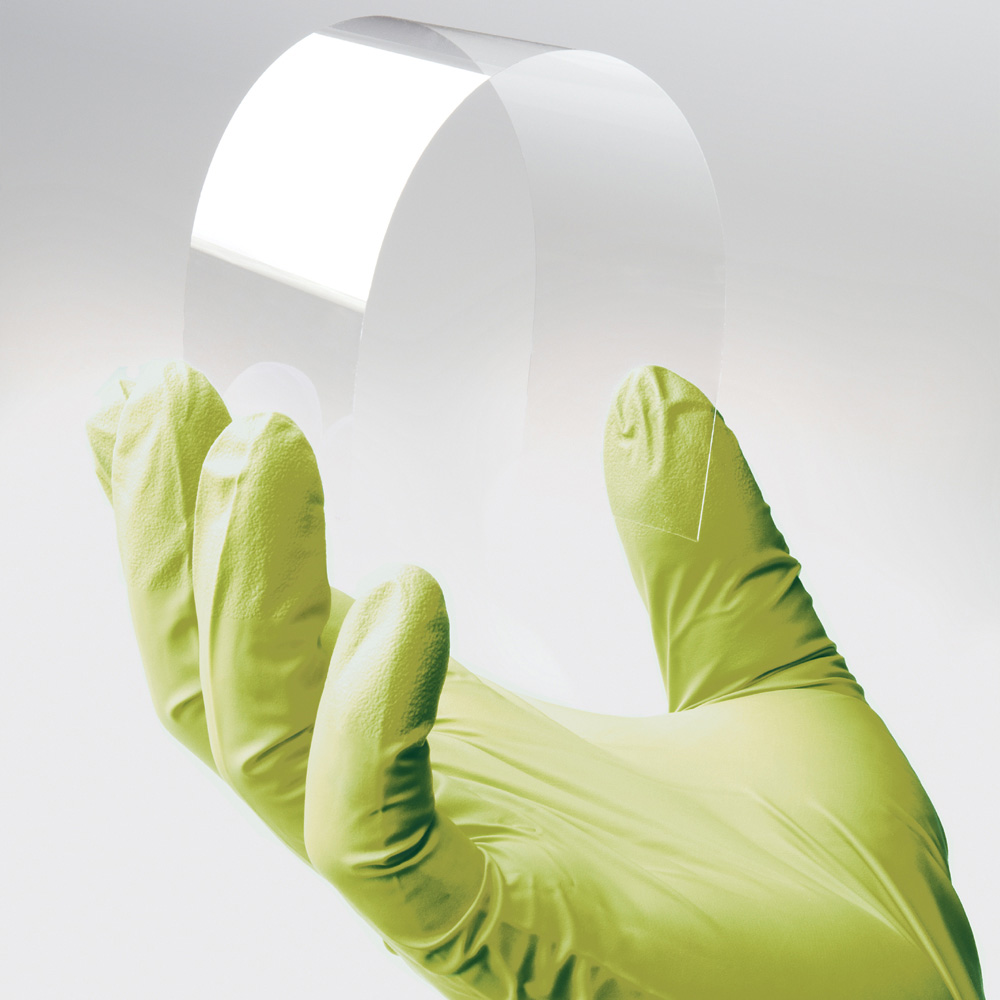
Where windows, soda bottles, and automobile windshields are made of various types of thick glass such as the common soda lime, Corning Inc. has been working on thinner, more durable alternatives for the past several years. Two of Corning's current projects, Willow Glass and Gorilla Glass, are far less breakable than classical glass, and can be made as thin as 0.1 millimeter, In a demonstration, Waguih Ishak, one of Corning's Research Center Directors, showed how a piece of normal glass could be cracked pretty easily whereas even when he exerted his full force on a piece of Willow Glass, he couldn't even leave a scratch.

Glass is formed by the superheating of sand, found mainly on coastlines where it has been created by the erosion of ocean waves on rocks. Glass has been made for thousands of years, and some archeological evidence even shows that ancient Mesopotamian civilizations had found a way to make a form of glass. Corning Inc., however, has advanced so much further than the primitive and brittle glass made accidentally as a byproduct of metalworking. Their products are so thin and flexible that they are able to be rolled up for shipping. Razor-thin willow glass can be shipped in rolls around the world for use in smartphones, televisions, and, one day, maybe even space shuttles.

As Ishak states, while plastic can become yellow and deteriorate, glass won't deteriorate. Furthermore, plastic is far more permeable than glass, meaning that a water can pass through a plastic screen on an electronic device in mere hours where it would take billions of years to pass through glass. So, it seems that Corning's creations really are breakthroughs in the field. A substance that is impermeable to water, can bend without breaking, doesn't deteriorate with age, and is crack and scratch-resistant seems almost too good to be true.

Lien's interview with Ishak provides us with a lot of information on their process while still keeping Corning's trade secrets. For the past few decades, the process involved superheating sand and other materials, then letting it slide down the side of a trough, allowing gravity to form the fused liquid into solid sheets of Willow Glass. Once the sheets are formed, a secret blend of chemicals are used to protect the glass against cracks and scratches. Recently, Corning came up with a method that involves using a roller to make the glass sheet even thinner than what gravity can do, enabling the glass to reach a minimum 0.05-millimeter thickness.

According to Ishak, however, 0.05 millimeter is by no means the thinnest they could make with future advancements in technology. The thinner they can make the glass, the more room there is for a bigger battery, which will extend usage time. Ishak dreams of the day in the not-so-distant future when the the technology inside the device catches up with the glass and allows designers to make smartphones that can fold or tablets that can be rolled up like a piece of paper. Ishak admits that this technology is not around yet, but is certain that when the electronics are ready, Corning Inc. will be on the team, bringing the world the newest technologies of the future. Even so, more durable and longer-lasting electronics are nothing to scoff at, and Corning certainly seems on its way to great things.

***************************************************************************************************
Find out more about us at www.sepulvedaescrow.net. Any Questions? Contact our Escrow Expert! Sepulveda Escrow Corporation (818) 838-1831. Follow our company on FacebookTwitterLinkedIn, and Google+.
***************************************************************************************************

Friday, October 23, 2015

Google to Offer New "YouTube Red" Subscription-Based System


Where YouTube once made all of its income through advertisement sales, the Google-owned company is planning to make a big change. Starting next week, YouTube will be providing an option for viewers to pay $9.99 per month to be a part of a service called YouTube Red. As described by Saba Hamedy and Paresh Dave, in their L.A. Times article, this service will not only remove advertisements from most videos, thereby enhancing the viewer's enjoyment, but will also provide the ability to download content and stream music from Google Play.

YouTube, which first opened in 2005, grew in popularity very quickly and as purchased by Google a year later. Since then, while videos on YouTube get millions of views per month, Google has found that the well-known site is not quite the money-maker it might have been expected to be. Analysts believe that this is because YouTube is free, in general. Artists, musicians, instructors, and entertainers can upload videos for free, and people around the world can watch, like, and comment those videos for free. Only videos with advertisements provide any sort of income to YouTube and the maker of the video.

Now, with YouTube Red, Google's parent company, Alphabet Inc., expects to make far more money from the site without increasing advertisements or drastically changing its currently free setup. Analysts YouTube Red has great potential to become hugely profitable, but only if YouTube finds a way to overcome competition by Facebook, Vimeo, and Snapchat, among several other competitors.

Furthermore, will it really be worth it to viewers? Is the removal of ads, even on top of the addition of all kinds of new content by such YouTubers as The Fine Bros, Lilly Singh, and Pewdiepie, really worth the $10 per month that it will cost. YouTube tends to be targeted more toward teenagers and younger Millennials, so that would also mean that subscription to YouTube Red would probably fall under the jurisdiction of viewers' parents, who may not be willing to spend money on that which used to be free.

Much of the new content will be produced by well-known YouTube stars, who, unlike so-called "traditional actors," tend to come up with the content in their own videos. Many such stars started out with comedy or singing shows, filmed in their bedroom, and since have accrued hundreds of thousands of subscribers. It is these individuals that YouTube Red is going to use to try to pique the interest of potential viewers.

Market research company EMarketer believes that the growth of YouTube's ad revenue will slow over the coming years, which would make now the perfect time for the company to move away from advertisements and toward other forms of income. Many wonder, however, how this new system will affect the YouTube stars, some of whom are making a comfortable living off of payments from advertising sponsors. Will they be willing to give up that security to be a part of this new project? Hamedy and Dave seem to conclude that with YouTube Red, the stars will have more opportunities to create newer and better content that previously would have been cost prohibitive. YouTube executives believe that the stars will see the project's potential and will happily sign on to be a part of this new system.

***************************************************************************************************
Find out more about us at www.sepulvedaescrow.net. Any Questions? Contact our Escrow Expert! Sepulveda Escrow Corporation (818) 838-1831. Follow our company on FacebookTwitterLinkedIn, and Google+.
***************************************************************************************************