Showing posts with label Cell Phones. Show all posts

Friday, June 8, 2018

Over Half of American Households Rely Solely on Cell Phone Communication


Image result for landline phones being phased out

New technology is the way of the future. While some consumers choose to stick with old-fashioned versions of modernized innovations, the vast majority opt instead to implement the advancements as soon as they become available. One such technological innovation is the mobile telephone. Where people once had to use a payphone to make contact while outside of their home and office, remote communication has become a staple in pretty much every American's life. To that end, according to Tracey Lien's L.A. Times article, over half of the households in America have completely phased out landline telephones.

Landlines were once a valuable necessity in the home, and to this day still have a few benefits. However, they also have significant drawbacks, especially as technology becomes more interconnected in this day and age. In 2006, a survey was conducted that concluded that only about 16% of American households didn't have a landline connection. Since the advent of smartphones and other such devices, that statistic has climbed to 54% in the most recent survey. That number has continued to climb each year. In fact, some European countries have over 80% of households relying solely on wireless phone connectivity, so it is very likely that one day, it could reach 100% in most areas of the world.

Millennials especially have been the ones to push the cord-cutting trend. It's an economic choice. Basically, if they already have a cell phone line that they pay for each month, why would they make a second payment each month to have a phone line that isn't even accessible on the go? The logic isn't completely perfect, as landlines are very beneficial in emergency situations or during power outages. However, if it comes to hundreds of dollars per year in extra cost, many consumers opt to save money, even with the minimal cost to their peace of mind.

New renters or homeowners are choosing to cut costs wherever they can, whether by using video streaming platforms instead of cable or by cutting out the landline phone option. Landlines are more often targeted by telemarketers, and consumers (especially those of the younger demographics) tend to send messages more than speak on the phone anyway, so a landline becomes pretty much useless except in an emergency. 10 years ago, not having a landline was risky. Today, it still has a bit of inherent risk, but with the way technology has been advancing, the risk decreases exponentially each year. It is likely that landlines may one day be gone from homes completely, only present in places of business or governmental institutions.

***************************************************************************************************
Find out more about us at www.sepulvedaescrow.net. Any Questions? Contact our Escrow Expert! Sepulveda Escrow Corporation (818) 838-1831. Follow our company on FacebookTwitterLinkedIn, and Google+.
**************************************************************************************************

Friday, March 9, 2018

Robocallers Use Out-of-State Loopholes to Evade Strict California Regulations


Robocalls, even from a company or political platform that you feel connected to, can be annoying at the best of times. Recently, there was a controversial legal battle centering around freedom of speech, the conclusion of which was that the state of Montana technically has the legal right to pass a law banning robocalls, even those of a political nature. At the very least, this decision could help Montanans to crack down and have specific rules regarding such calls, in an attempt to reduce the number, if not do away with them altogether. Interestingly enough, discovers David Lazarus in his L.A. Times article, California has some pretty strict laws regarding robocallers. It just so happens that nobody follows them.

Politicians in California have found loopholes to get around the laws regarding robocallers. According to the California Public Utilities Code, every robocall within California is required to begin with a live person and the name, phone number, and address of the organization making the call. Then, the live operator has to ask permission and get consent before playing the pre-recorded message. Only if every single one of those criteria is met is the robocall legally permissible. Of course, because most people are so accustomed to illegal robocalls, a call meeting those criteria tends to resemble telemarketing more than robocalling, which, of course, has its own set of negative responses.

Californian homes get constant robocalls from the beginning of election season all the way to election day. The way that most get away with the robocalls without technically breaking state law is by designing the calls to originate outside of the state. If the robocall is coming from a computer server in another state, technically it doesn't require a live operator or affirmative consent or really any other regulations before playing the message. Of course, even though this strategy avoids breaking state laws, it may be breaking federal laws, although that doesn't stop much. According to federal law, robocallers can't call cell phones (again, something that still happens all too often), but the federal policy has no restriction on robocalls to landlines. Even though many people have given up their landlines over the years, there are still several million throughout the country that can be targeted.

As you can see, there are restrictions on when and how a political representative can place robocalls. However, those regulations can be easily side-stepped. There is a potential solution, though. Because the callers can avoid state regulations by making the calls from another state, this can be prevented by passing a regulation that prohibits political robocalls from being placed out of state. If the political groups have to place their calls from in state, they will be forced to follow the state regulations, which would reduce annoyance and frustration among many recipients. Of course, this would severely limit the scope of a political group's reach, but at least they would be able to better target voters interested in their specific platform.

***************************************************************************************************
Find out more about us at www.sepulvedaescrow.net. Any Questions? Contact our Escrow Expert! Sepulveda Escrow Corporation (818) 838-1831. Follow our company on FacebookTwitterLinkedIn, and Google+.
**************************************************************************************************
Friday, September 1, 2017

FreedomPop Cell Phone Service Focuses on Providing Customers with Lowest Prices


In the United States, from the wealthiest entrepreneur to the poorest student, from teenagers to retirees, almost everyone has a cell phone. While cell phones were once a conveniently mobile alternative to landlines, to allow people to make calls outside of their homes, from almost anywhere in the world, they have now become much more than just phones. With the advent of text messaging and smartphones, many users now rarely use their phone for calling, opting instead to text or surf the internet using their mobile data or surrounding Wi-Fi signals. Most cell phone providers, especially the "Big Four" carriers, charge upwards of $40 per month for a cell phone plan. According to Paresh Dave's L.A. Times article, there's a smaller company, called FreedomPop, that is able to provide users with cell phone plans for less than $5 per month.

FreedomPop isn;t the ideal cell service provider for everyone. In fact, they only have about 2 million customers, compared to the hundreds of millions of subscribers at companies like Verizon or AT&T. About half of their users have service for "free," although they do have to pay a monthly fee of $7.99. The "free" portion of their service has limits on data usage, calls, and texts, and their customer service hasn't been rated very highly, but for many people, their low prices make the switch a no-brainer. Some of their most all-inclusive plans include unlimited talk, text, and data for around $20-30 per month, which is significantly less than their larger competitors. Users mainly have to have a credit card attached to their account, and they get charged extra fees for going over their allotted usage, but users seem to feel that the low prices make it worthwhile overall.

The company is able to keep prices so low by going against common industry practice. At its inception, the main focus of FreedomPop was to provide everyone with access to the internet. To do that, they chose to accept lower profit margins, which means they can charge less for their service. Even though the company's user base is small, it has had enough of an impact on the industry that large competitors like Verizon and T-Mobile are lowering their prices in response. The goal of FreedomPop is to gain as many customers as possible, around the world, both to achieve their vision statement and to maximize revenue. The more revenue they take in, the more room they have to cover their fixed costs and provide service at a low price. Besides the lower profit margins, FreedomPop cuts costs by minimizing the amount they spend on marketing and by doing careful research on exactly which potential customers they choose to target.

FreedomPop has received over $100 million in venture capital investment to keep doing what they're doing. They are also looking at an acquisition offer, but investors don't seem interested in selling the company. FreedomPop is different from other cell service providers. They handle customer service efficiently by providing refunds when they receive complaints (modeled similarly to larger companies like Google Express) because they have found that giving a $5 reimbursement immediately makes a customer more likely to stay with the company and provide good reviews. However, as would be expected with a company that provides service at an average of $15 per month, customer service and quality sometimes have to suffer to some extent. It's really a choice that each customer has to make. Do you pay more for service through a "Big Four" company (Verizon, AT&T, Sprint, or T-Mobile), or do you pay less for a up-and-coming company like FreedomPop?

***************************************************************************************************
Find out more about us at www.sepulvedaescrow.net. Any Questions? Contact our Escrow Expert! Sepulveda Escrow Corporation (818) 838-1831. Follow our company on FacebookTwitterLinkedIn, and Google+.
**************************************************************************************************

Friday, October 30, 2015

New Glass Technology Creates Thinner, More Durable Screens


Millions of people in the United States and around the world own smartphones, devices that can cost as much as $800. A huge fear among such individuals is that they will drop or otherwise break their phone, especially its most fragile component: the screen. Dozens of iPhone and Android users break their screens every day, to the extent that there are stores that have been opened specifically to repair smartphone screens and make other repairs. According to Tracey Lien's article, in the L.A. Times, a company called Corning Inc. has a way to make broken screens a thing of the past.

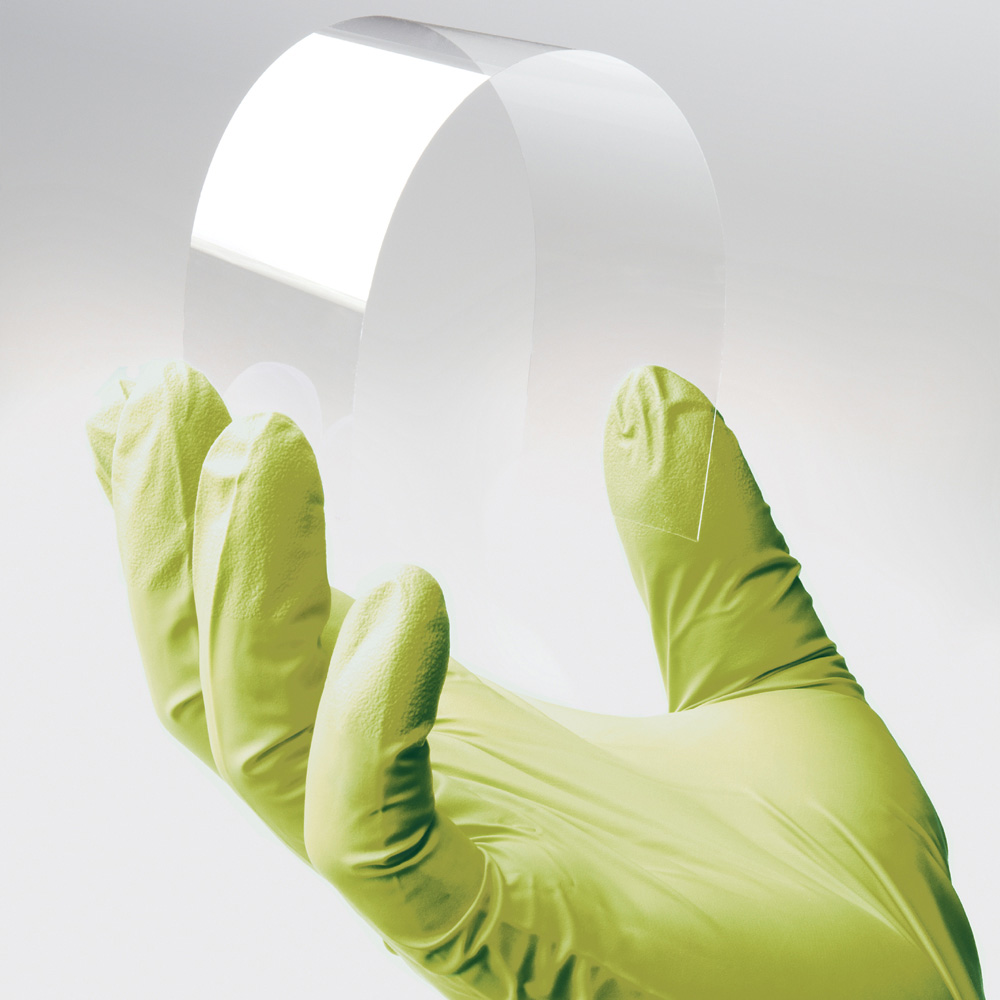
Where windows, soda bottles, and automobile windshields are made of various types of thick glass such as the common soda lime, Corning Inc. has been working on thinner, more durable alternatives for the past several years. Two of Corning's current projects, Willow Glass and Gorilla Glass, are far less breakable than classical glass, and can be made as thin as 0.1 millimeter, In a demonstration, Waguih Ishak, one of Corning's Research Center Directors, showed how a piece of normal glass could be cracked pretty easily whereas even when he exerted his full force on a piece of Willow Glass, he couldn't even leave a scratch.

Glass is formed by the superheating of sand, found mainly on coastlines where it has been created by the erosion of ocean waves on rocks. Glass has been made for thousands of years, and some archeological evidence even shows that ancient Mesopotamian civilizations had found a way to make a form of glass. Corning Inc., however, has advanced so much further than the primitive and brittle glass made accidentally as a byproduct of metalworking. Their products are so thin and flexible that they are able to be rolled up for shipping. Razor-thin willow glass can be shipped in rolls around the world for use in smartphones, televisions, and, one day, maybe even space shuttles.

As Ishak states, while plastic can become yellow and deteriorate, glass won't deteriorate. Furthermore, plastic is far more permeable than glass, meaning that a water can pass through a plastic screen on an electronic device in mere hours where it would take billions of years to pass through glass. So, it seems that Corning's creations really are breakthroughs in the field. A substance that is impermeable to water, can bend without breaking, doesn't deteriorate with age, and is crack and scratch-resistant seems almost too good to be true.

Lien's interview with Ishak provides us with a lot of information on their process while still keeping Corning's trade secrets. For the past few decades, the process involved superheating sand and other materials, then letting it slide down the side of a trough, allowing gravity to form the fused liquid into solid sheets of Willow Glass. Once the sheets are formed, a secret blend of chemicals are used to protect the glass against cracks and scratches. Recently, Corning came up with a method that involves using a roller to make the glass sheet even thinner than what gravity can do, enabling the glass to reach a minimum 0.05-millimeter thickness.

According to Ishak, however, 0.05 millimeter is by no means the thinnest they could make with future advancements in technology. The thinner they can make the glass, the more room there is for a bigger battery, which will extend usage time. Ishak dreams of the day in the not-so-distant future when the the technology inside the device catches up with the glass and allows designers to make smartphones that can fold or tablets that can be rolled up like a piece of paper. Ishak admits that this technology is not around yet, but is certain that when the electronics are ready, Corning Inc. will be on the team, bringing the world the newest technologies of the future. Even so, more durable and longer-lasting electronics are nothing to scoff at, and Corning certainly seems on its way to great things.

***************************************************************************************************
Find out more about us at www.sepulvedaescrow.net. Any Questions? Contact our Escrow Expert! Sepulveda Escrow Corporation (818) 838-1831. Follow our company on FacebookTwitterLinkedIn, and Google+.
***************************************************************************************************

Friday, August 7, 2015

Changes to FCC Regulations May Help Reduce Robocalls


The National Do Not Call Registry, run jointly by the Federal Communications Commission and the Federal Trade Commission, was designed to be a way for consumers to avoid sales calls. Unfortunately, due to new technologies, so-called telemarketers have found ways to go around As Jim Puzzanghera discusses in his L.A. Times article, most people dislike receiving annoying and commonly fraudulent phone calls on a daily basis, which is why the FCC has proposed new regulations that could help consumers only receive the calls that they want.

The agencies receive about 150,000 complaints per month about robocalls, but there's not much they can do about it. Once your number is on the Do Not Call Registry, telemarketers are, in theory, not allowed to call you. However, as witnessed by many on the list, these calls still come through. By using internet-based phone numbers or routing calls through other countries, telemarketers are able to circumvent the law and contact those on the Do Not Call list. Until recently, consumers had to tell callers, in writing, that they no longer wish to receive sales calls. Under the new regulations, the calls can be stopped by asking the telemarketer "in any reasonable way at any time" to stop.

In addition to making it easier for consumers to stop sales calls on their end, the FCC's changed regulations will allow and encourage telephone providers to offer robocall-blocking tools to their customers. While robocalls can be annoying to those receiving them, they can also be costly. Some calls and texts rack up charges on a monthly phone bill. Many times, phone providers keep a significant portion of the fees charged by such third-party message services, a practice that has led companies like Verizon and Sprint to court in recent months. If the calls and texts were blocked in the first place, such charges would not be an issue.

Under the new rules, even if a company had previously received written permission from the owner of a phone number to make sales calls, the robocaller has to stop immediately once they find out that the phone number has changed ownership. In this way, the new owner will not have to be bothered by calls that were authorized by a previous owner. The new rules, however, apply to certain companies and not to others. For example, computerized calls from banks or hospitals are allowed if they are designed to help the consumer. Calls about possible fraudulent activity on a credit card or about medication refills are not considered"robocalls" in the classical sense by the FCC.

While law enforcement is working toward catching illegal telemarketers and putting a stop to some of the sales calls. the FCC believe that the most sensible way to stop the calls is directly at the source. If phone providers were to offer to their customers the variety of new services available to block such calls, consumers could at least avoid calls from the most notorious telemarketers. Some lawmakers worry that the new regulations could be harmful in that they prevent surveys and demographics studies from being performed on the general public. On the other hand, many consumers find survey-takers to be just as annoying as telemarketers. Altogether, these regulations could be a way to give consumers what they want. Stopping illegal calls and making consumers happy are the top responsibilities of the National Do Not Call Registry, and these new laws may help them fulfill their purpose.

***************************************************************************************************
Find out more about us at www.sepulvedaescrow.net. Any Questions? Contact our Escrow Expert! Sepulveda Escrow Corporation (818) 838-1831. Follow our company on FacebookTwitterLinkedIn, and Google+.
***************************************************************************************************

Tuesday, May 19, 2015

Hands-Free Phone Systems Pose Distractions


11/7/14 - A hands-free phone system for use while driving became a required accessory under California state law, in the hope that a lack of physical distraction would reduce the general distraction of a driver and thus prevent accidents from occurring as frequently. While such hands-free systems do, for the most part, prevent drivers from needing to take their hands off of the steering wheel, a recent study performed by the American Automobile Association and the University of Utah provides compelling evidence that the complicated and error-prone systems may actually cause more distraction than they prevent. Jerry Hirsch, in his L.A. Times article, summarizes the results of this study and theorizes as to how such systems could be made more safe.

The study tested cognitive distraction, focusing on the mental strain of such systems as compared to simply the physical or visual distraction that any phone system could bring about. If one is thinking about too much, one tends to block out seemingly “irrelevant” stimuli, which can slow down one's reaction time and thus lead to a car accident. In much the same way, frustration at a voice-controlled system's mistakes or confusion related to the many features of such systems can lead to more distraction than even taking one's eyes off of the road. This, of course, does not imply that one should be using hand-held phone systems while driving either.

As the study concludes, no matter what kind of hands-free phone system one's car may have, the only real way to avoid distraction and be safe while driving is to avoid cell phone use entirely. To reduce distractions caused by hands-free phone systems, one should make sure that they fully understand how to use the system before trying to use it while actually driving. While Hirsch does quote sources that claim that the study shows little about the relationship between phone systems and distracted driving, most of his data shows that distracted driving is dangerous driving. Any distraction, no matter how slight, can have a drastic impact.

From errors in voice recognition to overly-complex programs, hands-free phone systems can be quite distracting. However, research shows that this doesn't have to be so. Manufacturers could, in future years, develop simpler, and thus safer, hands-free systems to prevent distractions while driving. Any form of distraction, whether physical, visual, or mental, reduces general safety, and due to this, it is always safer to just ignore one's phone while driving.

***************************************************************************************************
Find out more about us at www.sepulvedaescrow.net. Any Questions? Contact our Escrow Expert! Sepulveda Escrow Corporation (818) 838-1831. Follow our company on FacebookTwitterLinkedIn, and Google+.
***************************************************************************************************