Showing posts with label Low Prices. Show all posts

Friday, September 1, 2017

FreedomPop Cell Phone Service Focuses on Providing Customers with Lowest Prices


In the United States, from the wealthiest entrepreneur to the poorest student, from teenagers to retirees, almost everyone has a cell phone. While cell phones were once a conveniently mobile alternative to landlines, to allow people to make calls outside of their homes, from almost anywhere in the world, they have now become much more than just phones. With the advent of text messaging and smartphones, many users now rarely use their phone for calling, opting instead to text or surf the internet using their mobile data or surrounding Wi-Fi signals. Most cell phone providers, especially the "Big Four" carriers, charge upwards of $40 per month for a cell phone plan. According to Paresh Dave's L.A. Times article, there's a smaller company, called FreedomPop, that is able to provide users with cell phone plans for less than $5 per month.

FreedomPop isn;t the ideal cell service provider for everyone. In fact, they only have about 2 million customers, compared to the hundreds of millions of subscribers at companies like Verizon or AT&T. About half of their users have service for "free," although they do have to pay a monthly fee of $7.99. The "free" portion of their service has limits on data usage, calls, and texts, and their customer service hasn't been rated very highly, but for many people, their low prices make the switch a no-brainer. Some of their most all-inclusive plans include unlimited talk, text, and data for around $20-30 per month, which is significantly less than their larger competitors. Users mainly have to have a credit card attached to their account, and they get charged extra fees for going over their allotted usage, but users seem to feel that the low prices make it worthwhile overall.

The company is able to keep prices so low by going against common industry practice. At its inception, the main focus of FreedomPop was to provide everyone with access to the internet. To do that, they chose to accept lower profit margins, which means they can charge less for their service. Even though the company's user base is small, it has had enough of an impact on the industry that large competitors like Verizon and T-Mobile are lowering their prices in response. The goal of FreedomPop is to gain as many customers as possible, around the world, both to achieve their vision statement and to maximize revenue. The more revenue they take in, the more room they have to cover their fixed costs and provide service at a low price. Besides the lower profit margins, FreedomPop cuts costs by minimizing the amount they spend on marketing and by doing careful research on exactly which potential customers they choose to target.

FreedomPop has received over $100 million in venture capital investment to keep doing what they're doing. They are also looking at an acquisition offer, but investors don't seem interested in selling the company. FreedomPop is different from other cell service providers. They handle customer service efficiently by providing refunds when they receive complaints (modeled similarly to larger companies like Google Express) because they have found that giving a $5 reimbursement immediately makes a customer more likely to stay with the company and provide good reviews. However, as would be expected with a company that provides service at an average of $15 per month, customer service and quality sometimes have to suffer to some extent. It's really a choice that each customer has to make. Do you pay more for service through a "Big Four" company (Verizon, AT&T, Sprint, or T-Mobile), or do you pay less for a up-and-coming company like FreedomPop?

***************************************************************************************************
Find out more about us at www.sepulvedaescrow.net. Any Questions? Contact our Escrow Expert! Sepulveda Escrow Corporation (818) 838-1831. Follow our company on FacebookTwitterLinkedIn, and Google+.
**************************************************************************************************

Friday, July 7, 2017

Grocery Delivery: Niche or Mainstream?


Going shopping can be both inconvenient and time-consuming for the average person. People like to save time and money so you might think that a technological innovation to make grocery shopping more convenient might attract a lot of interest. According to David Pierson's L.A. Times article, that might not be the case after all.

Amazon recently put in a $13.7 billion bid to acquire Whole Foods Inc., including all of its stores, warehouses, and distribution centers. Although Amazon already has a service called AmazonFresh, which allows customers to order fruits, vegetables, and other perishable food products to be delivered on the same day, this acquisition seems to show that Amazon is looking to gain greater traction in the grocery-delivery market. But, the question still remains: will grocery delivery be a successful venture in the years to come?

During the dot-com boom of the 1990s. a company called Webvan had a goal of making grocery shopping a thing of the past. They planned to do what Amazon is attempting to do: make grocery delivery mainstream. Unfortunately for Webvan, even after $800 million in funding, they were ultimately forced to declare bankruptcy nearly 20 years ago. They realized too late that, at the time, grocery delivery was both incredibly costly and extremely risky because it takes a certain kind of customer to let someone else pick out their groceries for them.

Research has shown that people have some innate preference for picking out their groceries themselves. They want to be able to look at each and every piece of fruit before purchasing it, making sure that it's unbruised or the right level of ripeness. Consumers don't trust that an employee of AmazonFresh or another similar company will be able to do as good a job as them when picking out their groceries. Especially if they end up paying the same amount for the delivered groceries as for those purchased in the store, customers will not sacrifice quality for a little bit of convenience.

However, if the convenience factor was there and the prices were reduced, studies show that the combination might be enough to convince some customers to try out grocery delivery. People care about the price more than anything else. That's why discount grocery stores like Aldi have been expanding so quickly in recent years. Even if the quality of the food is not phenomenal, the lower prices bring customers in faster than at any other chain. So, although many people in this day and age want organic fruits and vegetables, few of them purchase their organic foods at Whole Foods, because the chain is known to have high prices. If Amazon somehow found a way to reduce the prices and deliver the food, all while still making a profit, their goal might be achieved in the near future.

***************************************************************************************************
Find out more about us at www.sepulvedaescrow.net. Any Questions? Contact our Escrow Expert! Sepulveda Escrow Corporation (818) 838-1831. Follow our company on FacebookTwitterLinkedIn, and Google+.
**************************************************************************************************

Friday, November 18, 2016

Study by Adobe Systems: Holiday Deals and Discounts of 2016


With Thanksgiving quickly approaching, many people are already starting to plan for the holiday shopping that comes right around the corner. Late November is often the best time to shop for the holidays if you're looking for great deals on many items. However, this rule often only applies to general items, not specialty items that might sell out quickly. Jonnelle Marte, in her L.A. Times article, describes the results of a study performed by Adobe systems, which tells shoppers which dates are potentially the best for deals on toys, electronics, clothing, and jewelry.

Just a few years ago, Black Friday started early on the morning following Thanksgiving, when many people were off of work and had the time to go wait in hours-long lines to get a deal on the latest products. More recently, though, Black Friday has undergone a shift to start earlier and earlier, to the extent that some stores start their "Black Friday" sales as early as 6 PM on Thanksgiving Day itself. Some items have their best deals on Black Friday, but not as many as might be expected.

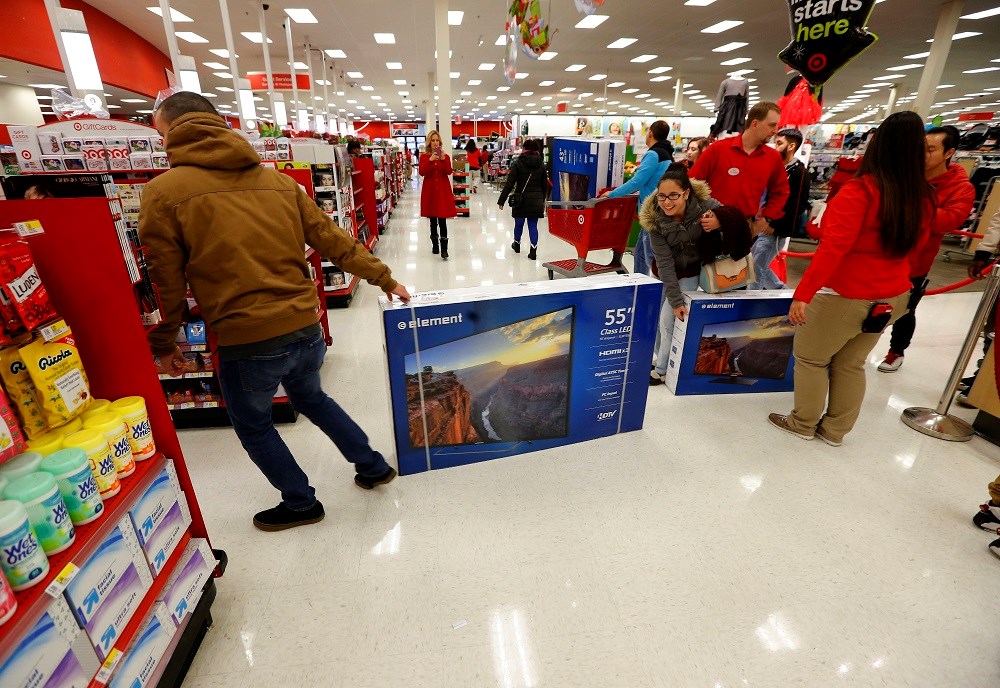
Electronics are one category of items that receive the largest markdowns on Thanksgiving Day, according to Adobe's research. From flat-screen televisions to cell phones and computers, Thanksgiving is the day to get those deals. When compared to the average prices on the electronics in October, it was found that televisions are expected to be discounted by an average of 20% and tablet computers will have an average discount of 18%. Those deals won't last forever, of course, given that the stores only have a limited supply of each product, but for the deal-hunters that get to their holiday shopping extra early, they could find themselves snagging quite the discount.

Another type of item that has its greatest discount on Thanksgiving is jewelry. Adobe's study found that on average, jewelry will be discounted approximately 10%. The research also found that many people push off making those purchases until later on, closer to the holidays, often because they are searching for the "perfect" piece of jewelry, regardless of the jewelry's brand. Because they search for a certain style and higher quality of jewelry, they often miss out on the deals, but because they get the best piece they can, many customers don't mind missing out on the 10% savings.

Most other items have their greatest deals on days other than Thanksgiving/ Black Friday. For example, clothing and other apparel often have the greatest discounts on November 22nd, or the Tuesday before Thanksgiving. Retailers often start their discounts on clothing early, because it's not an item in major demand. Most people are more appreciative if they get a new electronic device on the holidays, not clothing, so the stores have to do something extra to get the additional revenue that has become expected during holiday times. In fact, some everyday items, like socks, will sometimes be marked down the most significantly right after the holidays are over.

As for toys, Adobe's research showed that the best day for deals would be Cyber Monday, which is the Monday after Thanksgiving. Cyber Monday is known for its online deals, but it is expected that most toys, especially generic ones, will be discounted an average of 13%. Toys are a more tricky item, especially for parents, because if they wait for the best deal on certain in-demand items, they may end up missing out on the item altogether, if te store's stock runs out. So, in general, Cyber Monday can offer the best deals on toys, as long as you're not focused on getting a particular toy. If you are looking for the latest Hatchimal or Lego set, you might want to pay a little bit extra to guarantee you get it.

Overall, the best deals seem to be those involving electronics that are offered on Thanksgiving Day. Every other deal seems to be a good one, but only to the customer who doesn't care about what specific product they are getting. For electronics, especially televisions, many customers don't care about the specific brand, so any discount on a large, flat-screen television is a good thing. When it comes to pieces of jewelry, people become pickier and look for quality pieces that won't necessarily offer the better deal. The above suggestions will benefit people searching for general products, but if a customer is looking for a very specific product, they might just have to bite the bullet and spend full price on it to help guarantee that they get exactly what they want.

***************************************************************************************************
Find out more about us at www.sepulvedaescrow.net. Any Questions? Contact our Escrow Expert! Sepulveda Escrow Corporation (818) 838-1831. Follow our company on FacebookTwitterLinkedIn, and Google+.
***************************************************************************************************

Friday, July 8, 2016

U.S. Takes Second Place in World Oil Reserves


The top oil-producing countries in the world are Russia, Saudi Arabia, Canada, and the United States. A few short years ago, the US was dead last in that hierarchy based on estimates of total recoverable oil throughout each country. As shown in Rob Nikolewski's L.A. Times article, a recent study by Rystad Energy has shown that the United States has beaten out some of its former competition, taking second place behind Canada as one of the world's top oil producers.

The amount of "recoverable oil reserves" is calculated based on how much of a country's oil is both technologically and economically feasible to extract. In other words, if it is too deep to get out or will cost more money to mine than can be earned in the market, then it isn't calculated in the country's total reserves. Leaders in the oil industry have determined that the United States' improved position in the market is likely due to technological advancements, especially those that enable the procurement of shale oil.

Shale oil is a type of oil found in some sedimentary rocks that can be extracted pressurized drilling. It is a type of oil that was previously ignored or not considered useful because it was harder to extract. However, since much of the "easier to access" oil has been extracted and used up over decades of drilling, the technology advanced to keep up with demand. Additionally, other forms of drilling technology, such as hydraulic fracturing, or "fracking," which involves the pumping of pressurized fluid into otherwise-empty oil well in order to force any remaining oil out have added to US reserves. Texas by itself has over 60 billion barrels worth of shale oil, an amount comparable to the total oil reserves in the entire country of Mexico.

The Rystad study concluded that there are approximately 2.1 trillion barrels of oil globally, from over 60,000 oil wells. Over half of the reserves in the US are shale oil deposits, which, since they are more difficult to extract, can incur extra costs. Right now, oil prices are very low, which might seem like a good thing to the average consumer. However, when prices stay low for too long, producers can;t extract more oil in an economical manner, which reduces the total amount in the market, which can cause prices to shoot up.

According to one economist, if oil prices stay below $50 per barrel, miners will not put in the investment to tap shale oil reserves. If prices get closer to $100, he predicts that the US will provide a significant portion of the oil market over the next few years. So, even though the US has plenty of oil deposits in Texas, California, South Dakota, and Alaska, and technology can help the mining along, prices will have to go up in the short-term in order to keep gasoline prices steady in future years.

***************************************************************************************************
Find out more about us at www.sepulvedaescrow.net. Any Questions? Contact our Escrow Expert! Sepulveda Escrow Corporation (818) 838-1831. Follow our company on FacebookTwitterLinkedIn, and Google+.
***************************************************************************************************

Friday, May 27, 2016

"365 by Whole Foods" Market Boasts Lower Prices and Higher Efficiency


This week, Whole Foods opened their "365 by Whole Foods Market" in Silver Lake, the first of a set of 13 such stores to be built around the country this year. The supermarket chain's new style of smaller store has already interested many customers in its first couple of days, and the company expects the fad to grow rapidly. In her L.A. Times article, Samantha Masunaga describes the new type of store and some of the ways it differs from the classical Whole Foods supermarket.

365 is Whole Foods' first smaller format store. However, it features many high-tech options and better deals than their regular stores, making it a highly sought-after alternative. People, especially Millennials, go to Whole Foods because they are looking for healthier, organic food options. However, eating healthier is often costly, and most people have pretty inflexible budgets when it comes to groceries. Therefore, when shoppers found out that 365's products were the same, but at a cheaper price, they flocked to the new store.

On Wednesday morning, when the store opened its doors for the first time, the parking lot was full and then some.  Interested shoppers circled the lot, having trouble finding a spot to park their cars, but when they finally got into the store, they were amazed by what they found. While the 365 has a smaller selection than a normal Whole Foods, its prices are significantly cheaper, which, too many Millennials with little disposable income, is a worthwhile trade-off. Additionally, the displays of produce feature electronic readers that measure the weight of fruits or vegetables and print stickers based on the measurement. In that way, the check-out process is quick and easy, saving time for both customers and employees.

Besides the reduced variety, the new 365 will also be missing Whole Foods' signature deli counter. However, it still has a large salad bar and a variety of pre-cooked hot food items. Analysts believe that 365 is likely Whole Foods' response to losing their share on the health food market. Other stores like Ralphs and Target have begun to provide organic options for their customers, which means Whole Foods is facing much greater competition in a once-blue ocean. Over the past three quarters, Whole Foods has shown declining sales, but the management hopes that the smaller, less cost-intensive 365 stores will help to turn that around over the coming year.

***************************************************************************************************
Find out more about us at www.sepulvedaescrow.net. Any Questions? Contact our Escrow Expert! Sepulveda Escrow Corporation (818) 838-1831. Follow our company on FacebookTwitterLinkedIn, and Google+.
***************************************************************************************************