Showing posts with label Research. Show all posts

Friday, October 21, 2016

Orbital ATK's Successful Rocket Launch Enables it to Supply the ISS Again


The International Space Station (ISS) currently houses three astronauts: one each from Russia, Japan, and the United States. Those astronauts live and do research in the floating structure 250 miles above the Earth, and as such, need a steady supply of food and equipment to stay alive. Two years ago, on October 28, 2014, an unmanned Antares rocket from a company called Orbital ATK exploded on takeoff, destroying the rocket, launch pad, and the entire shipment of supplies. Fortunately, Orbital ATK seems to be making a return to the market. Just this week, as detailed in an article by the Associated Press of the L.A. Times, a newly rebuilt Antares rocket took flight, carrying over 5,000 pounds of food and other supplies for the astronauts on the ISS.

The rocket's flight was in view for watchers throughout the East Coast, as far north as Boston and as far south as Charleston.  Besides the fact that the renovations and repairs cost over $15 million, the engineers of Orbital ATK were very relieved when the rocket launch was successful. because it meant that they could get back into the business of supplying the ISS. Over the past two years, since Orbital ATK was out of commission, NASA's sole source of supplies was SpaceX. When the American space program first ended in 2011, government-owned shuttles were forced into retirement, which gave SpaceX and Orbital ATK room to take over.

Orbital ATK was doubtful about its ability to launch over the past few weeks, due mainly to the hurricane weather in the region, but the success of their rocket has brought the company back on track. Analysts expect that the next space-related venture to be commercialized will be flights to transport crew members of the ISS. NASA also hopes to get astronauts to Mars by the 2030s, which would mean the next goal for companies like SpaceX would be commercialized transport to Mars and other planets in the future. Orbital ATK's newly regained ability to send rockets into space has granted the company a spot in the competition for control of a future commercialized form of interplanetary travel.

The payload of supplies released by the Antares rocket, stored in a Cygnus capsule, is currently orbiting the Earth, waiting a few days before it will break free of the orbit and make it all the way to the space station. The reason for the delay is that a new crew of three astronauts is set to launch from Kazakhstan this week, and NASA wants to give them a little bit of time to get settled on the ISS before they have to immediately begin unpacking supplies and beginning the experiments. Especially because their last rocket exploded before it ever left the ground, many people were wary that a similar outcome could be expected this time. The success of Orbital ATK's rocket speaks volumes for their position in the future market of commercialized space transportation.

***************************************************************************************************
Find out more about us at www.sepulvedaescrow.net. Any Questions? Contact our Escrow Expert! Sepulveda Escrow Corporation (818) 838-1831. Follow our company on Facebook, Twitter, LinkedIn, and Google+.
***************************************************************************************************

Friday, October 7, 2016

Caltech Researchers Discover Deep-Level Earthquakes in the Mantle


For a very long time, seismologists (people who study earthquakes) believed that earthquakes could only happen in the Earth's crust layer, no more than 15 miles below the surface. A recent discovery by researchers at Caltech turned that assumption on its head. As Rong-Gong Lin II wrote in his L.A. Times article, it turns out that some earthquakes actually have the ability to travel deep under the surface, to the mantle level, which can multiply the quake's power many times.

Some of the earthquakes took place so far under the surface that the state-of-the-art sensors employed by the Caltech researchers barely sensed them, which explains why conventional seismometers have failed to pick up the signals in the past. Basically, what the researchers discovered is that the largest earthquakes are those that spent some time percolating in the mantle. One example was the 8.6 earthquake that happened in the middle of the Indian Ocean in 2012. At the time, science's understanding of how earthquakes work could not explain how an earthquake that large had happened.

If these greater-strength quakes were possible, areas around the Newport-Inglewood fault or the San Andreas fault could be at risk. Fortunately, the researchers have so far only found evidence of microquakes (2.0 or less) that originated in the deeper layers. It is possible that the deeper-level quakes are more spread out and don't usually join together, which could mean that they would only cause small microquakes. If a quake on the scale of magnitude 3 or 4 were to be detected in the mantle, concerns would likely be raised, but right now, researchers have asked for more time to study and learn more about the way earthquakes work.

Additionally, research performed in areas other than the Long Beach portion of the Newport-Inglewood fault line did not show nearly as much evidence of deep quakes. Some evidence points to liquids flowing up from the mantle in certain beachside areas, so that may contribute to Long Beach's increased risk for deep quakes. At the moment, there is no way to tell if deep-level quakes are as large a risk as they could be. Perhaps it is only an issue in Long Beach; maybe it's only an issue in cities that border the ocean. Only time and a lot more research will reveal the truth.

***************************************************************************************************
Find out more about us at www.sepulvedaescrow.net. Any Questions? Contact our Escrow Expert! Sepulveda Escrow Corporation (818) 838-1831. Follow our company on Facebook, Twitter, LinkedIn, and Google+.
***************************************************************************************************
Friday, January 22, 2016

New Research Involves Renewing Groundwater Supplies, Not Filling Reservoirs


In a test on a potential new way to reduce the effects of California's recurring drought conditions, researchers are looking not to expand reservoirs, but rather find a way to funnel the excess rainwater from the El Nino winter back into the groundwater, where it can be put to better use during the drier seasons. Currently, the majority of rain runs off into the ocean, simply because a large portion of the land is covered in concrete or asphalt, which doesn't allow rainwater to permeate. Through this ongoing experiment, depicted in Geoffrey Mohan's L.A. Times article, the water is instead redirected to the fields of involved farmers, where the water is able to seep into the soil.

While creating new reservoirs and expanding existing reservoirs could accomplish the same goal, the experiment aims to show that it can be accomplished more naturally and cheaply. Simply by harnessing the power of gravity, storm runoff could be forced into irrigation channels. From the irrigation channels, several fields in succession can be watered before the rest of the runoff can make it to nearby lakes and rivers. Once upon a time, farmers used only surface water and groundwater to tend to their crops. In this day and age, the groundwater levels are so depleted, especially during drought seasons, that there isn't enough water to make that system feasible.

That system could once again become helpful for farmers and common folks alike, once the groundwater levels have been put back to normal. Through a large-scale application of the concepts present throughout the experiment, everything from wells to reservoirs could be filled with the rainwater that would normally be wasted as runoff to the ocean. Unfortunately, not very many people have volunteered to be a part of the study. Some are, quite reasonably, simply unwilling to risk their trees in the event that the experiment ruins them. More often, state or federal agencies control the water in dams and canals and put up a lot of red tape due to their worries that the water may benefit people who aren't paying for it.

The research is risky, but well worth it in the long run. The water might spur fungal disease in the trees, but it also might kill off worms and mites. The test measures whether the concentration of contaminants like nitrogen-based fertilizers increases in the total groundwater and what effects that might have on the ecosystem. In general, the experiment is looking to make sure whether this would be an effective way to store water for use in drier times. From what has been measured so far, the irrigation hasn't ruined the test trees, but it will still be a while before significant results can be found.

According to researchers' approximations, there are about 3.6 million acres of agricultural land in California alone that have the proper characteristics to make them usable in groundwater-refilling projects. The only issue is that everyone would have to work together to make this concept a reality. For the first few years, crop yields will likely decrease due to the plan, which will make many farmers want to drop out. However, if they all stick it out to the end, the groundwater levels would eventually become properly equilibrated, which would extremely dampen the effects of future drought conditions in the area. It would just take a lot of cooperation between individual farmers and governmental agencies, as well as a unified belief that renewing the environment will have far more positive effects, both economically and otherwise, in the long  run than making a quick buck today.

***************************************************************************************************
Find out more about us at www.sepulvedaescrow.net. Any Questions? Contact our Escrow Expert! Sepulveda Escrow Corporation (818) 838-1831. Follow our company on Facebook, Twitter, LinkedIn, and Google+.
***************************************************************************************************

Friday, October 30, 2015

New Glass Technology Creates Thinner, More Durable Screens


Millions of people in the United States and around the world own smartphones, devices that can cost as much as $800. A huge fear among such individuals is that they will drop or otherwise break their phone, especially its most fragile component: the screen. Dozens of iPhone and Android users break their screens every day, to the extent that there are stores that have been opened specifically to repair smartphone screens and make other repairs. According to Tracey Lien's article, in the L.A. Times, a company called Corning Inc. has a way to make broken screens a thing of the past.

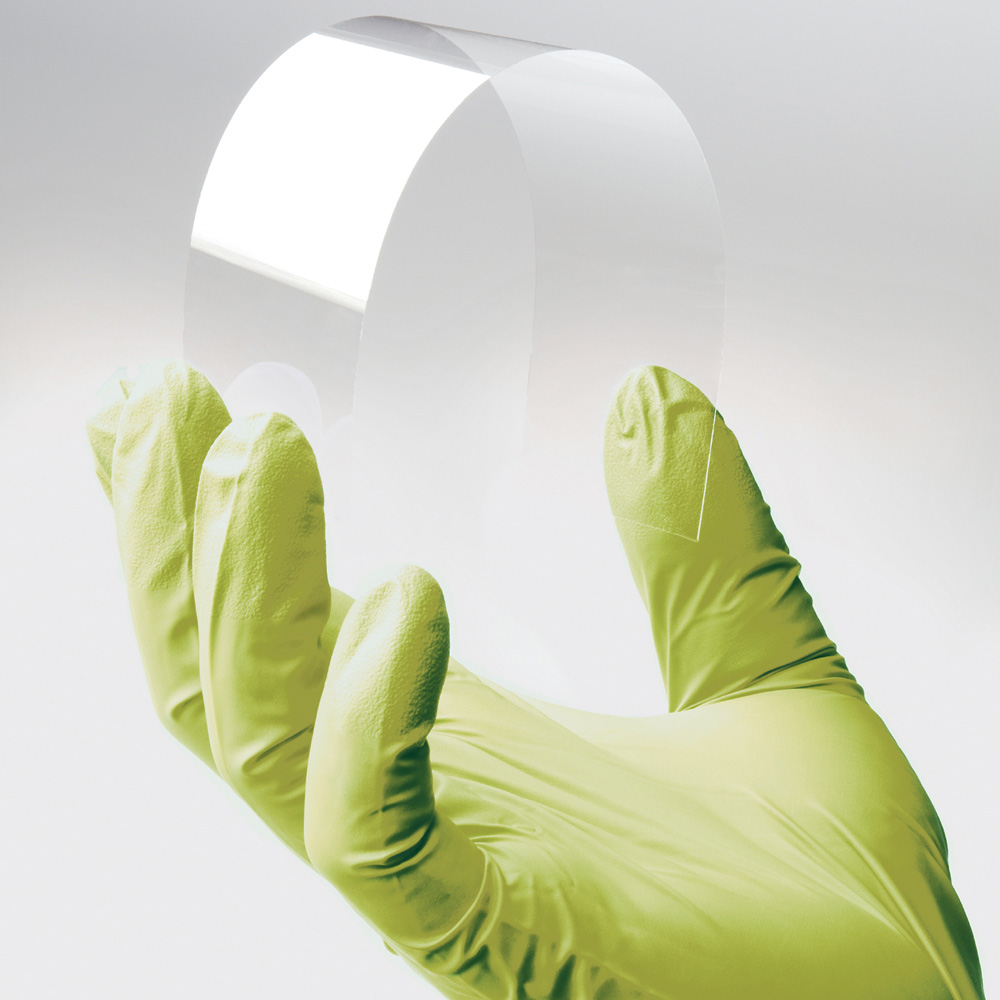
Where windows, soda bottles, and automobile windshields are made of various types of thick glass such as the common soda lime, Corning Inc. has been working on thinner, more durable alternatives for the past several years. Two of Corning's current projects, Willow Glass and Gorilla Glass, are far less breakable than classical glass, and can be made as thin as 0.1 millimeter, In a demonstration, Waguih Ishak, one of Corning's Research Center Directors, showed how a piece of normal glass could be cracked pretty easily whereas even when he exerted his full force on a piece of Willow Glass, he couldn't even leave a scratch.

Glass is formed by the superheating of sand, found mainly on coastlines where it has been created by the erosion of ocean waves on rocks. Glass has been made for thousands of years, and some archeological evidence even shows that ancient Mesopotamian civilizations had found a way to make a form of glass. Corning Inc., however, has advanced so much further than the primitive and brittle glass made accidentally as a byproduct of metalworking. Their products are so thin and flexible that they are able to be rolled up for shipping. Razor-thin willow glass can be shipped in rolls around the world for use in smartphones, televisions, and, one day, maybe even space shuttles.

As Ishak states, while plastic can become yellow and deteriorate, glass won't deteriorate. Furthermore, plastic is far more permeable than glass, meaning that a water can pass through a plastic screen on an electronic device in mere hours where it would take billions of years to pass through glass. So, it seems that Corning's creations really are breakthroughs in the field. A substance that is impermeable to water, can bend without breaking, doesn't deteriorate with age, and is crack and scratch-resistant seems almost too good to be true.

Lien's interview with Ishak provides us with a lot of information on their process while still keeping Corning's trade secrets. For the past few decades, the process involved superheating sand and other materials, then letting it slide down the side of a trough, allowing gravity to form the fused liquid into solid sheets of Willow Glass. Once the sheets are formed, a secret blend of chemicals are used to protect the glass against cracks and scratches. Recently, Corning came up with a method that involves using a roller to make the glass sheet even thinner than what gravity can do, enabling the glass to reach a minimum 0.05-millimeter thickness.

According to Ishak, however, 0.05 millimeter is by no means the thinnest they could make with future advancements in technology. The thinner they can make the glass, the more room there is for a bigger battery, which will extend usage time. Ishak dreams of the day in the not-so-distant future when the the technology inside the device catches up with the glass and allows designers to make smartphones that can fold or tablets that can be rolled up like a piece of paper. Ishak admits that this technology is not around yet, but is certain that when the electronics are ready, Corning Inc. will be on the team, bringing the world the newest technologies of the future. Even so, more durable and longer-lasting electronics are nothing to scoff at, and Corning certainly seems on its way to great things.

***************************************************************************************************
Find out more about us at www.sepulvedaescrow.net. Any Questions? Contact our Escrow Expert! Sepulveda Escrow Corporation (818) 838-1831. Follow our company on Facebook, Twitter, LinkedIn, and Google+.
***************************************************************************************************

Friday, September 4, 2015

Drought Conditions Prevent Ability to Store Sustainable Energy


For companies like Southern California Edison, the drought is taking its toll on their sources of sustainable energy. When water stored in artificial lakes high in the mountains is released, it flows down to turn hydroelectric turbines and convert the water's kinetic energy into electrical energy for use by consumers. This system only works when the water is available for use. Because of the drought, water levels have dropped so far that the hydroelectric system has been put on hold for the time being. According to Ivan Penn, in his L.A. Times article, the hydroelectric power is not the only source of power being lost due to depleted water reserves.

Renewable resources are those that are considered to be constant in nature, that will always be available on Earth. Sunlight, wind, and water are some examples of such resources. You may ask, “Why is water considered 'renewable' if a drought can reduce the amount available?" This is due to the fact that, while a drought reduces the availability of water in specific parts of the world, the amount of water available throughout the entire world remains relatively constant. 

As more and more research comes out showing the negative effects that coal and fossil fuels have on the environment, as well as the rapidly diminishing supplies of such resources, both government agencies and private corporations search for a more sustainable alternative. Wind and solar energy seem to provide the greatest return on investment, to the extent that many homeowners have installed their own solar panels to harness the Sun's natural power for themselves. Unfortunately, power companies have yet to find a way to store excess energy. Just as blackouts and power reductions can be caused by too little power being produced, too much power can overload the power grid and damage everything connected to it.

Edison has a system that, in non-drought times, would be quite effective in storing excess energy for later use. when the water has flowed down the mountain and through th3e turbines, it ends up in another manmade lake. When their solar panels and wind turbines collect more energy than can be used by consumers, the excess energy is used rather than given away at negative prices. The energy is used to power pumps that bring the water back up the mountain and stored back in the starting lake. In this way, "energy" can be stored, though not in the classical sense.  Since energy can only be converted, not created or destroyed, the excess energy is converted from electrical to mechanical (pumps) to potential (water on top of the mountain). Then, when the energy is needed again, the water is released from the lake and the potential energy becomes kinetic, then electrical once again. 

At nighttime, stored energy is needed to make up for the fact that no solar energy is being collected. While Edison's energy storage system, of course, has loss associated with it, since all processes lose some energy as heat, it is better than the alternative in which excess energy is given away to competing companies in order to prevent overloading of the power grid. However, drought conditions have everyone at a loss. How else can the energy be stored in an economical, efficient, and environmentally-friendly manner?  

As Penn points out, it's not as if we can control Sun or wind on command. Renewable energy sources are great and have become more utilitarian and widely used in recent years, but it seems that the most effective use of researchers' time would be to find a better way to store the energy.  If renewable, sustainable energy can be stored and easily accessed, then there would be little reason to use fossil fuels and other degradative materials as energy sources. As such, solar, wind, and hydroelectric power are arguably the best and cheapest energy sources, but they can only live up to their true potential if scientists find an effective way to store the excess. 

***************************************************************************************************
Find out more about us at www.sepulvedaescrow.net. Any Questions? Contact our Escrow Expert! Sepulveda Escrow Corporation (818) 838-1831. Follow our company on Facebook, Twitter, LinkedIn, and Google+.
***************************************************************************************************