Showing posts with label Scientific Advances. Show all posts

Friday, February 19, 2016

Alphabet to Surpass Apple as "World's Most Valuable Company"


For years, Google Inc. was always known for its internet/computer science businesses, including its online search database, maps, advertising platform, YouTube, Android, and more. In recent years, Google began investing more and more time, effort, and money in other kinds of technologies. From healthcare devices to drones to self-driving cars, Google has had its hand in many types of technological innovations. Unfortunately, that led to a somewhat unwieldy business model, in which every product/ technological focus was grouped under the single title of "Google." Paresh Dave and Andrea Chang discuss in their L.A. Times article how Google recently underwent a business shift and created a new corporation, Alphabet Inc., within which several subgroups focus on different realms of Google's technological goals.

Not only has the creation of Alphabet Inc. made the business more structured, it also has generated plenty of investor interest. In fact, according to Dave and Chang, Alphabet Inc. is well on its way toward claiming the position of "world's most valuable company" from competitor Apple Inc. In the fourth quarter, Alphabet showed that profit had grown by double-digits, and proved to investors and the world that projects like self-driving cars and virtual reality glasses were not wasting resources, but instead earning revenue. Where analysts expected Alphabet to earn $16.9 billion, the company surprised everyone by reporting $21.3 billion in revenue, an improvement of 18% over the course of two years.

Last summer, when Google first began changing to the Alphabet structure, the company aimed to separate online ventures from those involving physical technological innovations. Each of the individual units of Alphabet is designed to have flexibility over its own budget and operations, but in the end, Alphabet itself will keep watch over each sub-business and make the major business decisions. Certain ventures labeled as "Other Bets," which include YouTube and smart-thermostat maker Nest, had a loss of over $3 billion in 2015, which was to be expected, according to Alphabet's analysts. Loss is expected during the R&D stage of technological innovation, but executives believe that the loss is at an acceptable level based on predictions of future revenue.

Alphabet's momentum seems almost unstoppable. In the past year alone, Alphabet's stocks have risen more than 40% in total. On the other hand, Alphabet's major competitor, Apple, is having plenty of problems that have led their stock values to fall. As mentioned previously, much of Apple's recent troubles have been closely linked to the company's reliance on a single product: the iPhone. Since iPhone sales have gone down, Apple's stocks have taken a plunge. Alphabet's new business model will help to reduce the chances of a similar situation taking place, since the variety of sub-businesses means that even if one sub-business has trouble, it will have little effect on the company as a whole.

Overall, economic analysts believe that Alphabet will keep improving and that its stock prices will continue to increase. Executives have seen continuous increases in the number of users of Gmail and the Google Play Store. They also expect that advertisements on Google and YouTube will be very important for Alphabet's future revenue. Since Alphabet's creation, revenue rose nearly 14% and profit for the year rose by 16%. In the past year, Alphabet also added over 8,200 new employees. As you can see, Alphabet seems very confident about the company's future growth and is planning accordingly.

***************************************************************************************************
Find out more about us at www.sepulvedaescrow.net. Any Questions? Contact our Escrow Expert! Sepulveda Escrow Corporation (818) 838-1831. Follow our company on FacebookTwitterLinkedIn, and Google+.
***************************************************************************************************

Friday, October 30, 2015

New Glass Technology Creates Thinner, More Durable Screens


Millions of people in the United States and around the world own smartphones, devices that can cost as much as $800. A huge fear among such individuals is that they will drop or otherwise break their phone, especially its most fragile component: the screen. Dozens of iPhone and Android users break their screens every day, to the extent that there are stores that have been opened specifically to repair smartphone screens and make other repairs. According to Tracey Lien's article, in the L.A. Times, a company called Corning Inc. has a way to make broken screens a thing of the past.

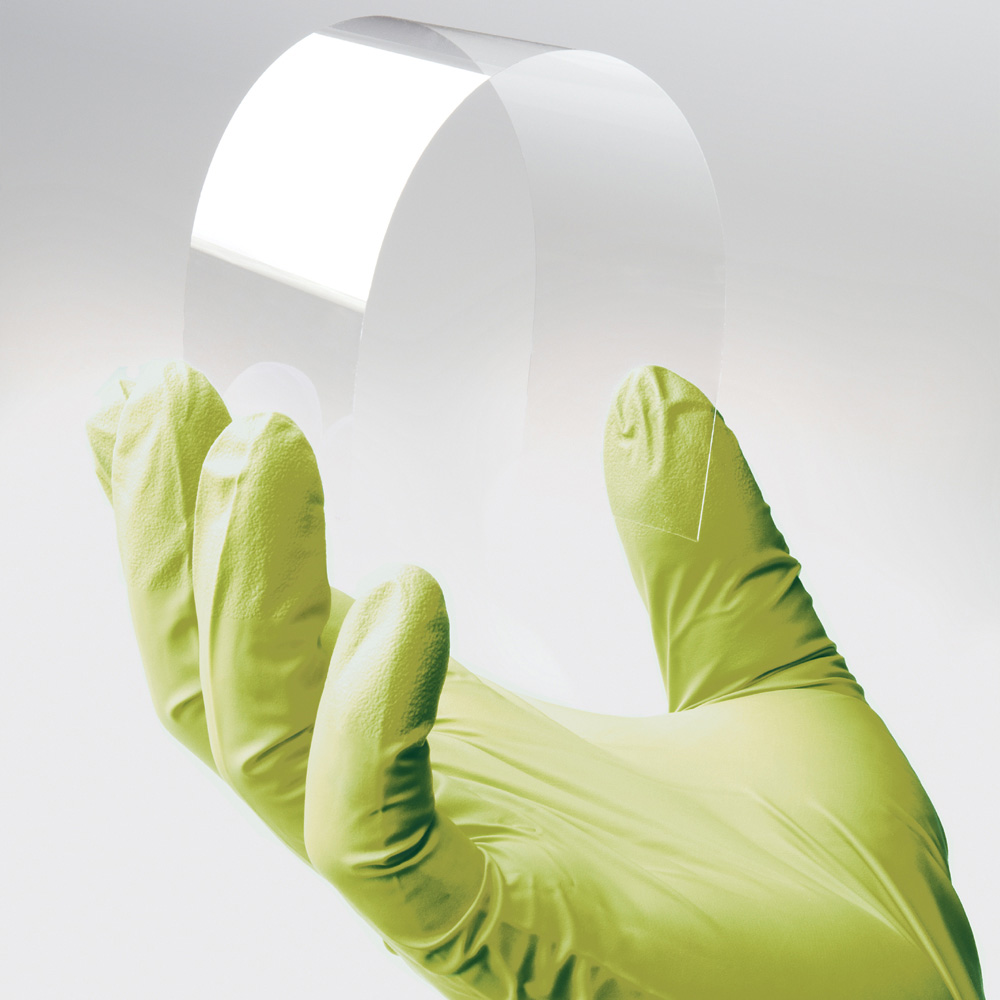
Where windows, soda bottles, and automobile windshields are made of various types of thick glass such as the common soda lime, Corning Inc. has been working on thinner, more durable alternatives for the past several years. Two of Corning's current projects, Willow Glass and Gorilla Glass, are far less breakable than classical glass, and can be made as thin as 0.1 millimeter, In a demonstration, Waguih Ishak, one of Corning's Research Center Directors, showed how a piece of normal glass could be cracked pretty easily whereas even when he exerted his full force on a piece of Willow Glass, he couldn't even leave a scratch.

Glass is formed by the superheating of sand, found mainly on coastlines where it has been created by the erosion of ocean waves on rocks. Glass has been made for thousands of years, and some archeological evidence even shows that ancient Mesopotamian civilizations had found a way to make a form of glass. Corning Inc., however, has advanced so much further than the primitive and brittle glass made accidentally as a byproduct of metalworking. Their products are so thin and flexible that they are able to be rolled up for shipping. Razor-thin willow glass can be shipped in rolls around the world for use in smartphones, televisions, and, one day, maybe even space shuttles.

As Ishak states, while plastic can become yellow and deteriorate, glass won't deteriorate. Furthermore, plastic is far more permeable than glass, meaning that a water can pass through a plastic screen on an electronic device in mere hours where it would take billions of years to pass through glass. So, it seems that Corning's creations really are breakthroughs in the field. A substance that is impermeable to water, can bend without breaking, doesn't deteriorate with age, and is crack and scratch-resistant seems almost too good to be true.

Lien's interview with Ishak provides us with a lot of information on their process while still keeping Corning's trade secrets. For the past few decades, the process involved superheating sand and other materials, then letting it slide down the side of a trough, allowing gravity to form the fused liquid into solid sheets of Willow Glass. Once the sheets are formed, a secret blend of chemicals are used to protect the glass against cracks and scratches. Recently, Corning came up with a method that involves using a roller to make the glass sheet even thinner than what gravity can do, enabling the glass to reach a minimum 0.05-millimeter thickness.

According to Ishak, however, 0.05 millimeter is by no means the thinnest they could make with future advancements in technology. The thinner they can make the glass, the more room there is for a bigger battery, which will extend usage time. Ishak dreams of the day in the not-so-distant future when the the technology inside the device catches up with the glass and allows designers to make smartphones that can fold or tablets that can be rolled up like a piece of paper. Ishak admits that this technology is not around yet, but is certain that when the electronics are ready, Corning Inc. will be on the team, bringing the world the newest technologies of the future. Even so, more durable and longer-lasting electronics are nothing to scoff at, and Corning certainly seems on its way to great things.

***************************************************************************************************
Find out more about us at www.sepulvedaescrow.net. Any Questions? Contact our Escrow Expert! Sepulveda Escrow Corporation (818) 838-1831. Follow our company on FacebookTwitterLinkedIn, and Google+.
***************************************************************************************************

Friday, September 4, 2015

Drought Conditions Prevent Ability to Store Sustainable Energy


For companies like Southern California Edison, the drought is taking its toll on their sources of sustainable energy. When water stored in artificial lakes high in the mountains is released, it flows down to turn hydroelectric turbines and convert the water's kinetic energy into electrical energy for use by consumers. This system only works when the water is available for use. Because of the drought, water levels have dropped so far that the hydroelectric system has been put on hold for the time being. According to Ivan Penn, in his L.A. Times article, the hydroelectric power is not the only source of power being lost due to depleted water reserves.

Renewable resources are those that are considered to be constant in nature, that will always be available on Earth. Sunlight, wind, and water are some examples of such resources. You may ask, “Why is water considered 'renewable' if a drought can reduce the amount available?" This is due to the fact that, while a drought reduces the availability of water in specific parts of the world, the amount of water available throughout the entire world remains relatively constant. 

As more and more research comes out showing the negative effects that coal and fossil fuels have on the environment, as well as the rapidly diminishing supplies of such resources, both government agencies and private corporations search for a more sustainable alternative. Wind and solar energy seem to provide the greatest return on investment, to the extent that many homeowners have installed their own solar panels to harness the Sun's natural power for themselves. Unfortunately, power companies have yet to find a way to store excess energy. Just as blackouts and power reductions can be caused by too little power being produced, too much power can overload the power grid and damage everything connected to it.

Edison has a system that, in non-drought times, would be quite effective in storing excess energy for later use. when the water has flowed down the mountain and through th3e turbines, it ends up in another manmade lake. When their solar panels and wind turbines collect more energy than can be used by consumers, the excess energy is used rather than given away at negative prices. The energy is used to power pumps that bring the water back up the mountain and stored back in the starting lake. In this way, "energy" can be stored, though not in the classical sense.  Since energy can only be converted, not created or destroyed, the excess energy is converted from electrical to mechanical (pumps) to potential (water on top of the mountain). Then, when the energy is needed again, the water is released from the lake and the potential energy becomes kinetic, then electrical once again. 

At nighttime, stored energy is needed to make up for the fact that no solar energy is being collected. While Edison's energy storage system, of course, has loss associated with it, since all processes lose some energy as heat, it is better than the alternative in which excess energy is given away to competing companies in order to prevent overloading of the power grid. However, drought conditions have everyone at a loss. How else can the energy be stored in an economical, efficient, and environmentally-friendly manner?  

As Penn points out, it's not as if we can control Sun or wind on command. Renewable energy sources are great and have become more utilitarian and widely used in recent years, but it seems that the most effective use of researchers' time would be to find a better way to store the energy.  If renewable, sustainable energy can be stored and easily accessed, then there would be little reason to use fossil fuels and other degradative materials as energy sources. As such, solar, wind, and hydroelectric power are arguably the best and cheapest energy sources, but they can only live up to their true potential if scientists find an effective way to store the excess. 

***************************************************************************************************
Find out more about us at www.sepulvedaescrow.net. Any Questions? Contact our Escrow Expert! Sepulveda Escrow Corporation (818) 838-1831. Follow our company on FacebookTwitterLinkedIn, and Google+.
***************************************************************************************************