Showing posts with label Online Presence. Show all posts

Friday, May 26, 2017

Google Aims to use Targeted Advertisements to Boost Both In-Store and Online Shopping


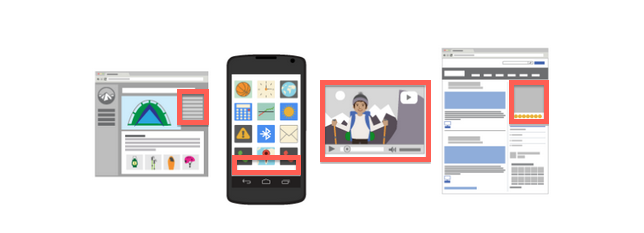
Most people who use the internet, especially for online shopping, have noticed at some point that the advertisements that appear on web pages they visit tend to relate to items they have been looking to buy. It is one of the ways that Google makes revenue, by selling advertising space and targeting the advertisements at those consumers most likely to be swayed by them. By correlating the number of clicks on an advertisement to the actual items purchased online by consumers, Google is able to show online retailers that their advertisements are the right choice.

Similarly, Google seems to be looking to move into the non-digital marketplace. According to an article by the Associated Press of the L.A. Times, Google is looking into a new service that will track how much consumers spend in brick and mortar stores after clicking on advertisements related to those purchases. However, it will only be able to correlate the information to stores, not to specific items purchased at the stores, which may not be enough information for some advertisers.

By determining how ad clicks are connected with actual purchases, Google can help advertisers to determine whether their ads are a waste of money or actually useful. If the data is convincing enough, it could be beneficial to both Google and the advertisers it is contracted by. If advertisers see how well their ads work, they are more likely to increase their advertising budget, thus generating more revenue for the retailer and more income for Google. The main problem, however, seems to be the loss of privacy inherent in this kind of data tracking.

Already, Google has digital dossiers on everyone who uses their online services. They know what people search for, what people shop for, and even the types of videos people watch on social media. Using that information, they can create targeted ads that are directed at the proper demographics. This new system just seems to be an expansion of that concept. There are precautions in place, fortunately. The system is expected to run in a "double-blind" manner, which means Google receives personal information that credit card companies and merchants don't, while the credit card company receives information that Google doesn't. Additionally, it won't be able to gather information on cash transactions and about 30% of credit card transactions. Advertisements have the ability to help all involved parties in that they can point customers toward products they want and provided added demand on products for retailers. The main question: is the loss of privacy worth the added benefits of the ads?

***************************************************************************************************
Find out more about us at www.sepulvedaescrow.net. Any Questions? Contact our Escrow Expert! Sepulveda Escrow Corporation (818) 838-1831. Follow our company on Facebook, Twitter, LinkedIn, and Google+.
**************************************************************************************************

Friday, September 16, 2016

Mobile Ordering Benefits Both Restaurants and Customers


Often, when you go to restaurant or coffee shop, you are plagued with the hassle of lines and long wait times. Wouldn't it be nice if you could just walk in and walk out minutes later with your order in hand? Fortunately, many restaurants have begun to introduce their own mobile applications that make the process easier for everyone. Samantha Bomkamp, in her L.A. Times article, describes some of the reasons why restaurants have embraced mobile apps and what benefits they can provide.

Mobile apps have the convenience factor that everyone wants. Instead of going into the store and waiting in a line behind a bunch of other people who may still need to decide on their order, you can open up the app on your way to the restaurant, decide what you want, place the order, and pay immediately. All you have to do is walk in and pick up your food, without even the need to stop to pay. Additionally, many fast food and coffee shops are revamping their service to include express lines for people who order online, thus shortening the wait times for everyone.

Pizza shops especially have been making mobile applications a large part of their business strategy. Because a significant portion of their business is already in the delivery sector, their apps have been developed to give customers many options and an easy interface to work with. That kind of app is easily transferable to the pick-up customers, many of whom prefer to tap a button than deal with having to describe their order over the phone. This year restaurants like Dominos and Taco Bell and even coffee shops like Starbucks and Dunkin' Donuts have started developing their own applications, making the already fast food even more convenient.

Research has found that, when technology can be used to place an order, the frequency of customer visits rises 6% and average spending goes up by 20%. Because the technology makes it easier to order efficiently, customers are more likely to come back to the restaurants in the future. Additionally, third-party apps like Eastman Egg, an app based out of Chicago that not only lets customers order food from nearby restaurants, but also tracks their location to let the restaurant know the optimal time to start preparing the food so that it will be ready as close as possible to the time the customer arrives. With single restaurants, the app has been found to work wonders but has some issues with large chains like Starbucks that have multiple locations. One way or another, it seems that mobile apps are taking over the restaurant industry, and it's speeding up the process for everyone.

***************************************************************************************************
Find out more about us at www.sepulvedaescrow.net. Any Questions? Contact our Escrow Expert! Sepulveda Escrow Corporation (818) 838-1831. Follow our company on Facebook, Twitter, LinkedIn, and Google+.
***************************************************************************************************

Friday, July 22, 2016

ZestFinance to Use Search Data in Calculating Credit Scores


Traditionally, a credit profile is derived by looking at a potential borrower's history of paying back loans. Whether from car loans, credit card usage, or a mortgage on a home, the more an individual can show that they have paid back borrowed money in the past, the lower their interest rate will be on a new loan. However, there is the issue of the Catch-22 of credit: without any credit history, it is very difficult to get your first loan on the path to a good credit profile. Some companies have started including monthly rent payments in their calculations. In partnership with Chinese search engine Baidu, Hollywood credit firm ZestFinance will be using a potential borrower's internet search and shopping history to calculate their credit score, as described in James Rufus Koren's L.A. Times article.

Nontraditional means have been used in the past to calculate a potential borrower's credit, especially when that borrower has never borrowed money, but this will be the first time using search data. ZestFinance has focused on borrowers with little credit history from the very beginning and is confident that the sheer size of Baidu's engine will make them succeed where no one has ever dared venture before. The company will be breaking out in both the US and China, underwriting loans through the companies Basix and JD.com, respectively.

In addition to using the search data in calculating credit profiles, behavioral data gained from analyzing search history can help the company to avoid fraudulent customers. With enough data, ZestFinance believes they will be able to statistically determine the likelihood of a borrower paying back their loan in a certain time frame. One example they give is that for some reason, potential borrowers who fill out their loan application with proper capitalization are more likely to pay back their loan than a borrower who writes in all capital letters. They aren't sure exactly why this correlation exists, but they believe that enough research will enable them to create fair assessments of a borrower's credit profile.

Some believe that this system will be unfair, because how can anyone really tell if someone will pay back a loan based on what they look up online? However, if this is the system that enables the majority of those people who were previously refused loans to start down the road to good credit, then it may be worth it. In fact, ZestFinance believes their system will be fairer than current non-traditional calculations in that it can allow people with no credit history to have a decent interest rate, whereas before, they had to choose between paying exorbitant rates or missing out completely on the chance to develop their credit profile. As Douglas Merrill, a ZestFinance executive, says, three out of four Chinese citizens lack the financial history to have a fair credit profile. In exchange for a small, carefully limited, loss of privacy, credit could be gained more easily by everyone, and for most, that's a pretty simple trade.

***************************************************************************************************
Find out more about us at www.sepulvedaescrow.net. Any Questions? Contact our Escrow Expert! Sepulveda Escrow Corporation (818) 838-1831. Follow our company on Facebook, Twitter, LinkedIn, and Google+.
***************************************************************************************************