Showing posts with label Credit Card. Show all posts

Friday, October 5, 2018

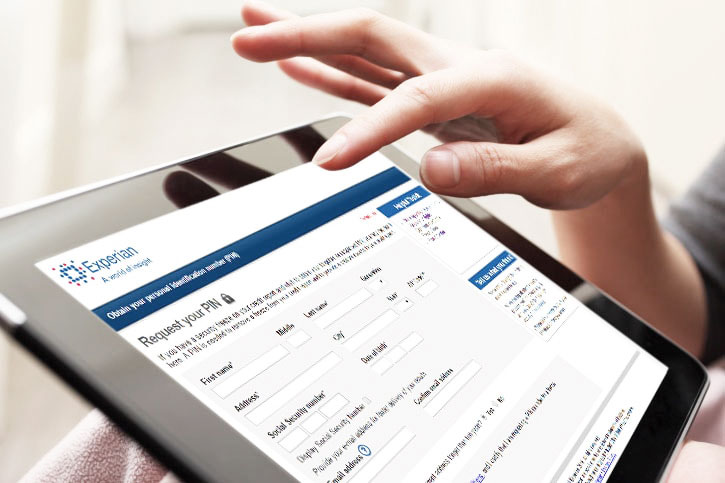
Experian Security Flaw Exposed PINs Needed to Unfreeze Credit Profiles


Image result for experian pin

With identity theft and consumer fraud constantly on the rise, every potential security breach is important for consumers to know about. All consumers, even those without credit cards, should constantly be prepared, and on the lookout for signs that they may be the targets of fraudulent activity. Recently, it was discovered that one credit reporting agency, Experian, had an overlooked security flaw that allowed criminals to access a consumer's PIN. According to Liz Weston's article, this failure of security has since been addressed, but for several hours this week, pretty much every person's credit profile was at risk.

If someone is the target of a cybercriminal and discovers that fraudulent activity has happened on their account, the first step they tend to take is freezing their credit so that more fraud can't happen in the time it takes to investigate the original fraud. This isn't an ideal solution, as some people who live paycheck to paycheck rely on their credit to survive, but overall, it's the best option currently available, as many consumers can go a few weeks without borrowing money from a lender or charging expenses to a credit card. In order to undo the freeze, to make the user's account accessible once the fraud issues have been cleared up, a user usually has to input a PIN code online and answer a few security questions.

This type of system, while convenient to the consumer who needs to unfreeze their credit as quickly and easily as possible, has its downsides too. The main issue with this system was revealed this week. In order to get into someone's account without their PIN code, a criminal would need to know certain financial information like name, Social Security number, date of birth, and street address (all of which can be purchased illegally through the dark web from criminals who had previously hacked companies like Equifax). Additionally, the hacker would usually have to also answer security questions that only the real user would know the answer to (name of a favorite teacher, favorite foods, etc). However, this Thursday, it was discovered that if a hacker (or any user, really) answered "none of the above" to the security questions (even if the correct answer was available to choose), the system would allow the unapproved user access, which could enable them to unlock a frozen credit profile.

Some users tested out the security flaw themselves to see if they could trick the system into giving up their PIN, and found that they succeeded quite easily. After broad public backlash, Experian announced this week that they were confident of the security of everyone's credit information, but is still working on making things even more secure to improve customer satisfaction. Late in the afternoon, users began to find that the security flaw had stopped working, a positive sign for worried consumers. However, as these issues keep arising and credit companies don't fix the security issues until after the fact, many consumers believe that the credit agencies don't have their customers' best interests at heart. However, there isn't much a consumer can do right now except be vigilant and keep insisting that credit agencies continue improving security.

***************************************************************************************************
Find out more about us at www.sepulvedaescrow.net. Any Questions? Contact our Escrow Expert! Sepulveda Escrow Corporation (818) 838-1831. Follow our company on Facebook, Twitter, LinkedIn, and Google+.
**************************************************************************************************

Friday, September 8, 2017

How to Choose a Rewards Credit Card That's Right for You


Credit cards can have many uses to different consumers. For some, it is a convenient way to keep their finances organized: spend money on the credit card all month, then pay one bill at the end. Others use credit cards to spend money that they don't currently have so that they can pay off the bill later when they have the money to pay it. Still others use credit cards for the sole purpose of building credit, to help them get lower APR when buying a car or getting a mortgage on a house. For many users, according to Chanelle Bessette's L.A. Times article, it's the rewards and extra bonuses that interest people in various credit cards.

If used properly, rewards credit cards can help users to get cash back, airline miles, and other perks. However, as with anything, there are both pros and cons. The best rewards cards give thousands of points as a signing bonus for charging a certain amount of money in a designated amount of time. Then, they offer points (or miles or cash back) for every dollar charged to the card in the future. Users can often get a flat amount of cash back on every purchase or can get special rates like 5% cash back on gasoline purchases. Some cards offer miles on airlines, which can essentially let you fly almost anywhere in the world as a reward for spending on the credit card.

On the downside, many of the best rewards cards have annual fees. The better your benefits from a rewards card, the more likely it is that the annual fees are high. For some cards, the annual fees can be hundreds of dollars, so they are more beneficial for people who will use them a lot in the year, gaining as many rewards as possible. Also be aware that some rewards cards extra fees when used overseas, or may not even be accepted by overseas vendors.

So, when deciding if a rewards card is right for you, there are several factors. Do you have great credit? Better cards require higher credit scores.  Do you often carry a balance on your credit card? Rewards cards tend to have higher APR, so the interest you pay could outweigh the rewards. If you travel a lot, a rewards card that offers mileage could be a good choice. If you spend a lot of money in certain categories each month, like gasoline or groceries, you can choose the right rewards card for you to maximize your benefits. All in all, there is no right or wrong answer. Rewards cards should be obtained only after careful consideration, on a case-by-case basis.

***************************************************************************************************
Find out more about us at www.sepulvedaescrow.net. Any Questions? Contact our Escrow Expert! Sepulveda Escrow Corporation (818) 838-1831. Follow our company on Facebook, Twitter, LinkedIn, and Google+.
**************************************************************************************************

Friday, May 26, 2017

Google Aims to use Targeted Advertisements to Boost Both In-Store and Online Shopping


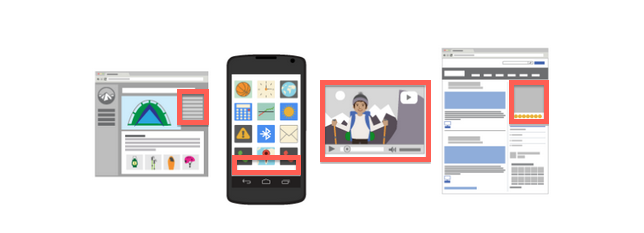
Most people who use the internet, especially for online shopping, have noticed at some point that the advertisements that appear on web pages they visit tend to relate to items they have been looking to buy. It is one of the ways that Google makes revenue, by selling advertising space and targeting the advertisements at those consumers most likely to be swayed by them. By correlating the number of clicks on an advertisement to the actual items purchased online by consumers, Google is able to show online retailers that their advertisements are the right choice.

Similarly, Google seems to be looking to move into the non-digital marketplace. According to an article by the Associated Press of the L.A. Times, Google is looking into a new service that will track how much consumers spend in brick and mortar stores after clicking on advertisements related to those purchases. However, it will only be able to correlate the information to stores, not to specific items purchased at the stores, which may not be enough information for some advertisers.

By determining how ad clicks are connected with actual purchases, Google can help advertisers to determine whether their ads are a waste of money or actually useful. If the data is convincing enough, it could be beneficial to both Google and the advertisers it is contracted by. If advertisers see how well their ads work, they are more likely to increase their advertising budget, thus generating more revenue for the retailer and more income for Google. The main problem, however, seems to be the loss of privacy inherent in this kind of data tracking.

Already, Google has digital dossiers on everyone who uses their online services. They know what people search for, what people shop for, and even the types of videos people watch on social media. Using that information, they can create targeted ads that are directed at the proper demographics. This new system just seems to be an expansion of that concept. There are precautions in place, fortunately. The system is expected to run in a "double-blind" manner, which means Google receives personal information that credit card companies and merchants don't, while the credit card company receives information that Google doesn't. Additionally, it won't be able to gather information on cash transactions and about 30% of credit card transactions. Advertisements have the ability to help all involved parties in that they can point customers toward products they want and provided added demand on products for retailers. The main question: is the loss of privacy worth the added benefits of the ads?

***************************************************************************************************
Find out more about us at www.sepulvedaescrow.net. Any Questions? Contact our Escrow Expert! Sepulveda Escrow Corporation (818) 838-1831. Follow our company on Facebook, Twitter, LinkedIn, and Google+.
**************************************************************************************************

Friday, July 22, 2016

ZestFinance to Use Search Data in Calculating Credit Scores


Traditionally, a credit profile is derived by looking at a potential borrower's history of paying back loans. Whether from car loans, credit card usage, or a mortgage on a home, the more an individual can show that they have paid back borrowed money in the past, the lower their interest rate will be on a new loan. However, there is the issue of the Catch-22 of credit: without any credit history, it is very difficult to get your first loan on the path to a good credit profile. Some companies have started including monthly rent payments in their calculations. In partnership with Chinese search engine Baidu, Hollywood credit firm ZestFinance will be using a potential borrower's internet search and shopping history to calculate their credit score, as described in James Rufus Koren's L.A. Times article.

Nontraditional means have been used in the past to calculate a potential borrower's credit, especially when that borrower has never borrowed money, but this will be the first time using search data. ZestFinance has focused on borrowers with little credit history from the very beginning and is confident that the sheer size of Baidu's engine will make them succeed where no one has ever dared venture before. The company will be breaking out in both the US and China, underwriting loans through the companies Basix and JD.com, respectively.

In addition to using the search data in calculating credit profiles, behavioral data gained from analyzing search history can help the company to avoid fraudulent customers. With enough data, ZestFinance believes they will be able to statistically determine the likelihood of a borrower paying back their loan in a certain time frame. One example they give is that for some reason, potential borrowers who fill out their loan application with proper capitalization are more likely to pay back their loan than a borrower who writes in all capital letters. They aren't sure exactly why this correlation exists, but they believe that enough research will enable them to create fair assessments of a borrower's credit profile.

Some believe that this system will be unfair, because how can anyone really tell if someone will pay back a loan based on what they look up online? However, if this is the system that enables the majority of those people who were previously refused loans to start down the road to good credit, then it may be worth it. In fact, ZestFinance believes their system will be fairer than current non-traditional calculations in that it can allow people with no credit history to have a decent interest rate, whereas before, they had to choose between paying exorbitant rates or missing out completely on the chance to develop their credit profile. As Douglas Merrill, a ZestFinance executive, says, three out of four Chinese citizens lack the financial history to have a fair credit profile. In exchange for a small, carefully limited, loss of privacy, credit could be gained more easily by everyone, and for most, that's a pretty simple trade.

***************************************************************************************************
Find out more about us at www.sepulvedaescrow.net. Any Questions? Contact our Escrow Expert! Sepulveda Escrow Corporation (818) 838-1831. Follow our company on Facebook, Twitter, LinkedIn, and Google+.
***************************************************************************************************

Friday, March 11, 2016

Banks to Incorporate Biometric Scanning to Help Prevent Hacking on Mobile Platforms


Due to hackers and other cyber criminals, online security has become a major issue around the world. In an attempt to protect their users' information, various websites have enacted different countermeasures to increase security and prevent hacking, but criminals seem to be evolving with technology. Furthermore, many of the extra safety measures, while they do a good job of protecting users, are often viewed as too confusing or time-consuming. James Koren, in his L.A. Times article, describes Wells Fargo's newest security measures: eye scanning and facial/voice recognition.

Banks and credit card companies tend to be the main targets of hackers and scammers looking to steal money and/or identification information. With a relatively small amount of information about you, a cyber criminal can apply for credit cards, open up bank accounts, and rack up thousands of dollars in debt under your name before you are any the wiser. Banks like Bank of America, JP Morgan Chase, and Wells Fargo are constantly looking for better ways to protect their customers without causing more of a hassle. What they have concluded is that the best method, at least for the time being, is the use of biometric markers, which, with current technology, are nearly impossible to forge.

The average consumer wants to be well protected, yet doesn't want to have to put in a lot of effort in order to obtain that protection. For example, Google, among other websites, has a feature called 2-Step Verification. When you make an account with Google, you have the option to save a phone number to your account. Then, every time you try to log in to your account on a computer that you have not saved, Google requires that you input your username, password, and a six digit code that is sent in a text message to the provided phone number. While this system essentially prevents hackers from getting into your account via brute force attacks, it can also be pretty annoying for users who have to log on to multiple computers/devices in any given day.

Besides lengthy, multiple-step encryption, there is also the simple issue of having to remember several different passwords for different websites, each with different formatting requirements. Each website doesn't want you to use the same password on another site, in case one of the websites gets hacked, but how is the average user supposed to remember upward of 5 passwords, and recall which one goes to which website? Biometrics seems to be the best of both worlds for both time-conscious and safety-conscious customers. Currently, fingerprint-scanning is huge in the marketplace, as new phones by Apple and Samsung are coming with built-in fingerprint scanning capabilities. Some banks are already offering fingerprint-based mobile access to non-business customers. However, for commercial customers, who have much larger accounts, and therefore much more to lose to cyber criminals, the banks want to use additional biometric markers to help ensure the security.

Wells Fargo's new service will use a phone's front-facing camera to look at the pattern of blood vessels on a user's retina. This pattern of blood vessels is just as unique as an individual's fingerprint and, therefore, provides just as much security.  Additionally, users could log in to their account using facial/voice recognition. A user holds their phone so that the front-facing camera can see them, and reads a series of numbers that appear on the screen. A combination of recorded voice data and facial structure data will determine if the user is who they claim to be. In all, these new features should provide a much easier and safer experience for all users, especially business customers who need better safety features. As of now, technology has developed to the point where biometric scanning is doable, but not yet hackable. In the future, this may change, but for the moment, biometrics is the safest course.

***************************************************************************************************
Find out more about us at www.sepulvedaescrow.net. Any Questions? Contact our Escrow Expert! Sepulveda Escrow Corporation (818) 838-1831. Follow our company on Facebook, Twitter, LinkedIn, and Google+.
***************************************************************************************************

Friday, December 4, 2015

New Credit Card Chip Technology Makes Debut as Holidays Approach


Have you recently noticed having a longer wait when checking out at various stores? Part of the reason is that there were more people out shopping, in preparation for Thanksgiving and Christmas. Another reason is that checkers are having some difficulty getting used to new systems designed to deal with the new "chip" credit cards. In Samantha Masunaga's L.A. Times article, she describes the new type of credit card, the reasons why it was created, and how its creation has affected shoppers.

While everyone expects longer lines around holiday times, analysts expect that the new credit cards may make lines extra long this year. Starting October 1st of this year, many new credit cards began to come equipped with a small metallic chip. This chip, which makes purchases safer and fraud harder to commit, has also caused something of a headache in that it has forced merchants to install new terminals that are able to accept the new cards. Since it is expected that 70% of cards will have the new chip technology by the end of the year, most merchants and card issuers have found that they should jump on the bandwagon.

While shoppers and checkers are all still trying to get used to the new card chips, leading to confusion and a longer wait time, eventually, as the chips become more common, it is expected that the lines will go back to normal. In all, though, customers seem to be taking the longer lines in stride, understanding that the increased security is worth a little bit more of a wait. Because it makes it harder to create a fake credit card or steal another person's information, the chip in the credit card helps to reduce identity theft and fraud.

Major retailers like WalMart, Target, and Home Depot have already transitioned to new technology that can accept chip cards, but some smaller companies are yet to complete the transition. However, by 2017, all merchants, including gas stations, will be forced to adopt new terminals that can accept the chip cards. Some shoppers have admitted to avoiding using their new chip cards, at least for the time being. While the difference between a chip card and a standard magnetic strip card can be as little as a few seconds, a delay of a minute or two can be caused by someone trying to swipe a chip card. If the mistake occurs several times throughout the day, the seemingly insignificant delays can add up. Because of this, many people not accustomed to the new technology try not to use it, so as to avoid causing a hold-up in the checkout line.

Some merchants claim that they argued with credit card companies about releasing the new cards right before the holidays, out of fear for potential back-ups. They would have preferred to start the new cards in January or February when customer traffic is less and slightly longer lines would be not as noticeable. Unfortunately, credit card companies chose to issue the new cards late this year. On the positive side, customers will be able to get plenty of practice over the holiday season and learn to use the cards properly. Some stores claim that delays are unnoticeable, others state that lines are only slightly longer, and customers have reported some even longer delays. Either way, even if the issue is minimal, use during the next month or so will provide shoppers with the chance to master the new technology and keep even minimal delays reduced in the future.

***************************************************************************************************
Find out more about us at www.sepulvedaescrow.net. Any Questions? Contact our Escrow Expert! Sepulveda Escrow Corporation (818) 838-1831. Follow our company on Facebook, Twitter, LinkedIn, and Google+.
***************************************************************************************************

Friday, July 31, 2015

How to Build, Maintain, and Repair Credit


Credit is a necessity in this day and age. Without a good credit score, it can be almost impossible to get a loan, buy a car, or purchase a house.  But what can you do if you have little to no credit? How can you get started? Well, according to David Lazarus, in his L.A. Times article, stepping into the world of credit scores and debt payments may not be as difficult as it seems.

Lazarus' sources show that over half of all American consumers have subprime credit scores. 26 million consumers have no data on file with credit companies and 19 million have information that is so outdated that it is almost useless by lenders. These Americans are unlikely to get a loan at all, and if offered, the rate on the loan will be much higher than those provided to others with better records. Lazarus focuses on two main problems: an inability to begin establishing credit and difficulty improving a low score.

There are a few types of loans that are designed to help new borrowers to start to build credit. A credit score is based on borrowing money and paying it back. So, the easiest way to establish credit is by getting a credit card from a store or a bank and using it. The key to the card is to use, not overuse. Build credit by having a balance on the credit card and paying off the balance on time each month. In this way, a lender can see that their money is in good hands. In general, when a lender gives you money, it is because you have a history of on-time payments. In fact, some credit reporting companies such as Experian and Equifax consider monthly rent payments in calculating a credit score.

After you have shown that you can handle a credit card, other loan options, such as "credit builder loans" are available, Such loans, which tend to be less than $1,000, are offered by credit unions as another path by which borrowers can show that they can be trusted. This type of loan is very interesting in that it is based specifically around building credit, rather than providing a borrower with needed money. With a credit builder loan, a designated amount of money is locked in a savings account by the lender. When the last payment has come in from the borrower, the money is released. While it would be just as easy for someone to save up their money by putting a designated amount aside each month, this "loan" allows a saver to build their credit score in the process.

As for those who have already borrowed more money than they can pay back, Lazarus assures them that all is not lost. However, do not let it get so bad that debt collectors come calling. Once the collectors show up, a mark on your file appears that will stay for up to 7 years, affecting your credit score and ability to get a loan. To avoid collection agencies, you can try working out a payment plan with your lender. Contact your creditor immediately if you think you will be behind on your payments.

If your score has already taken a hit, recovering can be difficult, but not impossible. Lazarus suggests that the first step is to get a copy of your credit report and begin paying off outstanding debts. As you pay off more debts, potential lenders tend to trust you more and more. After 7 years, the black mark on your record will disappear, which will bring your score up, but what can you do in the meantime? The best thing you can do, according to Lazarus, is just get your finances in order and avoid accruing more debts. Other than that, he assures those with bad credit that with enough time and good financial planning, things will get better.

***************************************************************************************************
Find out more about us at www.sepulvedaescrow.net. Any Questions? Contact our Escrow Expert! Sepulveda Escrow Corporation (818) 838-1831. Follow our company on Facebook, Twitter, LinkedIn, and Google+.
***************************************************************************************************

Tuesday, May 19, 2015

FICO Introducing Alternative Credit For Those With Poor or Nonexistent Credit History


4/3/15 - Individuals with low credit scores struggle to get a credit card, or to obtain a mortgage or other loan. Some see this as a fair system, especially since a low credit score usually means that the individual has a history of late payments or outstanding balances. It only makes sense that those with sketchy credit history should be trusted with more credit less readily. However, what about people without any credit history? A recent L.A. Times article discusses the options available for such individuals.

To build up a credit score, someone gets a credit card or loan, then pays back the loan on time, so as to show the credit company that they can be trusted. The length of a person's credit history is a substantial factor in determining how much money a bank or credit company would be willing to lend them. Unfortunately, without credit history, it can be difficult to get a loan in the first place. Without that first loan, the aspiring borrower can't build up a history of timely payments, and will therefore be unable to get a loan. This seemingly endless cycle has many newcomers wondering what to do.

Fortunately for young, first-time borrowers, Fair Isaac Corporation, known for its FICO credit score, has been working together with LexisNexis Risk Solutions and Equifax to create an alternative system for determining credit scores for individuals with little to no credit history. According to their research, someone with a good record of paying utility bills on time would also likely pay credit card bills in much the same pay. Using payment history instead of credit history, this system will create alternative credit scores and provide them to the top credit card issuers. Fair Isaac has yet to release information as to which banks have decided to participate in this program.

This currently unnamed new program is not meant to replace the FICO credit score. Instead, it will provide information only to credit card companies, in order to give credit-less consumers, usually young people, the opportunity to get a credit card and start building up their credit. Once credit has been built up through a history of timely payments, the consumer will be able to rely on the standard FICO credit score in order to get a mortgage or other loan.

According to a representative of LexisNexis, all collected data will be protected under the Fair Credit Reporting Act, so everyone involved will be able to dispute negative events on their credit reports, such as disputed bills. This system appears to have positive effects for all involved. New borrowers will be able to get credit cards with much less of a struggle. Banks will gain access to millions of previously non-existent customers and their interest payments. It's a win-win situation for everyone.

***************************************************************************************************
Find out more about us at www.sepulvedaescrow.net. Any Questions? Contact our Escrow Expert! Sepulveda Escrow Corporation (818) 838-1831. Follow our company on Facebook, Twitter, LinkedIn, and Google+.
***************************************************************************************************

Costco - American Express, Partnership to End in 2016


2/20/15 - For years, American Express was the exclusive credit card of Costco shopping centers throughout North America. Costco's most recent contract with American Express is set to expire in March 2016, and the companies have been unable to come to a mutually beneficial agreement for renewal of that contract. Costco Wholesale Corporation has since announced the upcoming split, and according to an article by E. Scott Reckard and Dean Starkman, of the L.A Times, Costco is close to finding a replacement as their sole credit card provider.

Since Costco only accepts one type of credit card, customers are forced to either pay via cash/check or use that type of credit card. This gives that credit card company a huge amount of business, since shoppers at Costco generally buy products in bulk and don't usually carry enough cash to pay for such a large quantity of goods. One of the big reasons for Costco's break with American Express, according to Reckard and Starkman, is a desire for lower swipe fees. If Costco, or any other company for that matter, is able to get cheaper rates from one credit card company versus another, they will almost always choose the one with lower prices.

Even though the partnership with Costco accounted for about $94 billion in revenue for AmEx, analysts state that based on Costco's new terms, the economics did not make a renewal the sensible move. Some of that money comes from interest on pending credit card balances, but the vast majority comes from actual spending by credit card holders.

Over the years, in an attempt to keep up with other companies, AmEx has offered rewards, special deals, and even lower fees, which has kept it relatively competitive. Unfortunately, AmEx's stock has been on a decline recently, a trend which has not been helped by the upcoming break with Costco. On the plus side, American Express claims that it has plans to reinvest in other companies, as well as to focus on its current partnerships.

The split is having a far worse effect on American Express than it is on Costco. Costco pretty much has the ability to choose its own rates, since the company that gets the partnership will be gaining much more business. A year ago, Costco switched to the Capital One Master Card in its Canadian branches, and has felt little ill effect from it. The only issue seems to be customers' reactions. How difficult will it be to change cards? Would it become easier for shoppers to simply pay in cash, which might reduce the benefit to the new credit card company? Only time will tell.

***************************************************************************************************
Find out more about us at www.sepulvedaescrow.net. Any Questions? Contact our Escrow Expert! Sepulveda Escrow Corporation (818) 838-1831. Follow our company on Facebook, Twitter, LinkedIn, and Google+.
***************************************************************************************************