Showing posts with label Hackers. Show all posts

Friday, October 5, 2018

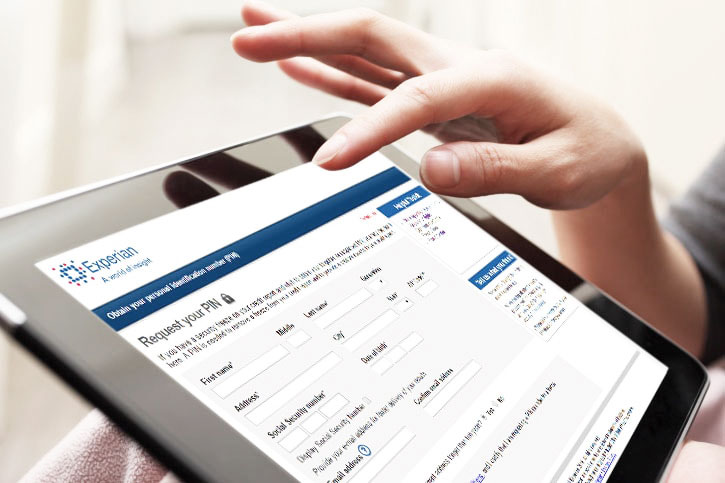
Experian Security Flaw Exposed PINs Needed to Unfreeze Credit Profiles


Image result for experian pin

With identity theft and consumer fraud constantly on the rise, every potential security breach is important for consumers to know about. All consumers, even those without credit cards, should constantly be prepared, and on the lookout for signs that they may be the targets of fraudulent activity. Recently, it was discovered that one credit reporting agency, Experian, had an overlooked security flaw that allowed criminals to access a consumer's PIN. According to Liz Weston's article, this failure of security has since been addressed, but for several hours this week, pretty much every person's credit profile was at risk.

If someone is the target of a cybercriminal and discovers that fraudulent activity has happened on their account, the first step they tend to take is freezing their credit so that more fraud can't happen in the time it takes to investigate the original fraud. This isn't an ideal solution, as some people who live paycheck to paycheck rely on their credit to survive, but overall, it's the best option currently available, as many consumers can go a few weeks without borrowing money from a lender or charging expenses to a credit card. In order to undo the freeze, to make the user's account accessible once the fraud issues have been cleared up, a user usually has to input a PIN code online and answer a few security questions.

This type of system, while convenient to the consumer who needs to unfreeze their credit as quickly and easily as possible, has its downsides too. The main issue with this system was revealed this week. In order to get into someone's account without their PIN code, a criminal would need to know certain financial information like name, Social Security number, date of birth, and street address (all of which can be purchased illegally through the dark web from criminals who had previously hacked companies like Equifax). Additionally, the hacker would usually have to also answer security questions that only the real user would know the answer to (name of a favorite teacher, favorite foods, etc). However, this Thursday, it was discovered that if a hacker (or any user, really) answered "none of the above" to the security questions (even if the correct answer was available to choose), the system would allow the unapproved user access, which could enable them to unlock a frozen credit profile.

Some users tested out the security flaw themselves to see if they could trick the system into giving up their PIN, and found that they succeeded quite easily. After broad public backlash, Experian announced this week that they were confident of the security of everyone's credit information, but is still working on making things even more secure to improve customer satisfaction. Late in the afternoon, users began to find that the security flaw had stopped working, a positive sign for worried consumers. However, as these issues keep arising and credit companies don't fix the security issues until after the fact, many consumers believe that the credit agencies don't have their customers' best interests at heart. However, there isn't much a consumer can do right now except be vigilant and keep insisting that credit agencies continue improving security.

***************************************************************************************************
Find out more about us at www.sepulvedaescrow.net. Any Questions? Contact our Escrow Expert! Sepulveda Escrow Corporation (818) 838-1831. Follow our company on Facebook, Twitter, LinkedIn, and Google+.
**************************************************************************************************

Friday, March 16, 2018

Alternatives to GPS Expected to be Less Susceptible to Spoofing or Jamming Attacks


The Global Positioning System, or GPS, as it's more widely referred to, was first developed by the US in the 1970s, and has been used ever since as the main method of determining location, speed, and even time. It relies on a set of 30 satellites in orbit, as well as their respective stations on the surface of the Earth. while the system has worked well for several decades, it is not completely immune to sabotage, and if any of the satellites or stations were to fail or be destroyed, the entire system could be compromised. To address this, says Samantha Masunaga, in her L.A. Times article, there are many companies working on guidance technologies that don't rely on those satellites, thereby assuring accurate and reliable location reporting.

GPS systems are susceptible to attacks from a few different methods. The more common method is the use of a GPS jammer, which prevents a GPS receiver from getting a signal, essentially making the receiver useless. In that situation, the attack can be problematic, in that the user no longer has control over their GPS system. However, the attack that poses far more concern is known as "GPS spoofing." GPS spoofing is a method by which a hacker feeds the GPS receiver a false signal, and causes the navigation change very slowly. Because the change is so subtle, the system doesn't detect it as an issue, so no alarms sound.  A hacker could send the user into a dangerous situation, or simply somewhere other than where they wanted to go, and the system would be none the wiser until it was too late.

One company, called Satelles, has their own set of location signals being beamed from a separate set of satellites. When there are multiple sources performing the same function in some industries, some might call that redundant and think it a waste of resources. However, with something as fragile and important to things like national security as a positioning system, it's better to have multiple redundancies. If one of the systems becomes vulnerable to hacking, another one can fill in and take its place. Alternatively, one of the branches of the US military, called DARPA, is working on an advanced navigation system (ANS) that relies on signals from local radio towers, cell towers, and TV towers. Those signals can then be triangulated by the ANS receiver to provide information about the receiver's precise location.

Others have looked into the option of using image recognition on vehicles to determine location based on the geography or landmarks of the surroundings. One company, Iridium, has a set of 66 satellites that were originally designed for satellite phones, but have since been re-purposed for location services, which are at higher quality due to the closer proximity to the Earth's surface. No matter which technology ends up becoming the dominant replacement for current GPS systems, it seems greatly beneficial that they are trying to go in a safer, more secure direction. Anything that is resistant to spoofing, jamming, and other sorts of attacks will be great for commercial and military applications, and may one day lead to a completely different default global positioning protocol.

***************************************************************************************************
Find out more about us at www.sepulvedaescrow.net. Any Questions? Contact our Escrow Expert! Sepulveda Escrow Corporation (818) 838-1831. Follow our company on Facebook, Twitter, LinkedIn, and Google+.
**************************************************************************************************

Friday, January 5, 2018

Sheltered Harbor Program Uses "Buddy System" to Protect Financial Institutions from Cyber-Criminals


Increased prevalence of new technologies in pretty much every industry over the past few decades has led to improved quality and efficiency of service across the board. While technological improvements have, as a whole, provided more benefits than drawbacks in the modern day, one major concern has made its way to the forefront in recent years. With the technological advances has come cyber attacks, which put personal data and financial information at risk. Yalman Onaran's article in the L.A. Times discusses a method that financial institutions have been developing to protect trillions of dollars in funds from hackers.

From checking and savings accounts to retirement and pension funds, there are trillions of dollars being stored through various banks and brokers. Those assets tend to be insured, such as in the case of a bank robbery, the clients of the bank will get their money back. The difference between a physical robbery and theft via cyber attack is that hackers will often delete data from the targeted system, which can lead to great turmoil for a banking institution without sufficient backup data.

Many of the larger companies keep their data backed up on private secure servers, but that doesn't help much if the cyber attack shuts down their entire system. In a situation where the entire system is targeted and taken down, it can take days or even weeks for the company to get everything running properly again. The main issue with that, especially among banks, is that their customers need to access their accounts on a daily basis. The average person can't just wait uncertainly for days on end without access to the money in their checking account.

Financial institutions began to worry that such a hack at any banking entity, no matter how small, could cause significant ripples throughout the entire financial system. For example, if people hear that a bank was hacked (even if the bank is not theirs), and if they see that the customers of that bank can't access their money, they would be less likely to trust their own bank and could possibly go to withdraw their money, to prevent their funds from getting tied up if their bank was hacked. If enough people followed suit, it would become a wave that could crash the entire infrastructure, as banks don't actually have enough money in-house to cover most of their customers, since they lend out the majority of it to other customers.

A project called Sheltered Harbor is aiming to avoid such potential issues by teaming up financial institutions. By pairing them up, if one bank was hacked and had their system shut down for any length of time, the other bank would have a backup of their data and could assist their customers. The same would work in reverse. So, unless a sophisticated cybercriminal could predict and target the exact banking institutions that had been paired, Sheltered Harbor's system should be able to prevent an all-out meltdown of the financial system. That means that trillions of dollars in savings and retirement accounts will remain protected.

***************************************************************************************************
Find out more about us at www.sepulvedaescrow.net. Any Questions? Contact our Escrow Expert! Sepulveda Escrow Corporation (818) 838-1831. Follow our company on Facebook, Twitter, LinkedIn, and Google+.
**************************************************************************************************

Friday, October 20, 2017

Key Reinstallation Attacks Can Allow Criminals to Hack Your WPA-2 Wireless Communication


Technological advancement, which can be greatly beneficial in many ways, can also make it more difficult for you to protect your personal information. Years ago, before the advent of the internet, rates of identity theft were far lower than they are today. Identification documents and private data were not nearly as available before the era of the internet. However, now that hacking is so prevalent, we must do what we can to improve our cybersecurity and prevent hackers wherever possible. According to Samantha Masunaga's recent L.A. Times article, the latest vulnerability to address lies in WPA-2 protocol, the current industry standard for Wi-Fi protection.

WPA-2 is the fundamental protection built into most wireless communication available around the world. Until recently, it was considered the best way to protect your online information, but researchers in Belgium found a vulnerability in the WPA-2 protocol that can allow a hacker to use "key reinstallation attacks" to intercept wirelessly transmitted information, even over encrypted networks. The hacking technique, also known as "Krack," is able to target systems powered by operating systems including Windows, Apple, Android, and Linux. From computers to modems to Wi-Fi enabled refrigerators; anything on your network could potentially be hackable.

The researchers found that Kracking is most effective against computers running Linux and devices running the latest version of Android OS. The hack could be used to capture information in sent emails, credit card numbers, browsing data, and even photos and videos sent to contacts. The hacking technique, while powerful, may not be as great a cause for worry as might be expected. According to the analysts, the hacker would have to be highly skilled and in close proximity to the targeted device. Therefore, any hacker looking to use Krack would likely target large corporations, where they might find a better payout.

To protect yourself, you should download any patches released by manufacturers as soon as they are released. For Windows devices, leaving "automatic updates" selected will let your computer take care of the threat for you. Many Apple devices have already received fixes for the vulnerability and others will receive software updates within the next couple of weeks. Google is working on releasing patches for Android devices as quickly as possible. Until that's all wrapped up, you can protect yourself by sending encrypted emails, being careful with online transactions from certain devices, and adding passwords to shared files that contain sensitive information.

***************************************************************************************************
Find out more about us at www.sepulvedaescrow.net. Any Questions? Contact our Escrow Expert! Sepulveda Escrow Corporation (818) 838-1831. Follow our company on Facebook, Twitter, LinkedIn, and Google+.
**************************************************************************************************

Friday, March 17, 2017

Deter Hackers by Improving Online Security on Social Media Accounts


As time goes on and technology continuously improves, the ability to hack into the new technology improves with it. So, because hackers are getting smarter and finding ways to attack our internet-enabled devices, we too have to develop and work harder to prevent such attacks. Over the past few years, popular social media platforms like Facebook and Twitter have been targets of hacking and phishing schemes. According to Jessica Roy's article in the L.A. Times, one feature on your Twitter account could be making you more vulnerable to hackers.

Lately, there have been several situations in which Twitter accounts have had their security compromised. From celebrities like Justin Bieber to multi-million-dollar businesses like McDonald's, hackers are taking over. Sometimes they just want to "troll" and post something that they think is funny or that might get a reaction. Other times, the messages are designed to trick other people into clicking a link that will allow the hacker to break into other accounts. 

In at least one case, the cyber attacks were due to third-party tools and applications, such as "Twitter Counter." Years ago, when Twitter was still new, third-party applications like Twitter Counter allowed users to keep track of followers, find new followers, and post their Tweets on a schedule. Nowadays, few people use such tools, because Twitter has since updated their system to be able to offer many of the same abilities. However, even though most users stopped using Twitter Counter, many of them forgot to disconnect the tool from their account, leaving them vulnerable to a cyber attack. 

Because the third-party tool is more easily hacked than Twitter itself, criminals often look to use a program like Twitter Counter as a springboard to get into an account. Once they have hacked the app that has permission to access your account, they will have the ability to post from your account. In order to prevent similar issues on your account, make sure to check the options on your account (under "settings and privacy") and revoke access to any third-party applications that you don't use. To make your account even more secure, Twitter has some built-in security features. 

First, two-step authentication can be enabled on your account. While it seems more annoying to have to put in a password and a special code sent to your cell phone by text message or call, overall it can be worth it to avoid data thieves. Additionally, to make your account even more secure, you can choose a complicated password with a variety of letters, numbers, and symbols. Finally, make sure your password doesn't match that on one of your other accounts. If you use the same password for every platform, then if one account is compromised, they all will be. These quick and easy changes to your behavior online can help to protect you and make it much more difficult for hackers to make you their next target.

***************************************************************************************************
Find out more about us at www.sepulvedaescrow.net. Any Questions? Contact our Escrow Expert! Sepulveda Escrow Corporation (818) 838-1831. Follow our company on Facebook, Twitter, LinkedIn, and Google+.
**************************************************************************************************

Thursday, March 24, 2016

BEWARE - You and Your Clients Are a Target For This Real Estate Scam


Cyber-criminals are finding new methods every day to steal personal and financial information. Their techniques range from phishing scams to buffer overflow techniques and brute-force password hacking. Banking institutions have found themselves under attack far more than usual in recent years, and have in turn begun to incorporate stronger security measures in an attempt to block hackers. As a result, many scammers/hackers have moved on to what they believe are "easier targets." focusing on normal people rather than financial institutions, Just last week, the Federal Trade Commission and the National Association of Realtors issued a warning to consumers that they must be hyper-vigilant in order to avoid recent phishing schemes that have been targeting closing costs on real estate transactions.

The National Association of Realtors, along with the Federal Trade Commission, issued their statement warning people to be on the look-out for a specific scheme targeting those involved in a real estate transaction. First, the hackers gain access to the email account of a customer, real estate agent, or escrow officer, and use the information to keep up-to-date on the transaction and determine the closing date. When they have figured out the closing date, the scammer sends an email that has been masked in such a way that they are able to impersonate the escrow company, title company, or real estate agent, telling the customer that the wiring instructions had a last-minute change. If the customer takes the bait, they send their funds to the scammer's account, which can be emptied in minutes.

Sepulveda Escrow utilizes encrypted and secure email when sending documents with sensitive and confidential information. In addition, documents can be returned via email through this secure portal. Sepulveda Escrow has also instituted new procedures to contact Clients directly to confirm details, rather than relying on email or contact through a third party. (Please see end of this blog for some helpful tips.)

It is imperative to know that cyber criminals don't always need to be able to break through firewalls or use high-tech software to get your personal information or access your computer's data. Quite often, hackers use more subtle tricks to gain access. Phishing schemes are one of the most common ways by which they trick potential targets. One example of phishing is when a hacker sends a mass email to a group of people, and makes it look like the email comes from a bank or other online payment platform. The email requests that the recipient verify their login information by following a link. The link leads to a page that closely resembles the actual login page for the financial institution, but when the user inputs their login information, the hacker records the username and password, thereby enabling them to access the account and steal their money.

Another example of phishing is when a hacker contacts a target or a group of targets under the guise of an Official informing them that they have been the victim of a scam. They then tell the recipient that they can help them fix the damage, but first ask for certain sensitive information like Social Security number or bank information, to "verify" what data had been "stolen."  While you may look at this and think that the scheme is too obvious to be effective, statistics show that approximately 0.4% of recipients fall prey to such attacks. In other words, if a mass email is sent to 10,000 people, about 40 of them will have their information successfully stolen.

While phishing is historically the easiest and most effective method by which hackers are able to steal personal or financial information, there are several other methods. A buffer overflow attack, used by more sophisticated hackers, involves inputting many lines of code into an online form in order to overload the system and allow the hacker to steal data inputted by previous customers. A brute-force password hack involves a computer program that inputs all kinds of combinations of letters, numbers, and symbols, until the correct password has been found and the hacker has gained access to an email or other kind of online account.

Finally, hackers often package viruses or worms into free online software or as attachments to mass emails. Such viruses can enable the hacker to record keystrokes, thus giving them access to many of your passwords, or enable them to access built-in microphones or webcams on laptops. Simply opening such an email or downloading an infected attachment can lead to a virus being installed on your computer or mobile device. Fortunately, anti-virus software can often help to detect and remove these viruses, but hackers are constantly finding new ways to avoid detection by your anti-virus program. The best way to avoid getting such viruses is to be careful when downloading anything, and to avoid opening any emails that seem suspicious or come from unknown or unreliable sources.

Here are some tips to help you avoid being affected by similar scams. First and foremost, if something doesn't look right or feels even a little bit suspicious, don't hesitate to double-check it. Don't rely too much on emails. Instead, pick up the phone and call your escrow officer or realtor to make sure that everything you have received is correct. Don't open email attachments you aren't expecting. Additionally, you shouldn't trust financial information that has been sent via email, nor should you send any of your own financial information via email, because it usually isn't secure. In general, wiring instructions are sent by fax or encrypted email message. When inputting personal information on a website, check the address for "https," of which the "s" stands for secure, meaning that your information will be better protected.

Be very careful when opening attachments or downloading anything from an email, no matter who sent it to you. Just because you recognize the email address, doesn't mean that the message actually came from the person you associate with that email address. It's possible that a scammer could have hacked a friend's email, or could have disguised their email to appear as if the message came from a friend's email address. Proceed with caution. Being aware and cautious can save you a lot of hassle in the long run. 

Biggest Tip: Following up on the phone after sending an email may seem burdensome, but we at Sepulveda Escrow find that it is always worthwhile to go the extra mile to avoid financial losses and potential lawsuits.

***************************************************************************************************
Find out more about us at www.sepulvedaescrow.net. Any Questions? Contact our Escrow Expert! Sepulveda Escrow Corporation (818) 838-1831. Follow our company on Facebook, Twitter, LinkedIn, and Google+.
***************************************************************************************************

Friday, March 11, 2016

Banks to Incorporate Biometric Scanning to Help Prevent Hacking on Mobile Platforms


Due to hackers and other cyber criminals, online security has become a major issue around the world. In an attempt to protect their users' information, various websites have enacted different countermeasures to increase security and prevent hacking, but criminals seem to be evolving with technology. Furthermore, many of the extra safety measures, while they do a good job of protecting users, are often viewed as too confusing or time-consuming. James Koren, in his L.A. Times article, describes Wells Fargo's newest security measures: eye scanning and facial/voice recognition.

Banks and credit card companies tend to be the main targets of hackers and scammers looking to steal money and/or identification information. With a relatively small amount of information about you, a cyber criminal can apply for credit cards, open up bank accounts, and rack up thousands of dollars in debt under your name before you are any the wiser. Banks like Bank of America, JP Morgan Chase, and Wells Fargo are constantly looking for better ways to protect their customers without causing more of a hassle. What they have concluded is that the best method, at least for the time being, is the use of biometric markers, which, with current technology, are nearly impossible to forge.

The average consumer wants to be well protected, yet doesn't want to have to put in a lot of effort in order to obtain that protection. For example, Google, among other websites, has a feature called 2-Step Verification. When you make an account with Google, you have the option to save a phone number to your account. Then, every time you try to log in to your account on a computer that you have not saved, Google requires that you input your username, password, and a six digit code that is sent in a text message to the provided phone number. While this system essentially prevents hackers from getting into your account via brute force attacks, it can also be pretty annoying for users who have to log on to multiple computers/devices in any given day.

Besides lengthy, multiple-step encryption, there is also the simple issue of having to remember several different passwords for different websites, each with different formatting requirements. Each website doesn't want you to use the same password on another site, in case one of the websites gets hacked, but how is the average user supposed to remember upward of 5 passwords, and recall which one goes to which website? Biometrics seems to be the best of both worlds for both time-conscious and safety-conscious customers. Currently, fingerprint-scanning is huge in the marketplace, as new phones by Apple and Samsung are coming with built-in fingerprint scanning capabilities. Some banks are already offering fingerprint-based mobile access to non-business customers. However, for commercial customers, who have much larger accounts, and therefore much more to lose to cyber criminals, the banks want to use additional biometric markers to help ensure the security.

Wells Fargo's new service will use a phone's front-facing camera to look at the pattern of blood vessels on a user's retina. This pattern of blood vessels is just as unique as an individual's fingerprint and, therefore, provides just as much security.  Additionally, users could log in to their account using facial/voice recognition. A user holds their phone so that the front-facing camera can see them, and reads a series of numbers that appear on the screen. A combination of recorded voice data and facial structure data will determine if the user is who they claim to be. In all, these new features should provide a much easier and safer experience for all users, especially business customers who need better safety features. As of now, technology has developed to the point where biometric scanning is doable, but not yet hackable. In the future, this may change, but for the moment, biometrics is the safest course.

***************************************************************************************************
Find out more about us at www.sepulvedaescrow.net. Any Questions? Contact our Escrow Expert! Sepulveda Escrow Corporation (818) 838-1831. Follow our company on Facebook, Twitter, LinkedIn, and Google+.
***************************************************************************************************

Tuesday, May 19, 2015

Hackers Gain Access To Anthem Database


2/6/15 - Over the past year, several major retailers, including Target, Home Depot, and Michael's have been victim to the cyber-attacks of hackers. The most recent target on a lengthy list of such data breaches was Anthem Blue Cross, a major health insurance provider. Chad Terhune discusses the consequences of this hack in his article in the Los Angeles Times.

While Anthem states that hackers did not gain access to credit card information and health records, they were able to access much more. From name to date of birth to Social Security number, it appears that these hackers now know most of the personal information belonging to up to 80 million individuals who have health insurance through Blue Cross.

The sheer amount of personal information gathered by the hackers is enough to be quite certain that identity theft is a likely outcome. The personal information could be used by the hackers or others to open new lines of credit, or possibly even to access and empty existing accounts. Anthem warns any who have had coverage in the past and any who are currently covered by Blue Cross to keep a watchful eye on their financial accounts, in case identity theft is the main goal of these hackers.

One of the more upsetting parts of this situation for many is the fact that the stolen information wasn't even encrypted. It's bad enough that the databases got broken into, but a lack of encryption on the stored information means that cyber-criminals have easy access to the data within those databases. In fact, Anthem was even forced to pay a fine of $1.7 million in connection to allegations by the federal government that a weakness in their security left clients' personal information open to attack. Why hasn't Anthem learned its lesson?

Anthem, along with many other companies, need to develop better safeguards and protection mechanisms to make sure that only authorized parties are able to access personal information. For a company as large as Anthem to have left data unprotected multiple times in less than two years is just irresponsible. Sure, there are hackers that can make their way past any defenses, but better protections will at least slow them down, maybe even enough to stop some of them altogether.

This is a crucial time for Anthem, due to the thousands of people trying to enroll in coverage under the Affordable Care Act. They will have to be very careful dealing with this issue, in order to convince their clients not to look elsewhere for a health insurance provider. While Anthem has dealt with the attack through the proper channels, by contacting the FBI immediately, most people would still be more comfortable trusting the large company with their information if Anthem underwent a massive overhaul of their security systems. Such a project could prevent future breaches and make all involved parties much happier.

***************************************************************************************************
Find out more about us at www.sepulvedaescrow.net. Any Questions? Contact our Escrow Expert! Sepulveda Escrow Corporation (818) 838-1831. Follow our company on Facebook, Twitter, LinkedIn, and Google+.
***************************************************************************************************