Showing posts with label Snapchat. Show all posts

Friday, September 28, 2018

Amazon-Snapchat Partnership Expected to Substantially Impact Snap Inc.'s Future Business Prospects


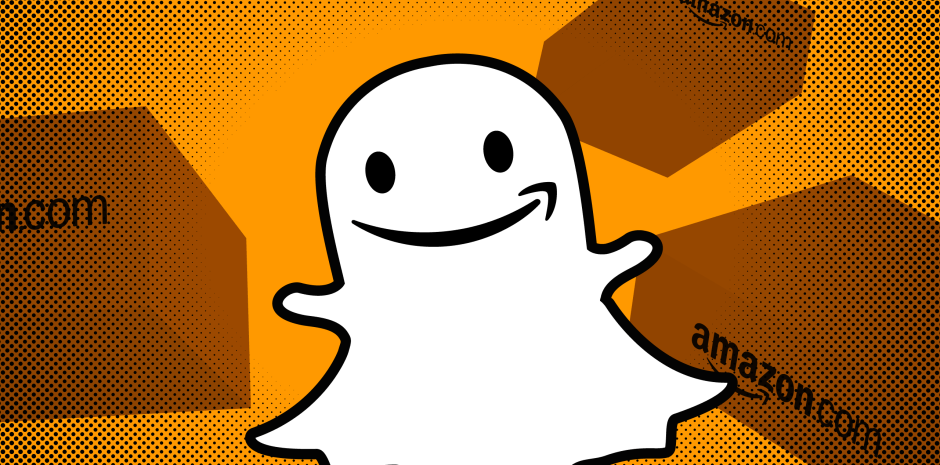
Image result for snapchat amazon

Online commerce constitutes a huge portion of all merchandise being purchased, and each year, the proportions keep increasing. While some people prefer to go into a store to actually feel an item or try on some clothes before making their purchase, services like Amazon Prime make it easy and convenient for consumers to shop online, then return anything they don't like, free of charge. With a feature that was recently added to Amazon's app, which allows a user to take a picture of an item in the real world in order to search for it on Amazon, the online market will continue to grow exponentially. Interestingly, although Amazon already has this feature on their own app, according to Sam Dean's L.A. Times article, the corporation has recently partnered with Snapchat to give the social media app the same shopping capabilities.

Economic analysts are unsure as to what Amazon's end goal might be. The corporation already has an app capable of leading a user to an item for sale based on a captured image. Why does Amazon want to add the same feature to Snapchat's app? Similarly, what could Snapchat possibly be getting out of the deal that it makes it worthwhile for them to use their platform to help an indirect competitor like Amazon? The explanation for Snap Inc.'s end of the partnership is simple: money. Online platforms that push business in Amazon's direction get between 1% and 10% of the sale price of a purchased item as a commission. So, the more Snap customers purchase on Amazon (which can be improved with this image-recognition feature), the more money Snap Inc. can bring in.

For Amazon's side of this partnership, no definite conclusions have been drawn. Some believe that Snapchat has a user base that is significantly different from Amazon's, to the extent that the benefit of increased sales would far outweigh the cost of adding the feature to Snapchat's app. According to a study, over three-quarters of all internet users between the ages of 18 and 24 use Snapchat, and that demographic tends to be much more likely than the average consumer to make online purchases on a whim. Others believe that this partnership is part of a far larger plan on Amazon's part. History has shown that when Amazon partners with a smaller company, they tend to only play nice until they fully understand the company's business model, at which point they put them out of business.

Alternatively, this tentative partnership could be a plan on both sides to improve the odds of a peaceful transition of ownership in the near future. Snap Inc. recently hired Tim Stone (a long-lasting executive at Amazon) as Snap's Chief Financial Officer. Also, because of Facebook's blatant copying of Snap's intellectual property over the years, if Snap executives were ever to consider liquidating the company, they would likely strongly oppose selling to Facebook, their business enemy. So, it isn't unbelievable to think that Snap might be gearing up to sell to Amazon soon, and this update to Snapchat's features could be their first step in testing such a combination of the companies.

***************************************************************************************************
Find out more about us at www.sepulvedaescrow.net. Any Questions? Contact our Escrow Expert! Sepulveda Escrow Corporation (818) 838-1831. Follow our company on Facebook, Twitter, LinkedIn, and Google+.
**************************************************************************************************

Friday, June 1, 2018

YouTube Most Popular Social Media Platform Among U.S. Teens


The internet has evolved so much since it was first created. The internet's growth from a hub of research sharing to the vast interconnected network that exists today is simply mindboggling. None of its original developers could ever have imagined how far their project would come one day. Although the internet is still used for that original intention (sharing research), consumers use it for so much more today. They can go shopping or communicate or socialize or really do pretty much anything they want. The internet is such a dominant force in our society that many online companies can make plenty of money just by getting users to visit their sites. According to a Bloomberg article, one such popular site, YouTube, has become the most dominant social media site, at least in terms of users aged 13-17, the "trendsetting demographic."

These days, the money-making ability and success of a social media company are dependent on how many users it can attract. Even though most of those kinds of sites are free to use, they make money off of advertisements. A few years back, Facebook was well in the lead and was able to make the statement that 71% of teenagers in the United States actively used the site. Now, there isn't one single definitive leader when it comes to favorite social media sites for US teens. The three market leaders are now YouTube, Snapchat, and Instagram, while Facebook has only captured 51% of their possible teen market. YouTube is in the lead currently, with 85% of teens in the US using the site, according to a Pew Research study.

Even with a decrease in their capture rate of that ideal demographic,  Facebook still does very well for its shareholders. Facebook makes approximately $23 per user each quarter and has over 185 million users in the US and Canada alone. Those numbers could change pretty quickly in the future, though. Even now, the study found that only 10% of the respondents reported using Facebook as their main social media platform. Conversely, 33% said that Youtube and Snapchat are their top sites, and 15% said that Instagram is visited most often. Facebook's relatively recent acquisition of Instagram could be their saving grace.

Social media apps and plenty of other online platforms have had increased usage over recent years. This is likely because getting on the internet continues to become easier as technology becomes more and more advanced. Where a user once had to go to a physical desktop computer, the advent of portable computing made everything more accessible to so many people. From laptop computers to smartphones, users are now able to get online pretty much anywhere and anytime they want to. In fact, the Pew study found that 95% of teens either have a smartphone or have regular access to one. Also, 45% of teens say that they are online nearly constantly. That kind of ease of use is beneficial to the companies and consumers alike.

***************************************************************************************************
Find out more about us at www.sepulvedaescrow.net. Any Questions? Contact our Escrow Expert! Sepulveda Escrow Corporation (818) 838-1831. Follow our company on Facebook, Twitter, LinkedIn, and Google+.
**************************************************************************************************

Friday, March 3, 2017

Snap Inc. IPO Jumps 44% on First Day


Snapchat has, since its release in September of 2011, continuously updated and found new ways to attract its expanding base of users. Most recently, the company was planning on adding functionality to help users find their friends and stay updated during emergency situations. From funny videos to reality-distorting filters, Snapchat has stayed technologically in tune enough to keep boosting demand and stay competitive with other social media networks. This week's L.A. Times article by Tracey Lien, Paresh Dave, and Nina Agrawal detail's Snap Inc.'s initial public offering (IPO) and what it means for the company as a whole.

On Wednesday, Snapchat's stock was priced at $17. Within 24 hours, it leaped to a closing price of $24 on Thursday, where it had peaked at $26 for a short time. That 44% gain is the kind of "pop" that can indicate massive success for a new stock offering. It usually means that the stock is in high demand among investors. However, it could also mean that the company purposely "left money on the table," setting the stock at a price lower than it was worth.

Analysts found that Goldman Sachs, Morgan Stanley, and other big investment banks had orders for 10 times the number of shares Snap was willing to sell, so they could easily have charged more than $17 per share in order to make extra money. However, in raising the cost per share, they risk reducing demand. While one or two dollars extra per share would have been unlikely to have any significant impacts on overall demand, if Snap had chosen to open at $22 or $23 per share, the market would probably have shown much less interest, and it's possible that the stock would have busted.

To many investors, it's far more impressive for a company's stock price to rise rapidly than to stay steady at an already-high price. It was a smart plan for Snap Inc. to set their stock price at a lower level, giving it room to grow. There is a possibility that if they had started it high it may have ended even higher, but in all likelihood, people would have shown much less interest in the company and not bought at such high levels. Either way, however, investors are unhappy if prices fluctuate too much from their original levels. Whether they start high and drop or start low and pop, investors become concerned. Therefore, the best way for a company to keep its investors happy is to try to predict a stock price that will stay steady through its IPO.

***************************************************************************************************
Find out more about us at www.sepulvedaescrow.net. Any Questions? Contact our Escrow Expert! Sepulveda Escrow Corporation (818) 838-1831. Follow our company on Facebook, Twitter, LinkedIn, and Google+.
**************************************************************************************************

Friday, January 13, 2017

Snapchat's Planned Updates Expect to Expand User Base


In late 2011, a group of Stanford students came together to develop a new kind of social media platform, which they called Snapchat. Snapchat was unique in that it aimed to allow virtual communication with the same level of emotional range that one might expect from an in-person conversation. To accomplish that goal, Snapchat was designed to be impermanent in that all messages, pictures, and videos sent through the app would be deleted after the recipient had viewed them. The new concept took the social media world by storm and brought in many users, especially among the teenage to early twenties demographic.

Eventually, however, the buzz died down and many users became bored of the concept, turning to standard social media platforms like Facebook and Twitter for their day-to-day use. Snapchat kept updating their software, adding features to make it more interesting to use, but some people didn't see a purpose in sharing 10-second blurbs of their life. It wasn't until late 2015 that the company made a big change that brought in so many more users: filters. Their filters gave users the ability to change their appearance, voice, or background, thereby making photos and videos more of a fun experience to share with friends. Since then, Snapchat has been continuously adding to their supply of filters, getting more and more detailed by the day. Most recently, as Paresh Dave described in his L.A. Times article, Snapchat is making another big change, a search bar that will make the platform that much more similar to competitors like Facebook.

Besides the fact that the new update seems to stray from the company's original plan to be different from other social media platforms, the search bar seems to be a great addition. Not only will users be able to look up friends by name, they will also be able to efficiently find celebrities and companies that they want to follow. Additionally, all users will have the ability to send their Snaps to the company for the chance to be featured publicly, a feature that was once limited to specific locations and events. Perhaps the coolest part of the new update involves the use of artificial intelligence to identify objects or people in public videos. In that way, a user could choose to view any Snap containing a specific product or featuring the image of a politician or some other famous person.

Because Snapchat is now allowing public submissions from anyone around the world, they are making their users happy and are granting themselves access to far more content. If users are willing to send in their own funny or thought-provoking images and videos, then Snapchat doesn't have to invest money into coming up with their own. Their AI will sort the Snaps based on event or location, which could be helpful for real-time coverage by real people in the event of a natural disaster or local emergency. All of these changes to the app seem to be timely and will hopefully be quite effective in both helping the company grow and allowing users to connect easily.

***************************************************************************************************
Find out more about us at www.sepulvedaescrow.net. Any Questions? Contact our Escrow Expert! Sepulveda Escrow Corporation (818) 838-1831. Follow our company on Facebook, Twitter, LinkedIn, and Google+.
***************************************************************************************************

Friday, October 28, 2016

Twitter Inc. to Shut Down Vine and Lay Off Hundreds of Employees


Five years ago, Facebook and Twitter got into a battle over who would ultimately purchase Instagram. When the more-powerful Facebook ultimately purchased Instagram, Twitter took a risk and went for the unheard-of Vine app. In the short-run, Vine was a far cheaper investment and ended up with millions of users. However, now that live video streaming seems to be the way of the future. According to Paresh Dave, in his L.A. Times article, Twitter is being forced to stop all future development on Vine and cut approximately 9% of its workforce to make ends meet as their profits continue to decrease.

Vine is an app that enables users, especially those with comedic talent, to share short videos, limited to approximately 6 seconds. Many people have gained viral fame due to Vine, including comedians like Thomas Sanders and singers like Shawn Mendes. Unfortunately, even though Vine gained massive popularity, it only lasted a few years before users and advertisers realized that YouTube and other platforms would be more lucrative. As one analyst stated, there are too many alternatives for video advertising to have a successful app that limits clips to 6 seconds.

Vine isn't the only thing Twitter Inc. is getting rid of, though. In order to save around $100 million per year, even after severance pay, Twitter plans to lay off approximately 350 of its 3,900 employees. Unfortunately, analysts don;t believe that the cuts will be enough in the long run. While Twitter's revenue is up 8% from last year, in part due to advertisement sales, it is also showing a loss of over $100 million per quarter. Twitter executives seem confident that the addition of live-streaming capabilities will enable the company to be more successful in the future, but that remains to be seen.

One of the main problems that analysts have pointed out regarding Twitter Inc.'s business is that users are too limited. On Twitter.com, posts are limited to 140 characters, and on Vine, videos were limited to 6 seconds. Users don't like limits, especially when they are so small. At least on Snapchat, videos have a slightly longer 10-second limit, nearly double that of Vine. There has been some talk in recent years of Twitter raising their character limits, but as of yet, that has not come to fruition. Logically, longer messages and longer videos would have more space for advertisement, so if Twitter wants to stay competitive, it may have to adapt to the longer format used by most platforms.

***************************************************************************************************
Find out more about us at www.sepulvedaescrow.net. Any Questions? Contact our Escrow Expert! Sepulveda Escrow Corporation (818) 838-1831. Follow our company on Facebook, Twitter, LinkedIn, and Google+.
***************************************************************************************************