Friday, August 31, 2018

California Law Requires Majority Renewable Energy Sources by 2030


Image result for california energy commission solar panels

Energy efficiency is a popular topic around the world, especially when being discussed in relation to transportation and construction. The fact is, every time a new vehicle is produced or a new building is constructed, the total amount of energy usage in the world goes up. However, if engineers and designers are able to make the new products more energy-efficient than the ones they are replacing, then over time, energy consumption can realistically be reduced significantly. The main reason that many people oppose using "green" sources of power, like solar or wind, is that the types of equipment needed to produce and store renewable energy have very high initial costs when compared with non-renewable resources like gasoline and coal. Over time, the costs tend to be offset by lower electricity costs, but it can be difficult for a new homeowner to come up with an extra $10,000 or more to put up solar panels.

A law passed in California will make it so that new homeowners will no longer really have a choice on the matter. Surprisingly, the unanimous approval of the bill by the California Energy Commission was preceded by very little debate, which just goes to show how much of a priority clean energy is for Sacramento lawmakers. The new law now requires that, by 2030, over half of the energy used in the state will have to come from renewable resources (i.e. non-carbon fuels). Additionally, the electricity pricing scale in California is getting restructured over the next year. The new pricing is expected to adjust the rates based on what time of day electricity is being used. So, more energy-efficient homes (especially those with the capability of storing power) will be able to save money.

Even though California is already the country's leading state in terms of renewable energy sources like solar panels, solar power only provides about 16% of the state's total energy (significantly less than the future 50% requirement). In order to meet the expectations, builders/designers have two ways to incorporate solar power: they could design all new homes with solar panels on the roof, or they could design neighborhoods with a central hub of solar panels that can be used to supply power to all homes in the surrounding community. Analysts expect that the addition of solar panels to new construction houses will raise the price by at least $8,000. Although the electricity cost savings over years of solar panel usage will outweigh the extra cost over time, some homeowners might instead choose to "lease" the panels, by which they pay a monthly rate to use the solar panels instead of buying the panels outright.

There are other sources of green energy that don't involve solar panels, but many of them require a very large investment in local infrastructure. Generally, wind energy and nuclear power are difficult to collect on an individual basis. It's not like designers could realistically put up a wind turbine in every backyard. So, although the panels are costly and the technology still needs time to advance, solar energy seems to be the only way of accomplishing the legally-mandated goal by 2030 without having a private company take over the electricity grid. It's hard to tell what options will be cheaper in the long run, but for now, solar seems to be the safest bet.

***************************************************************************************************
Find out more about us at www.sepulvedaescrow.net. Any Questions? Contact our Escrow Expert! Sepulveda Escrow Corporation (818) 838-1831. Follow our company on FacebookTwitterLinkedIn, and Google+.
**************************************************************************************************

Friday, August 24, 2018

Natural Hazard Disclosures for Real Estate Transactions


Image result for natural hazard disclosure

One of the main purposes of using an escrow officer when moving forward with your real estate or business transaction is to make sure that both seller and buyer fulfill all of their requirements (both legal and contractual). The escrow officer holds onto all of the funds in the transaction until those requirements are met, at which point, the escrow officer is legally allowed to begin disbursement. One of those legal requirements that must be completed by the seller, at least for real estate transactions in California, is what is known as a natural hazard disclosure, or NHD. In general terms, this means that, before escrow can close, the seller must disclose any and all potential hazards related to the real estate property being sold.

In some cases, sellers will fill out the required documentation themselves, usually the Natural Hazard Disclosure Statement or on the Local Option Real Estate Transfer Disclosure Statement (if applicable), both of which allow the seller to outline all hazards in full. However, the vast majority of sellers elect instead to use a third-party service to prepare the disclosure statement. It is important to note that, even if a seller uses such a third-party, they are still legally responsible for any information that is not disclosed. So, if a seller wishes to use a third-party service, they should make sure to choose one that will deliver the required scope of information necessary.

Natural Hazard Disclosures need to have information regarding whether the property is located in an area that has a heightened risk of certain (usually significantly destructive) natural disasters. For example, the seller must disclose if the area is one of potential flooding and if it is located in Zone A or Zone V (specially-designated zones that have very high flood hazard). Additionally, the NHD will include whether the area has been designated as "high fire risk," or if it is within a designated wildland area. Finally (and perhaps most devastatingly, in California), the NHD must list if the property is in an area with heightened earthquake risk and if the property is located along a fault line.

So, now that you know what kind of information you need to disclose when selling real estate, make sure that you cover all of your bases before escrow closes. A recent analysis of several third-party NHD preparers discovered that several of the companies only included the major, state-mandated information, as outlined above. However, there are often local city or county regulations that require even more natural hazards to be disclosed. These additional disclosures can range from recent methane leakages to issues with hillside erosion or landslides. So, be careful when filling out your disclosure statement, and be even more careful if choosing a third-party. You don't want to be left without full legal and financial protection because of a couple of missing disclosures.

***************************************************************************************************

Find out more about us at www.sepulvedaescrow.net. Any Questions? Contact our Escrow Expert! Sepulveda Escrow Corporation (818) 838-1831. Follow our company on FacebookTwitterLinkedIn, and Google+.
**************************************************************************************************

Friday, August 17, 2018

Cryptocurrency as Funds in Escrow Transactions?


Image result for bitcoin for real estate

An escrow officer's main duty in any transaction, be it a real estate sale, liquor license transfer, or hard money loan, is to act as a neutral third party between the buyer and seller (or lender and borrower). The escrow officer holds funds in a trust account and only disburses those funds once both parties have fulfilled all of their obligations in the transaction. Sometimes those obligations entail performing repairs or professional inspections, and sometimes it's just a short period (often 30 or 60 days) in which the escrow officer can get all of the necessities taken care of (Grant Deed, Change of Title, insurance, property liens, etc). Throughout this process, the escrow agent has a fiduciary duty to safeguard the funds in the trust account until such time as they can be disbursed.

Because an escrow officer almost always has to hold onto funds for some amount of time (even in all-cash offers), the funds need to be in the form of a currency that will retain its value. Until recently, that was simple. In the United States, the value of the dollar fluctuates very slightly each year with respect to the currency of other nations, but will generally be worth approximately the same amount from one day to the next. An issue may arise if the buyer wants to pay with funds that are not American currency, or even any type of national currency. In some cases, buyers want to make a purchase using Bitcoin.

Bitcoin is a well-known type of blockchain-based cryptocurrency. A blockchain is a decentralized record of all transactions happening within an online peer-to-peer network. The benefit of such an innovation is to allow users to confirm the transfer of funds without the need for a third-party like a bank to wire the funds. Cryptocurrency is the "currency" that is being transferred through the online blockchain. In a general sense, cryptocurrency is a chunk of data that can be easily transferred between users. While cryptocurrency is a convenient way to transfer funds, there are several downsides. First, cryptocurrency has no intrinsic value. One Bitcoin is only worth as much as someone is willing to pay you for it. There is no guaranteed trade-in value for paper currency or other commodities such as gold or diamonds. Second, cryptocurrency has no physical form. There are no bills or coins -- nothing except a block of data that says how much currency a user owns.

Unlike the U.S. dollar, cryptocurrency doesn't have a stable value. There are owners of Bitcoin who put in thousands of dollars just to lose it all in days, and there are users who saw their Bitcoin investment increase a thousand-fold over the course of a year. There's no way of predicting if the value of a cryptocurrency will go up or down, as the value is determined by how much people want it. It is a currency that exists in the minds of its users. If all buyers are willing to pay $10,000 for one Bitcoin, then that's the value of the Bitcoin. If all buyers are only willing to pay $100 per Bitcoin, then that's its value. Such an unstable currency is unusable by an escrow officer because there's no guarantee that the seller will receive the amount of real money (U.S. dollars) that they had assumed based on the price of the cryptocurrency at the time when the purchase agreement was signed. During the 30 or 60 day escrow, while the currency is sitting in a trust account, it could just as easily go up in value as it could go down. That kind of volatility is bad for business, so even if a buyer can find a seller willing to accept the cryptocurrency, Escrow companies cannot accept this as currency as Bitcoin does not qualify as verified “good funds”.

Finally, there's the major issue that blockchain is decentralized, which means it doesn't have any official (governmental or otherwise) institutions backing up the currency. The decentralization is a good aspect to many users since it makes the transfer of funds relatively inexpensive, fast, and painless. However, decentralization also means that if your blockchain account gets hacked and you lose your cryptocurrency, you're on your own. With centralized systems (such as banks or credit cards), if you are the victim of cybercrime, your funds will generally still be safe, and the financial institution will take the burden of dealing with law enforcement in tracking down the criminal and getting the money back. With blockchain, there's nothing proving that a piece of cryptocurrency belongs to you. It's just a chunk of online data associated with an online account that someone else might gain access to. This is why the inherent instability of cryptocurrency in its current form is not an acceptable means of funding an escrow transaction. Perhaps in time, and with more regulation and security this could be the way of the future, though for now, escrow companies do not accept Bitcoin in lieu of U.S. currency.


***************************************************************************************************
Find out more about us at www.sepulvedaescrow.net. Any Questions? Contact our Escrow Expert! Sepulveda Escrow Corporation (818) 838-1831. Follow our company on FacebookTwitterLinkedIn, and Google+.
**************************************************************************************************
Friday, August 3, 2018

Disney's California Adventures to Remove "A Bug's Land" in Favor of Marvel Superheroes


Related image


Disneyland is the most popular theme park in Southern California (based on attendance), and the majority of its visitors (over 18 million per year) are California residents. Because most of the visitors to Disneyland and Disney's California Adventures are from California, they tend to be repeat visitors, many with annual passes who come several times per year. That being said, they have strong opinions on what they want to see at the park. Some feel like Disney should change things up every once in a while to stop things from getting boring, while others prefer the nostalgia of seeing the same rides they enjoyed as a child. Well, according to Hugo Martin's L.A. Times article, Disney announced an impending change at their California Adventures theme park.

"A Bug's Land," an area of California Adventures themed around "A Bug's Life," one of Pixar's earliest animated features, is being closed down to make room for a Marvel-themed area, featuring superheroes from various comic books and movies owned by Disney since their purchase of the company in 2009. While "A Bug's Land" is popular among Disney's younger visitors, it's likely that the shift to Marvel will draw in more visitors, as superheroes tend to be more universal across age groups. However, since this change comes almost immediately after Disney opted to get rid of a classic and popular ride, "Tower of Terror," for a Marvel-themed attraction, "Guardians of the Galaxy - Mission: Breakout," they are likely to face many upset fans.

Marvel is a very popular franchise, and so far, the various movies that Disney has created under the Marvel brand have been well-received and have made a lot of money. However, people are generally resistant to change. They tend to be set in their ways and take a while to get used to new updates, especially in theme parks they have emotional attachments to. Because this shift is such a big one for California Adventures, some parents may choose to visit other theme parks, like Universal Studios, that provide more attractions for young children, like the "Despicable Me" ride. However, once the Marvel area has been completed and people have had a chance to enjoy the attractions, it is unlikely that Disney will suffer a loss of overall visitors.

Disney has released almost no information about what visitors can expect to see in the new area. It may have a focus on the Avengers, or the X-Men, or some other group of famous superheroes, or it may just be a general hub for all Marvel characters. Interestingly, the area will not be named "Marvel Land," or anything similar, as Disney's agreement when purchasing rights limits the company from using the word "Marvel" in any theme park names. It will probably be at least a few years before the area is fully up and running, enough time for Disney to come out with several more popular additions to their Marvel cinematic universe, so it's hard to tell what the park will really look like when all is said and done.

***************************************************************************************************
Find out more about us at www.sepulvedaescrow.net. Any Questions? Contact our Escrow Expert! Sepulveda Escrow Corporation (818) 838-1831. Follow our company on FacebookTwitterLinkedIn, and Google+.
**************************************************************************************************

Friday, July 27, 2018

Federal Law Prohibits Banks, Escrow, and Title Companies from Participating in the Sale of Marijuana-Related Businesses


The sale and consumption of marijuana, both medicinally and recreationally, is a pretty controversial topic throughout the United States. Some view marijuana as a dangerous substance that should be banned, comparable to hard narcotics like cocaine or methamphetamine. Many others view marijuana as a substance that should have limitations (similar to the sale of alcohol and tobacco), but not be completely illegal. Then, there's the even deeper issue of medicinal versus recreational usage. Some believe that marijuana should only be used when absolutely necessary (i.e. as a diagnosed treatment for a legitimate medical condition like glaucoma or nausea caused by chemotherapy), and some believe that cannabis isn't dangerous enough to be limited much, if at all.

The main difference between cannabis and substances like tobacco and alcohol is a lack of information. While there has been plenty of research done on the health effects of tobacco (cancer, asthma, etc.) and alcohol (impaired motor skills, liver disease, etc.) and even the effects on a fetus, there really isn't enough evidence to make a conclusive ruling on marijuana. However, for a while, it didn't matter whether marijuana was healthy or not. It didn't matter if it could impair motor skills or give a smoker asthma, because the sale and/or consumption of marijuana was illegal in the U.S., both on a federal and state level.

Over a decade ago, several states (California being one of the first) began to legalize medical marijuana, which could only be purchased from a licensed dispensary with a prescription from a doctor. Then, much more recently, states began legalizing recreational marijuana usage. However, that doesn't mean much from a business standpoint, because although marijuana is now legal in California, it's still illegal according to federal law. That may change within the next several years, but as of this moment, the law is the law, and that's all there is to it.

Because marijuana is still illegal federally, many businesses that must comply with state law (such as escrow/title companies), are not permitted to participate in any transactions regarding businesses that handle the sale of marijuana. In fact, in April of 2017, several national title companies received a memorandum from the Office of the Chief Underwriting Counsel that if the title company gets any indication from a buyer, seller, or broker that the Land will be used for growing, processing, distributing, or dispensing any types of marijuana-based products, they aren't allowed to be involved in the handling of any escrow or other funds of any type, issue any type of zoning coverage, or issue title insurance (except with the inclusion of an exception related to violation of federal law). This policy even applies to an entrepreneur looking to buy property that they will then rent out to tenants who may be involved in the marijuana industry,

Federal laws are taken very seriously by businesses involved in escrow and the transfer of funds, including banks. Banks are federally chartered, insured by the FDI, and use the Federal Reserve wire system. If those banks start breaking federal laws (even laws that don't exist at the state level), the bank can lose its charter and FDIC insurance, and eventually get shut down altogether. Just like banks, escrow companies lose their legal ability to operate if they break federal laws, especially in the financial realm, and for most of those businesses, it simply isn't worth the risk of getting involved in any transaction that might violate federal law.

For that reason, escrow companies (just like title companies and banks) don't take part in transactions involving property (or businesses) that are connected to the marijuana industry. It can be next to impossible for an entrepreneur to start that kind of business with a loan from a bank, because banks won't provide the loans and title companies won't close the sale (a closing is usually required by a lender). However, in some situations (where the sale is an all-cash offer, with no financing), there are law firms with real estate experience that can close real estate transactions. As of now, federal law makes it nearly impossible to do business in the cannabis industry if you need bank financing or plan to go through an escrow company. The laws may change in the future, but for now, it is what it is.

***************************************************************************************************
Find out more about us at www.sepulvedaescrow.net. Any Questions? Contact our Escrow Expert! Sepulveda Escrow Corporation (818) 838-1831. Follow our company on FacebookTwitterLinkedIn, and Google+.
**************************************************************************************************

Friday, July 13, 2018

Amazon to Enter Prescription Pharmaceuticals Market with Purchase of PillPack


Image result for amazon pillpack

Amazon Inc. has been growing by leaps and bounds over the past couple of decades since it was first founded. What started as an online bookstore has since become a platform so broad that it can't really be classified as any one type of store. Especially over the past couple of years, Amazon has continued to expand into new areas as it consumes all kinds of different businesses. Whole Foods helped them to get a grip on the groceries industry, and various entertainment sources have allowed Amazon to build a sizable streaming platform. Most recently, according to a recent Bloomberg article, Amazon is looking to expand into prescription pharmaceuticals and has already begun to make a name in the generic drugs industry.

Amazon is such a large company that sells such a large quantity per day that it is able to easily lower item prices just enough to undercut competitors while still making a healthy profit. For every industry into which Amazon expands, there are dozens of brick-and-mortar chains losing business because many consumers choose the convenience of online shopping. Last August, Amazon introduced its line of generic drugs last August, and has since expanded from about 35 to 65 different products, all items that someone could buy at their local drugstore. The upshot is that the drugs Amazon is selling are not a store brand, which means the online retailer can charge much less, making the choice much more enticing to potential customers.

While Amazon already has better prices on over 70% their Basic Care products than the same products at local stores like Walgreens and CVS, those drugs are all non-prescription, which means that many consumers still have to go in to a physical pharmacist to pick up many of their medications. Many of those same customers would get their prescription drugs online if it were possible, where it could be shipped directly to their home without having to wait in long lines or deal with other customers at a brick-and-mortar store.

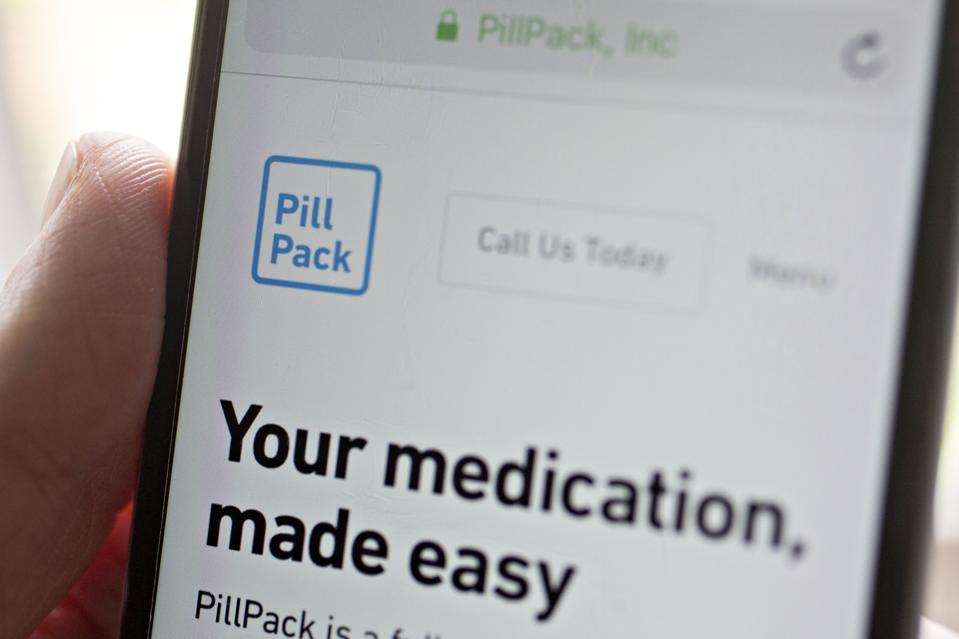
Well, those customers are in luck, since Amazon just announced that they will be purchasing a company called PillPack, a pharmacy company. Almost immediately after the announcement, the stock prices for companies like CVS dropped, likely correlated with investors' expectation that many consumers will choose Amazon over their local stores for filling prescriptions. Amazon may run into some legal snags when it comes to selling prescription drugs online, but it is very likely that very soon, you too will be able to get your prescriptions delivered right to your door (possibly with free delivery if included on Amazon Prime!).

***************************************************************************************************
Find out more about us at www.sepulvedaescrow.net. Any Questions? Contact our Escrow Expert! Sepulveda Escrow Corporation (818) 838-1831. Follow our company on FacebookTwitterLinkedIn, and Google+.
**************************************************************************************************

Friday, July 6, 2018

Twitter and Facebook Introduce "Ads Transparency" Tools


Facebook Pages ad transparency tool

In this day and age, it's difficult to get around without utilizing online resources, but in many cases, using those resources require the user to give up quite a bit of their personal information, from names and birthdates to shopping preferences. Because of this, private companies have access to a lot of their customers' personal information.  Yet, although that personal data is being sold to companies to enable their "targeted advertisements" to work better, the customers being targeted rarely receive any information in return about the organizations trying to target them, especially when those organizations are political in nature. Fortunately, according to a recent Bloomberg article, both Twitter and Facebook are in the process of revamping their advertisement policies to make it apparent to all users where the ads are coming from, who paid for them, and how much they paid.

While understanding the identities and motivations of the companies and organizations trying to target you through social media can be nice, that kind of data isn't nearly on the same level as the browsing history and other product-preference data the companies have on you. But, since many of their customers have recently opted to discontinue use of several social media sites after various data scandals, the social media platforms had to make some sort of gesture to try to regain their customers' trust. Twitter was also recently under fire by US lawmakers for not having a system in place to identify and deal with fake accounts that are used for spam or scams, especially in the political arena, as that's the category on which lawmakers tend to focus.

The new Twitter tool, called the Ads Transparency Center tool, lets users search for any Twitter account and see all advertisements run by the account over the past week. For politically-related advertisers, even more data will be released: demographic-targeting data, the amount spent, billing information, etc. All of that data should help lawmakers and analysts determine if certain accounts are being designed specifically to produce misleading or false advertisements for the purpose of impacting US political races.

It's an interesting change in policies. Until now, there was very little oversight regarding advertisements on social media. But, it does make sense that there should be just as much regulation for a Facebook political message as for one that is played over the radio or on the television. Some lawmakers are even putting forward bills to require that social media advertisements meet the same honesty requirements as any other ads. Overall, these changes seem to have little to do with making the individual customers happy, and more to do with obliging with the wishes of lawmakers, but sometimes the two categories overlap.

***************************************************************************************************
Find out more about us at www.sepulvedaescrow.net. Any Questions? Contact our Escrow Expert! Sepulveda Escrow Corporation (818) 838-1831. Follow our company on FacebookTwitterLinkedIn, and Google+.
**************************************************************************************************